This book, written by a group of distinguished scholars and practitioners, critically reappraises ideas about learning and development advanced by Albert O.
As the British relinquish control of Hong Kong, the economic relationship among the People's Republic of China (PRC), Taiwan, and Hong Kong becomes especially significant.
Following multiple global crises, there is an urgent need to review our economic and financial paradigms to improve outcomes for the three pillars of sustainable development: economic, social, and environmental.
Cooperative Enterprises is the first textbook to examine the evolution of the cooperative enterprise model and the contribution that cooperatives can make to the economy and society.
The world has witnessed the proliferation of Mega-Regional Trade Agreements (MRTAs), and this book critically examines a range of issues with MRTAs starting from their genesis to their economic clout over the world, the likely implications for member countries' integration, and the challenges they pose for non-member countries.
Im vorliegenden Werk mit dem Titel ›Die Erfindung der Sklaverei‹ entfaltet der Autor eine fesselnde Analyse, die den Ursprung und die Entwicklung der Sklaverei in verschiedenen Gesellschaften kritisch beleuchtet.
This report analyzes how carbon markets can be designed to help economies reach ambitious emission reduction goals and generate the financing needed to scale up climate action and build a resilient future.
In ›Die Erfindung des Zufalls‹ taucht der Leser in eine faszinierende Welt ein, in der das scheinbar Unvorhersehbare eine tiefgreifende Ordnung offenbart.
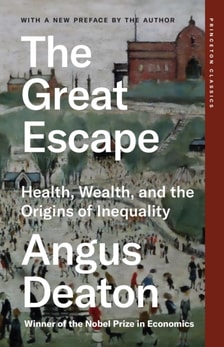
A Nobel Prize-winning economist tells the remarkable story of how the world has grown healthier, wealthier, but also more unequal over the past two and half centuriesThe world is a better place than it used to be.
A Nobel Prize-winning economist tells the remarkable story of how the world has grown healthier, wealthier, but also more unequal over the past two and half centuriesThe world is a better place than it used to be.
Following multiple global crises, there is an urgent need to review our economic and financial paradigms to improve outcomes for the three pillars of sustainable development: economic, social, and environmental.
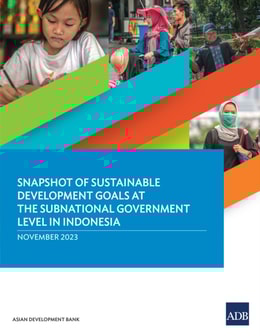
This report assesses how Indonesia is implementing the United Nations Sustainable Development Goals (SDGs) at the subnational government (SNG) level, identifies gaps and good practices, and outlines ways to speed up progress.
This book provides a detailed structured analysis of the transition that has taken place in the Indian economy since independence to the present times (including the period of COVID-19 pandemic).
This book provides an overview of the history, basic concepts, and provision models of infrastructure, significant theories on infrastructure economics, practices at home and abroad that reflect the economic development effects of infrastructure, and four infrastructure economic growth models.
En Argentina, la república posible, el autor nos ofrece una inmersión cautivadora en la rica historia de una nación de contrastes y diversidad inigualable.
This book analyzes and summarizes the process and achievements of China's economic restructuring from 1978 to 2018, including the objectives of China's economic restructuring, the initial stage of market-oriented reform (1979-1984), the comprehensive development stage of market-oriented reform (1985-1992), and the initial establishment stage of market-oriented reform system (1993-2000).
This book analyzes and summarizes the process and achievements of China's economic restructuring from 1978 to 2018, including the objectives of China's economic restructuring, the initial stage of market-oriented reform (1979-1984), the comprehensive development stage of market-oriented reform (1985-1992), and the initial establishment stage of market-oriented reform system (1993-2000).
This book analyzes the impact of entrepreneurship, technology, and innovation on meeting chronic and recurring social challenges, such as poverty, gender inequality, sustainability and climate change, income disparity, social healthcare, community housing and homelessness, and the drive to cleaner food and water supplies.
This book analyzes the impact of entrepreneurship, technology, and innovation on meeting chronic and recurring social challenges, such as poverty, gender inequality, sustainability and climate change, income disparity, social healthcare, community housing and homelessness, and the drive to cleaner food and water supplies.
Eine kontroverse Debatte kreist um die Frage, weshalb rohstoff- und insbesondere erdölexportierende Länder wie Iran in ihrer wirtschaftlichen Entwicklung oft weniger fortgeschritten sind als ressourcenimportierende Länder.
This book investigates the impact of financial capability and decision making ability on the financial wellbeing of women associated with community based organisations (CBOs).
Emerging economies, as actively changing societies, invoke questions about the future direction for national and global development as well as equitable economic growth.
Growth enhancing structural change-a relocation of labour from low to high productivity sectors-is increasingly perceived as inextricably linked with the sustainable development agenda.
Growth enhancing structural change-a relocation of labour from low to high productivity sectors-is increasingly perceived as inextricably linked with the sustainable development agenda.
First published in 1980, Wealth and The Wealthy in the Modern World looks at the careers of the very wealthy and the extent of wealth-holding and wealth distribution in the major Western nations since the Industrial Revolution.
This book offers a comprehensive exploration of child well-being within the context of Indian states, focusing on the progress made in eight Sustainable Development Goals (SDG) targets.
Originally published in 1984, at a time when international commodity control was brought from the periphery to the centre of international trade policy, this book provided a new and more comprehensive approach to, and an analytical appraisal of, international commodity controls, from their origins in the 1920s to their widespread acceptance as an important element in international trade policy in the 1970s.