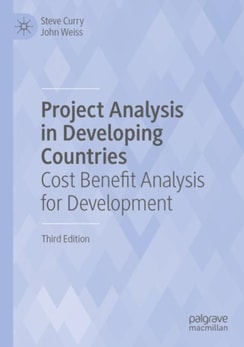
Emerging economies, as actively changing societies, invoke questions about the future direction for national and global development as well as equitable economic growth.
Originally published in 1984, at a time when international commodity control was brought from the periphery to the centre of international trade policy, this book provided a new and more comprehensive approach to, and an analytical appraisal of, international commodity controls, from their origins in the 1920s to their widespread acceptance as an important element in international trade policy in the 1970s.
Originally published in 1984, this was the first study to define and rationalise the character and functions of the plantation in the contemporary world.
First published in 1980, Wealth and The Wealthy in the Modern World looks at the careers of the very wealthy and the extent of wealth-holding and wealth distribution in the major Western nations since the Industrial Revolution.
Originally published in 1984, this was the first study to define and rationalise the character and functions of the plantation in the contemporary world.
First published in 1983, The Planned Economies of Eastern Europe provides a penetrating analysis of the Eastern European economies, beginning with an examination of the Soviet model on which they are based.
This book brings together world-renowned experts and rising scholars to provide a collection of chapters examining the long-term impact of historical events on modern-day economic and political developments in Latin America.
In Equality and the City, Enrique Penalosa Londono draws on his experience as mayor of Bogota, Colombia, as well as his many years of international work as a lecturer and consultant, to share his perspective on the issues facing developing cities, especially sustainable transportation and equal access to public space.
This book brings together world-renowned experts and rising scholars to provide a collection of chapters examining the long-term impact of historical events on modern-day economic and political developments in Latin America.
This book focuses on the impact of information technology on the lives and livelihoods of rural households in sub-Saharan Africa, where simple mobile phones have leapfrogged traditional communication and financial technologies, and thus, arguably, offer some of the greatest potential for development.
This book examines the important role which civil society organisations in South Africa play in challenging poor corporate governance in state-owned enterprises and demanding better government accountability, transparency and citizen participation.
This book introduces readers to the rich and fascinating history of West Africa, stretching all the way back to the stone age, and right up to the modern day.
Fostering Sustainable Businesses in Emerging Economies presents a series of case studies and exploratory studies, using quantitative analysis, scientific studies, and qualitative studies showing how innovation and technology enable emerging economies to achieve business sustainability and also achieve the Sustainable Development Goals (SDGs).
Fostering Sustainable Businesses in Emerging Economies presents a series of case studies and exploratory studies, using quantitative analysis, scientific studies, and qualitative studies showing how innovation and technology enable emerging economies to achieve business sustainability and also achieve the Sustainable Development Goals (SDGs).
This book focuses on the impact of information technology on the lives and livelihoods of rural households in sub-Saharan Africa, where simple mobile phones have leapfrogged traditional communication and financial technologies, and thus, arguably, offer some of the greatest potential for development.
This book introduces readers to the rich and fascinating history of West Africa, stretching all the way back to the stone age, and right up to the modern day.
In Equality and the City, Enrique Penalosa Londono draws on his experience as mayor of Bogota, Colombia, as well as his many years of international work as a lecturer and consultant, to share his perspective on the issues facing developing cities, especially sustainable transportation and equal access to public space.
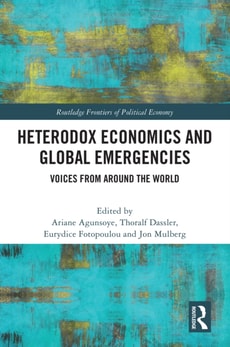
From the financial crash to the climate emergency and Covid- 19, this book demonstrates that recent crises have had unequal impacts, they require a heterodox approach to economics for their understanding, and new ways of thinking are needed to address them.
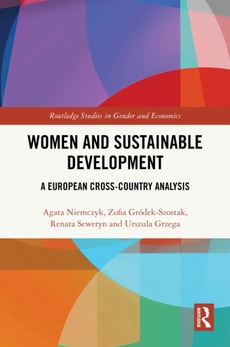
Sustainable development has been recognized as a paradigm for considering a future in which environmental, social, and economic concerns are balanced in the pursuit of improving quality of life.