The volume presents views of renowned economists on various aspects of Indian Economy covering Reforms of Rural Institutions, Employment and Poverty of Scheduled Castes, Agricultural Development, Indian Economy after Independence, Poverty Alleviation and Work Participation.
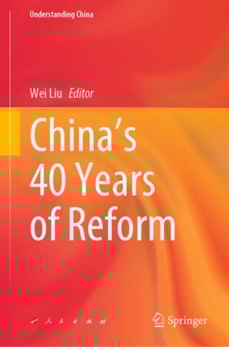
This book focuses on the key issues around Chinese reform in the past 40 years, including economic structure upgrading, finance reform, enterprise ecology, village modernization, ecological development, income structure, global governance, BRI, and governance model.
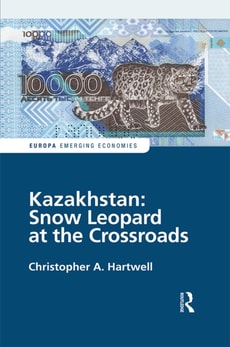
This volume examines the experience of Kazakhstan's transition over the past 30 years, explaining the political and economic performance of the country since the collapse of the USSR, through the country's institutions, policy choices, and external environment.
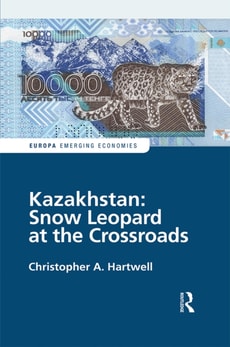
This volume examines the experience of Kazakhstan's transition over the past 30 years, explaining the political and economic performance of the country since the collapse of the USSR, through the country's institutions, policy choices, and external environment.
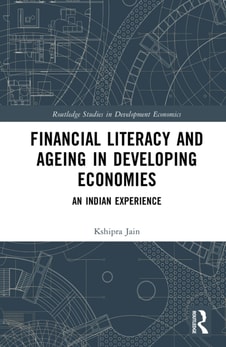
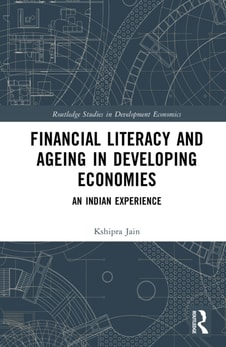
This book weaves together current understanding around financial literacy and ageing, arguing for the relevance of financial literacy for old age security.
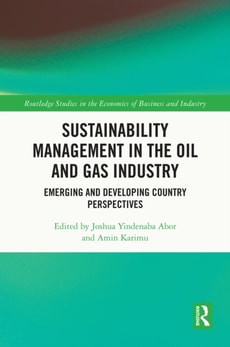
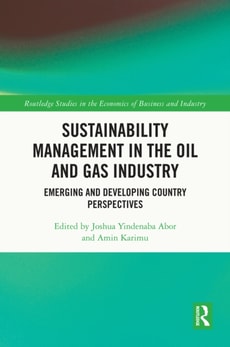
The oil and gas industry is a complex sector with significant reach in terms of providing the energy needs of the global economy and the security, environmental and development consequences thereof.
The oil and gas industry is a complex sector with significant reach in terms of providing the energy needs of the global economy and the security, environmental and development consequences thereof.
This book weaves together current understanding around financial literacy and ageing, arguing for the relevance of financial literacy for old age security.
Since the 1990's, the countries of Eastern Europe, the Caucasus and Central Asia (EECCA) have made great progress in pursuing economic development that is also environmentally sustainable.
Despite remarkable improvement in water supply and sanitation services, Estonia faces finance and investment challenges to keep up with social expectations and environmental health regulations.
States of Fragility 2022 arrives during an 'age of crises', where multiple, concurring crises are disproportionately affecting the 60 fragile contexts identified in this year's report.
Since 2006 Lithuania has taken steps to ensure higher operational efficiency and to reduce the disparity in prices for water supply and sanitation services.
O Brasil fez progressos significativos na gestão dos recursos hídricos desde a adoção da Lei das Águas em 1997 e da criação da Agência Nacional de Águas e Saneamento Básico (ANA) em 2000.
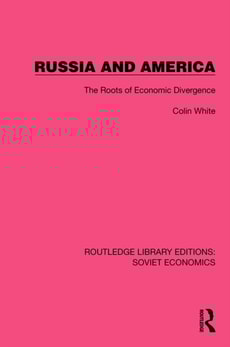
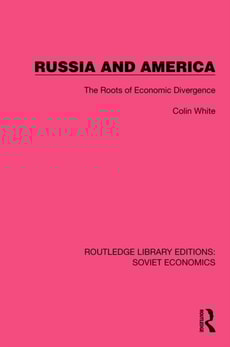
Russia and America (1987) examines the divergence between two countries organised on diametrically opposed economic principles - one centrally-planned, state-dominated, the other a highly decentralised market economy, free from significant government intervention.
Against a background of calls to prioritise the improvement of financial inclusion in Africa, this book provides an analysis of current financial inclusion measures in Southern Africa.
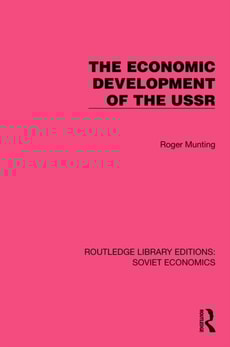
The Economic Development of the USSR (1982) examines the economic advances the Soviet Union made as the first major economy to adopt full-scale socialist planning.
The Economic Development of the USSR (1982) examines the economic advances the Soviet Union made as the first major economy to adopt full-scale socialist planning.
Russia and America (1987) examines the divergence between two countries organised on diametrically opposed economic principles - one centrally-planned, state-dominated, the other a highly decentralised market economy, free from significant government intervention.
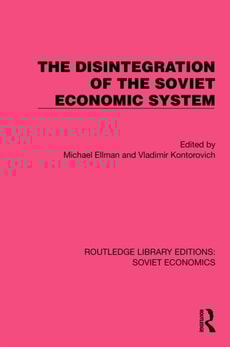
The Disintegration of the Soviet Economic System (1992) examines in detail the collapse of the Soviet economic system, and is set in its political context, both international and domestic.
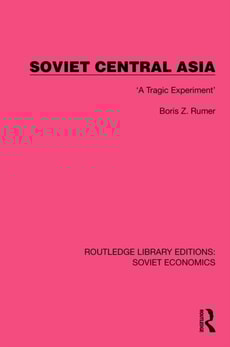
Soviet Central Asia (1989) explores the economic development of the four republics of Central Asia that suffered under Moscow's economic policies - Uzbekistan, Tajikistan, Turkmenistan and Kirghizia.
Against a background of calls to prioritise the improvement of financial inclusion in Africa, this book provides an analysis of current financial inclusion measures in Southern Africa.
Soviet Central Asia (1989) explores the economic development of the four republics of Central Asia that suffered under Moscow's economic policies - Uzbekistan, Tajikistan, Turkmenistan and Kirghizia.
The Disintegration of the Soviet Economic System (1992) examines in detail the collapse of the Soviet economic system, and is set in its political context, both international and domestic.
This book is a major stocktaking of law and economics in the context of developing and emerging economies, and in the light of the dramatic changes in the global economy that we have witnessed in recent years.
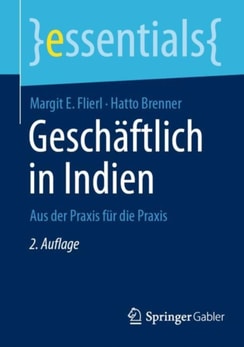
Dieses essential gibt wertvolle Hinweise zur Zusammenarbeit mit Firmen und Geschäftspartnern in Indien und eröffnet Möglichkeiten zur optimalen Nutzung der Chancen, die dieses faszinierende Land bietet.
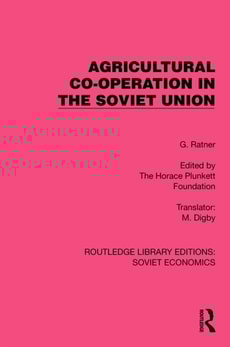
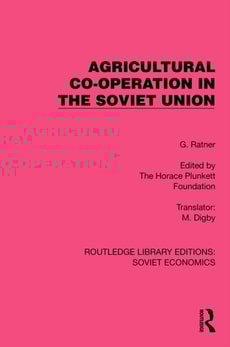
Agricultural Co-operation in the Soviet Union (1929) examines agriculture in the USSR as the government was restructuring all national economic life and enterprise on a state socialist basis.
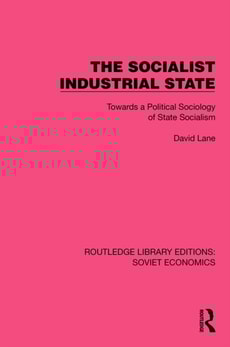
The Socialist Industrial State (1976) examines the state-socialist system, taking as the central example the Soviet Union - where the goals and values of Marxism-Leninism and the particular institutions, the form of economy and polity, were first adopted and developed.
The Soviet Union Looks Ahead (1930) is the official statement of the five-year economic plan put forward by the Soviet Union, a plan involving the radical reconstruction of the entire production system of Russia.
Agricultural Co-operation in the Soviet Union (1929) examines agriculture in the USSR as the government was restructuring all national economic life and enterprise on a state socialist basis.
The Enigma of Soviet Petroleum (1980) provides an analysis of the relevance of the Soviet planning system to oil production levels: why it is that planning has been the source of so many petroleum industry problems, and the nature of the measures that are being taken to overcome them.
The Soviet Union Looks Ahead (1930) is the official statement of the five-year economic plan put forward by the Soviet Union, a plan involving the radical reconstruction of the entire production system of Russia.
The Socialist Industrial State (1976) examines the state-socialist system, taking as the central example the Soviet Union - where the goals and values of Marxism-Leninism and the particular institutions, the form of economy and polity, were first adopted and developed.
The Enigma of Soviet Petroleum (1980) provides an analysis of the relevance of the Soviet planning system to oil production levels: why it is that planning has been the source of so many petroleum industry problems, and the nature of the measures that are being taken to overcome them.
Advances in Pacific Basin Business, Economics and Finance (APBBEF) is an annual series designed to focus on interdisciplinary research in finance, economics, and management among Pacific Rim countries.
Advances in Pacific Basin Business, Economics and Finance (APBBEF) is an annual series designed to focus on interdisciplinary research in finance, economics, and management among Pacific Rim countries.