Anthropological interest in new subjects of research and contemporary knowledge practices has turned ethnographic attention to a wide ranging variety of professional fields.
With growing evidence of unsustainable use of the world s resources, such as hydrocarbon reserves, and related environmental pollution, as in alarming climate change predictions, sustainable development is arguably the prominent issue of the 21st century.
Unmanned Aerial Systems in Agriculture: Eyes Above Fields bridges the gap between knowledge of concept and real-world use and operations of UASs in agri-production.
Based on ethnographic research conducted over several years, Market Frictions examines the tensions and frictions that emerge from the interaction of global market forces, urban planning policies, and small-scale trading activities in the Vietnamese border city of Lao Cai.
The original critical guide to key concepts in development studies from some of the world's most eminent critical development scholars and practitioners.
A New Way of Looking at Power at WorkWho hasnt left the office after a particularly frustrating day wondering what they could have done to turn a negative experience into a positive one?
In this book, George Gilder asserts that widespread antagonism toward the current state of Israel springs from, like anti-Semitism everywhere, envy of superior accomplishment.
The financial crisis that has blighted the world's richest countries since 2008 was a turning point in human history because it ushered in an era in which economies will tend to shrink rather than grow.
A Financial Times Best Business Book of the YearNamed one of 10 Best New Management Books for 2022 by Thinkers50An advocate of sustainable capitalism explains how it's done The EconomistPolman's new book with the sustainable business expert Andrew Winstonargues that it's profitable to do business with the goal of making the world better.
Like the robber barons of the 19th century Gilded Age, a new and proliferating crop of billionaires is driving rapid development and industrialization in poor countries.
In the 1990s, the Republic of the Marshall Islands (RMI) turned its fisheries industry to a more open, lucrative and private sector driven, with the support of a series of strategic capacity development interventions sponsored by the Asian Development Bank.
The 2009 ADB Perceptions Survey gauges stakeholders' perceptions of ADB's mission to help reduce poverty and contribute to development in Asia and the Pacific.
The report explains the current state of inclusive business (IB) models from the People's Republic of China, drawing from domestic and international company examples and practices.
This publication presents data visualization of economic statistics from Southeastern Asia and the Pacific relevant for the analysis of cross-border production arrangements at the local, regional, and global levels.
This country diagnostic assessment seeks to strengthen financial preparedness for disasters in Fiji, focusing on insurance and other risk transfer instruments.
A 2001 report by the Australian Agency for International Development and the New Zealand Ministry for Foreign Affairs and Trade marked the beginning of efforts by both governments to increase their emphasis on aid harmonization in the Pacific.
The Vanuatu Legal Sector Strengthening Program (VLSSP) was launched in 2002 at a time when "e;the public was calling for a revamp of the whole judiciary.
For years, Nauru, a small Pacific island nation (population 10,000), benefited from the considerable wealth generated from its only major natural resource, phosphate.
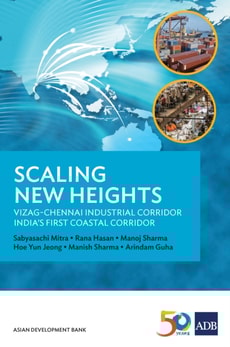
Spanning more than 800 kilometers of India's eastern coastline, the Vizag-Chennai Industrial Corridor (VCIC) is part of the country's East Coast Economic Corridor.
This publication is a result of a 2-year innovative, exploratory, and reflective study of cities as unique urban spaces that support life, work, and play.
A 2001 report by the Australian Agency for International Development and the New Zealand Ministry for Foreign Affairs and Trade marked the beginning of efforts by both governments to increase their emphasis on aid harmonization in the Pacific.
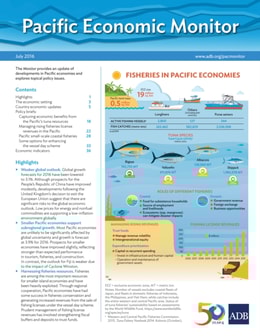
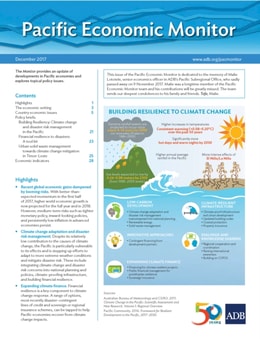
This latest issue of the Pacific Economic Monitor highlights the gains of Pacific developing member countries (Pacific DMCs) and the challenges that the Pacific DMCs continue to face including the impacts of climate change.