The Econometric Analysis of Network Data serves as an entry point for advanced students, researchers, and data scientists seeking to perform effective analyses of networks, especially inference problems.
Say goodbye to dry presentations, grueling formulas, and abstract theories that would put Einstein to sleep -- now there's an easier way to master the disciplines you really need to know.
The remarkable evolution of econophysics research has brought the deep synthesis of ideas derived from economics and physics to subjects as diverse as education, banking, finance, and the administration of large institutions.
This book reminds students in junior, senior and graduate level courses in physics, chemistry and engineering of the math they may have forgotten (or learned imperfectly) which is needed to succeed in science courses.
Since the Great Depression, researchers and statisticians have recognized the need for more extensive methods for measuring economic growth and sustainability.
Handbook of Field Experiments, Volume Two explains how to conduct experimental research, presents a catalog of research to date, and describes which areas remain to be explored.
Handbook of Field Experiments provides tactics on how to conduct experimental research, also presenting a comprehensive catalog on new results from research and areas that remain to be explored.
Handbook of Computational Economics: Heterogeneous Agent Modeling, Volume Four, focuses on heterogeneous agent models, emphasizing recent advances in macroeconomics (including DSGE), finance, empirical validation and experiments, networks and related applications.
This book examines conventional time series in the context of stationary data prior to a discussion of cointegration, with a focus on multivariate models.
This book focuses on extending the models and theories (from a mathematical/statistical point of view) which were introduced in the first volume to a more technical level.
Considering the World Gross Domestic Product WGDP as a representation of all the production by humankind, is it possible to define a smallest common quantitative measure, an economic quantum at an individual level, whose aggregate will lead to the word GDP ?
The technique of regression analysis is used so often in business and economics today that an understanding of its use is necessary for almost everyone engaged in the field.
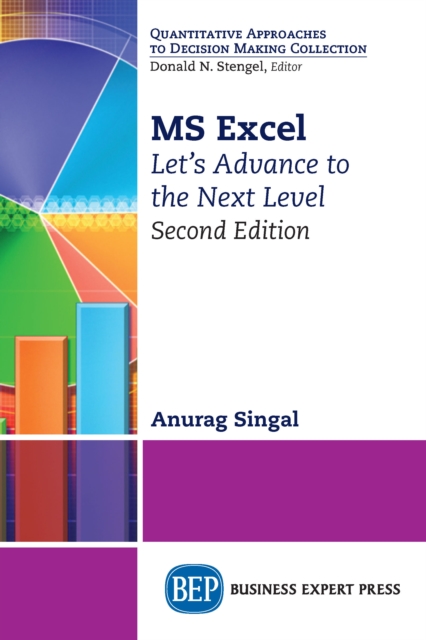
The focus of this book is on providing clear word descriptions and step-by-step Excel instructions, rather than including lots of x's and y's everywhere.
It's estimated that 80 percent of an organization's data contains location attributes, but many don't understand how to unlock the potential of this data for their organizations to make better decisions.
Advances in Econometrics is a research annual whose editorial policy is to publish original research articles that contain enough details so that economists and econometricians who are not experts in the topics will find them accessible and useful in their research.
The 30th Volume of Advances in Econometrics is in honor of the two individuals whose hard work has helped ensure thirty successful years of the series, Thomas Fomby and R.
The 'Advances in Econometrics' series aims to publish annual original scholarly econometrics papers on designated topics with the intention of expanding the use of developed and emerging econometric techniques by disseminating ideas on the theory and practice of econometrics throughout the empirical economic, business and social science literature.
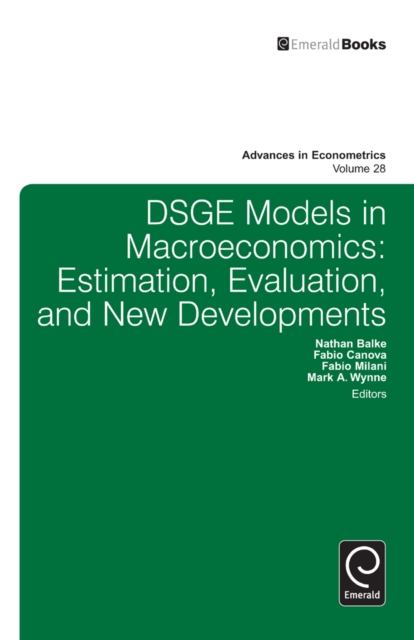
This volume of Advances in Econometrics contains articles that examine key topics in the modeling and estimation of dynamic stochastic general equilibrium (DSGE) models.
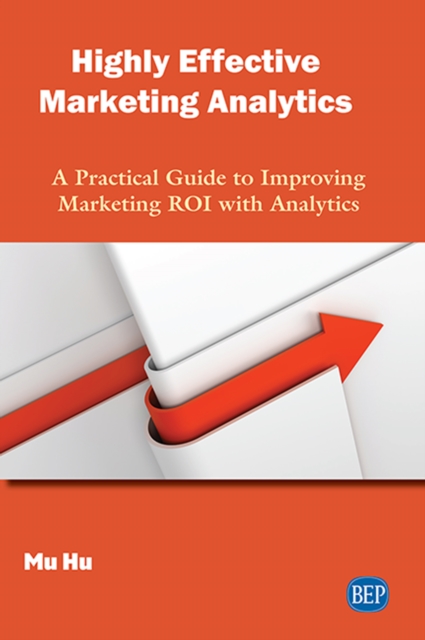
Highly Effective Marketing Analytics infuses analytics into marketing to help improve marketing performance and raise analytics IQ for companies that have not yet had much success with marketing analytics.
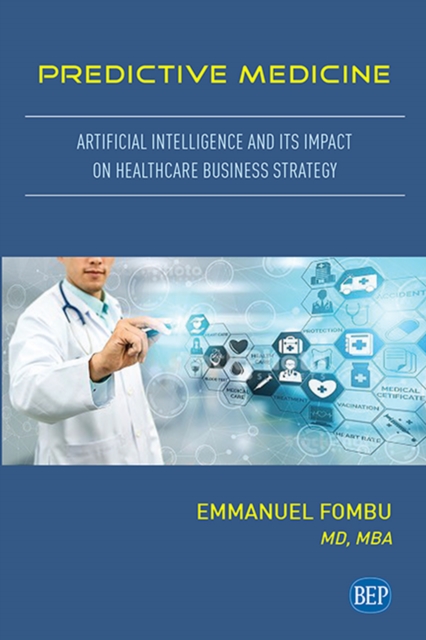
Predictive Medicine makes artificial intelligence more accessible for healthcare practitioners without shying away from complex topics and controversial subject matter.
The convergence of blockchain and Internet of things (IoT) powered by data and artificial intelligence (AI) is on the agenda of several big companies and some of them have already started using its implementations, initiatives, and solutions in various projects.
This book undertakes a theoretical and econometric analysis of intense economic growth in selected European countries during the end of the twentieth century and the beginning of the twenty first.