The most user-friendly and authoritative resource on missing data has been completely revised to make room for the latest developments that make handling missing data more effective.
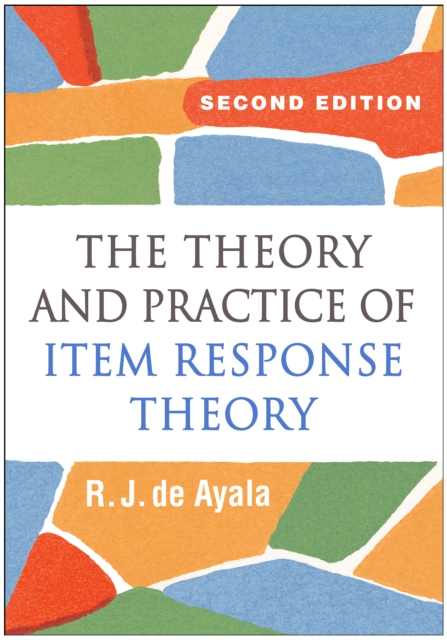
Noted for addressing both the hows and whys of item response theory (IRT), this text has been revised and updated with the latest techniques (multilevel models, mixed models, and more) and software packages.
Acclaimed for helping novice behavioral scientists hit the ground running as producers of meaningful research, this text now has been extensively revised with more than 50% new material, including current guidance on open science; transparency; replication; and quantitative, qualitative, and mixed methods reporting standards.
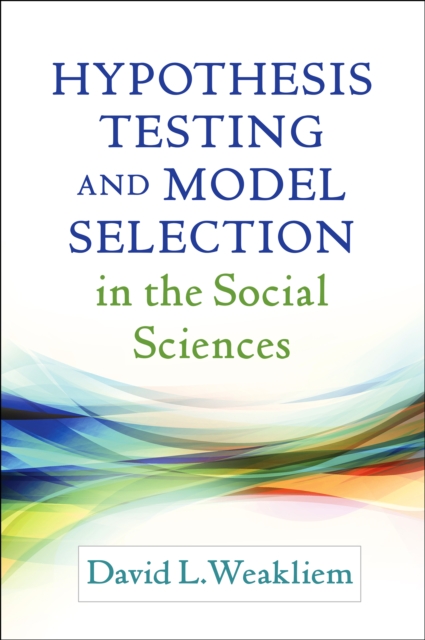
Examining the major approaches to hypothesis testing and model selection, this book blends statistical theory with recommendations for practice, illustrated with real-world social science examples.
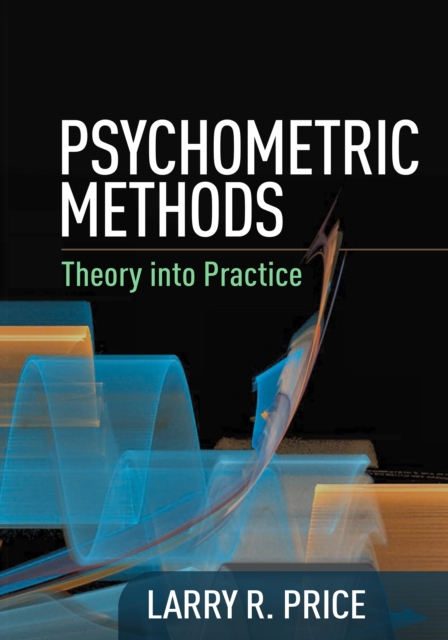
Grounded in current knowledge and professional practice, this book provides up-to-date coverage of psychometric theory, methods, and interpretation of results.
With its emphasis on practical and conceptual aspects, rather than mathematics or formulas, this accessible book has established itself as the go-to resource on confirmatory factor analysis (CFA).
Written in a friendly, conversational style, this book offers a hands-on approach to statistical mediation and moderation for both beginning researchers and those familiar with modeling.
A practical introduction to using Mplus for the analysis of multivariate data, this volume provides step-by-step guidance, complete with real data examples, numerous screen shots, and output excerpts.
This volume contains selected papers that were presented at the International Conference COMPUTATIONAL FINANCE 1997 held at London Business School on December 15-17 1997.
Observers and Macroeconomic Systems is concerned with the computational aspects of using a control-theoretic approach to the analysis of dynamic macroeconomic systems.
Cost Structure and the Measurement of Economic Performance is designed to provide a comprehensive guide for students, researchers or consultants who wish to model, construct, interpret, and use economic performance measures.
Econometric Business Cycle Research deals with econometric business cycle research (EBCR), a term introduced by the Nobel-laureate Jan Tinbergen for his econometric method of testing (economic) business cycle theories.
In the late 1980s, as the empirical appeal of macro-economic exchange rate models began to fade, a few people including Professor Charles Goodhart at the London School of Economics and researchers at Olsen & Associates in Zurich, started to collect intra-daily exchange rate data.
Agent-Based Computer Simulation of Dichotomous Economic Growth reports a project in agent-based computer stimulation of processes of economic growth in a population of boundedly rational learning agents.
The three decades which have followed the publication of Heinz Neudecker's seminal paper `Some Theorems on Matrix Differentiation with Special Reference to Kronecker Products' in the Journal of the American Statistical Association (1969) have witnessed the growing influence of matrix analysis in many scientific disciplines.
The aim of Cooperative Games on Combinatorial Structures is to analyze conflict situations in which two or more players can make coalitions and obtain prizes and penalties.
Structural Funds: Growth, Employment and the Environment is a book on the role of transfers designed for assisting sustainable development of less developed regions within the European Union.
Parallel Algorithms for Linear Models provides a complete and detailed account of the design, analysis and implementation of parallel algorithms for solving large-scale linear models.
Models, Methods, Concepts and Applications of the Analytic Hierarchy Process is a volume dedicated to selected applications of the Analytic Hierarchy Process (AHP) focused on three themes: economics, the social sciences, and the linking of measurement with human values.
Social and Economic Networks in Cooperative Game Theory presents a coherent overview of theoretical literature that studies the influence and formation of networks in social and economic situations in which the relations between participants who are not included in a particular participant's network are not of consequence to this participant.
1 DATA ENVELOPMENT ANALYSIS Data Envelopment Analysis (DEA) was initially developed as a method for assessing the comparative efficiencies of organisational units such as the branches of a bank, schools, hospital departments or restaurants.
Macroeconomic Policy in the Canadian Economy investigates developments in Canada over the last forty years, using recent advances in the field of applied econometrics.
Economists can use computer algebra systems to manipulate symbolic models, derive numerical computations, and analyze empirical relationships among variables.
A number of clubs in professional sports leagues exhibit winning streaks over a number of consecutive seasons that do not conform to the standard economic model of a professional sports league developed by El Hodiri and Quirk (1994) and Fort and Quirk (1995).
The Analytic Network Process (ANP), developed by Thomas Saaty in his work on multicriteria decision making, applies network structures with dependence and feedback to complex decision making.
"e;In this book, Peter Bogetoft - THE expert on the theory and practice of benchmarking - provides an in-depth yet very accessible and readable explanation of the best way to do benchmarking, starting from the ground up.
Complex-Valued Modeling in Economics and Finance outlines the theory, methodology, and techniques behind modeling economic processes using complex variables theory.
Mathematical Statistics for Economics and Business, Second Edition, provides a comprehensive introduction to the principles of mathematical statistics which underpin statistical analyses in the fields of economics, business, and econometrics.