This book analyses how Calon Gypsies in Brazil have responded to global financial transformations and shifted their economic practices from itinerant trade to moneylending.
This book traces regional income inequality in Spain during the transition from a pre-industrial society to a modern economy, using the Spanish case to shed further light on the challenges that emerging economies are facing today.
This book presents the complete and pioneering works of the great Spanish economist, German Bernacer (1883-1965), to an English audience for the first time.
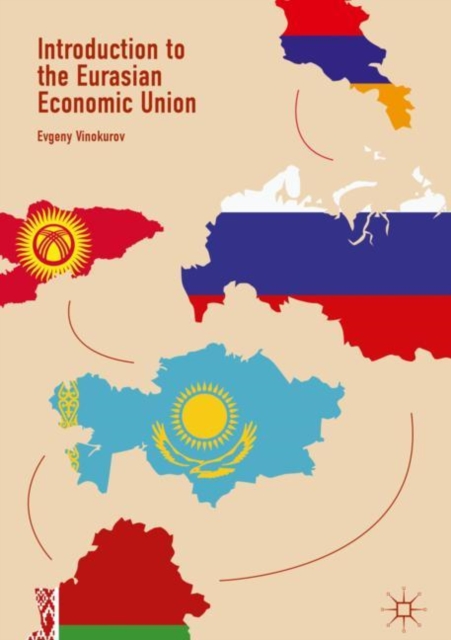
The Eurasian Economic Union (EAEU), which includes Russia, Kazakhstan, Belarus, Kyrgyzstan, and Armenia, is a new but substantial regional organization.
This book is the fifteenth volume in the renowned International Papers in Political Economy (IPPE) series which explores the latest developments in political economy.
This book uses a critical political economy approach to develop an historically and politically grounded set of strategies for states to move toward a post-growth, decarbonised global economy.
This book discusses the impacts of climate change that are already being felt on every continent and provides the scientific basis for a number of modern approaches and state-of-the art methods for monitoring the environment, social behavior and human expectations concerning protection of the environment.
This proceedings volume provides current research on emerging issues in business, economics and finance in the global economy with particular emphasis on Eastern Europe.
This book presents an in-depth understanding of the transformation of modern economy in the twenty-first century by examining the interface and interplay of three key forces of contemporary global economy-Foreign Direct Investment (FDI), Multinational Enterprises (MNEs), and Global Value Chains (GVCs)-and how the emerging nexus of these forces has already ushered in revolutionary transformation in global production, investment, trade, and employment in recent decades.
This book scrutinizes the last 15 years of exceptional growth in the Turkish economy, and presents a model for sustainable ongoing growth that has particular implications for other key emerging economies.
This volume comprises papers presented at the 8th international conference "e;The Economies of the Balkan and Eastern European Countries in the Changing World"e; (EBEEC) held in Split, Croatia in 2016.
With substantial risks arising from resource constraints on global growth, serious questions are being posed about how a scarcity of finite resources may impact global social and political fragility.
This brief presents a detailed look at the entrepreneurial ecosystem of nations around the wold by combining individual data with institutional components.
This enlightening book offers a comprehensive historical analysis of the main development challenges of the last half century and the international community's response through aid and trade.
This brief captures the contextual features of entrepreneurship by measuring entrepreneurial attitudes, abilities, and aspirations at both the individual- and country-level.
This book explains how and why the state-socialist regime in Hungary used technology and propaganda to foster industrialization and the conservation of natural resources simultaneously.
This book uses Figueroa's unified theory of capitalism to explain how economic growth has led to a new epoch, the Anthropocene, and it presents a new set of economic principles that are needed in this new age.
The book illustrates the considerable advances in modern evolutionary economics and addresses core questions of economic behaviour, interaction of heterogeneous actors in uncertain environments and the possibility of aggregating observations on a macro-economic level.
This Palgrave Pivot empirically analyzes the role of conventional and interest-free Islamic banking in the growth process of developing Islamic nations.
This book is at the cutting edge of the ongoing research in bioeconomy and encompasses both technological and economic strategies to master the transformation towards a knowledge- and bio-based production system.
The book spans a scientific research program elegantly developed by Roberto Camagni, an eminent regional scientist, who has offered ground-breaking ideas in regional and urban economics throughout his academic career.
This book analyses the effects of technological development, innovation, entrepreneurship and governance in middle income countries, such as Turkey, in detail.
This book examines five countries in South East Asia that are instructive case studies of how the region has had to negotiate pathways of development beyond crises and traps.
This book explores the diverse challenges facing the EU and in particular examines the impediments to financial stability and sustainable growth and how these can be overcome.
This timely book debates the economic and political logic of the austerity policies that have been implemented in the UK and in the Eurozone since 2010 and asks whether there is any alternative for these countries in the years ahead.