Resisting Financialization with Deleuze and Guattari aims to provide a contribution in relation to three main areas: the understanding of contemporary capitalism and financialization from a critical perspective; the analysis of resistance to financialization; and the better understanding of the philosophy of Deleuze and Guattari.
Resisting Financialization with Deleuze and Guattari aims to provide a contribution in relation to three main areas: the understanding of contemporary capitalism and financialization from a critical perspective; the analysis of resistance to financialization; and the better understanding of the philosophy of Deleuze and Guattari.
First published in 1957, this book is a detailed analysis on Christian Democracy, a movement backed by Protestants as well as Catholics, which has become one of the great social forces of Western Europe.
First published in 1957, this book is a detailed analysis on Christian Democracy, a movement backed by Protestants as well as Catholics, which has become one of the great social forces of Western Europe.
This book brings together leading scholars of the history of economic thought to demonstrate the vitality and richness of a discipline that welcomes both practitioners of intellectual, contextual history, as well as specialists in the historical explanation of the analytical and theoretical dimension of economic science.
This book brings together leading scholars of the history of economic thought to demonstrate the vitality and richness of a discipline that welcomes both practitioners of intellectual, contextual history, as well as specialists in the historical explanation of the analytical and theoretical dimension of economic science.
Bengal's traditional industries, once celebrated worldwide, largely decayed under the backwash effects of the British Industrial Revolution in the first half of the nineteenth century.
Bengal's traditional industries, once celebrated worldwide, largely decayed under the backwash effects of the British Industrial Revolution in the first half of the nineteenth century.
This report, first published in 1996, argues that radical changes in industrial organization and its relationship to society tend to arise in rapidly industrializing countries, and that new principles of sustainable production are more likely to bear fruit in developing than in developed countries.
This report, first published in 1996, argues that radical changes in industrial organization and its relationship to society tend to arise in rapidly industrializing countries, and that new principles of sustainable production are more likely to bear fruit in developing than in developed countries.
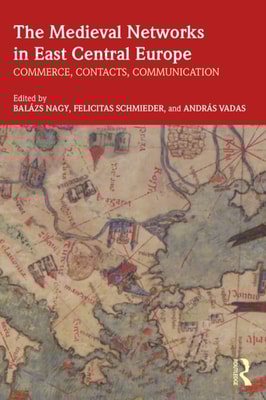
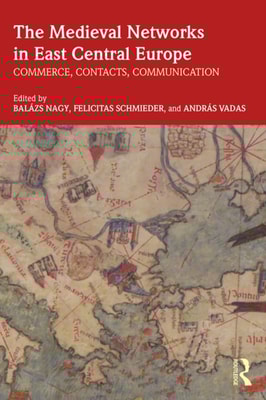
Medieval Networks in East Central Europe explores the economic, cultural, and religious forms of contact between East Central Europe and the surrounding world in the eight to the fifteenth century.
Medieval Networks in East Central Europe explores the economic, cultural, and religious forms of contact between East Central Europe and the surrounding world in the eight to the fifteenth century.
In the history of Russian economic ideas, a peculiar mix of anthropocentrism and holism provided fertile breeding ground for patterns of thought that were in potential conflict with the market.
In the history of Russian economic ideas, a peculiar mix of anthropocentrism and holism provided fertile breeding ground for patterns of thought that were in potential conflict with the market.
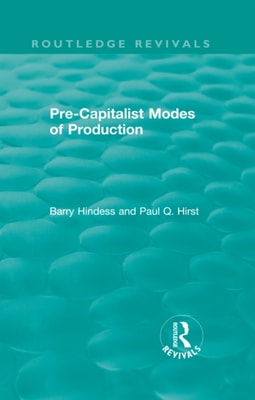
First published in 1975, this book investigates the various pre-capitalist modes of production briefly indicated in the works of Marx and Engels, and gives an examination of the conditions of the transition from one mode of production to another.
First published in 1975, this book investigates the various pre-capitalist modes of production briefly indicated in the works of Marx and Engels, and gives an examination of the conditions of the transition from one mode of production to another.
A call to transform the way we think about property, this book examines how capitalism has from its origins sought to enclose or privatize the commons, or land and other forms of property that had been viewed as communally owned, and argues that neoliberal economic policies and the corporate takeovers of urban spaces, prisons, schools, the mass media, farms, and natural resources have failed to serve the public interest.
A call to transform the way we think about property, this book examines how capitalism has from its origins sought to enclose or privatize the commons, or land and other forms of property that had been viewed as communally owned, and argues that neoliberal economic policies and the corporate takeovers of urban spaces, prisons, schools, the mass media, farms, and natural resources have failed to serve the public interest.