This book provides a uniquely comprehensive explanation of the 2008-2009 global financial crisis and resulting scholarly research in the context of building an agenda for reform.
This book explores how steam engine technology was transferred into nineteenth-century China in the second half of the nineteenth century by focusing on the transmission of knowledge and skills.
This book deals with the economics of establishing a frontier by conquest or by peaceful settlement, the costs involved, and the optimum extension of the territory.
This book is a theoretical and empirical analysis of institutional foundation of long-term economic growth from the perspective of state-market and central-local relations.
This book revisits the economic relationship that ties the UK andIreland to the United States in the aftermath of the greatest economic crisisof the past fifty years.
This enlightening text analyses the origins of Western complaints, prevalent in the late nineteenth century, that Japan was characterised at the time by exceptionally low standards of 'commercial morality', despite a major political and economic transformation.
This text offers an accessible guide to the ways in which our growing knowledge of development in early-modern and modernising Japan can throw light on the paths that industrialisation was eventually to take across the globe.
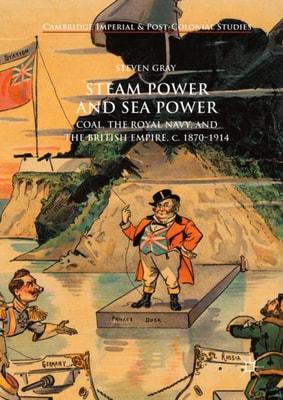
This book examines how the expansion of a steam-powered Royal Navy from the second half of the nineteenth century had wider ramifications across the British Empire.
This book examines the views of Greek Church Fathers on hoarding, saving, and management of economic surplus, and their development primarily in urban centres of the Eastern Mediterranean, from the late first to the fifth century.
The state and entrepreneurs are two players that have shaped both economic activity and economic history throughout the world since the Industrial Revolution.
This volume of original essays considers how the International Labour Organization has helped generate a set of ideas and practices, past and present, transnational and within a single nation, aimed at advancing social and economic reform in the Pacific Rim.
Thomas Malthus identified a crucial tension at the heart of a market economy: While an accumulation of wealth is necessary to provide the capital investment needed to generate growth, too much accumulation will cause planned saving to exceed profitable investment, which will result in secular stagnation, a condition of low growth and underemployment of resources.
Economic Methodology explores the status and character of economics as a social science and introduces students to philosophical issues underlying modern science.
In The Financial Crisis Reconsidered, Aronoff challenges the conventional view that reckless credit produced the US housing boom and the financial crisis, explaining how the large current account deficit, and its mercantilist origin, was a more fundamental cause.
Greece's economy symbolizes in many ways the Eurozone's economic problems and divergent interests as it amasses most of the economic disadvantages characterizing the Eurozone's economy itself.
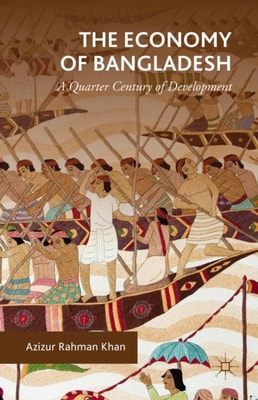
In the quarter century since its emergence from military rule and integration into the global economy, Bangladesh's economy has achieved high growth, reduced aid dependence and made remarkable improvement in social indicators while at the same time it continues to suffer from increasing inequality.
This book explores the challenges faced by the Japanese economy and the Japanese banking industry following the financial crisis that emerged around the turn of the last millennium.