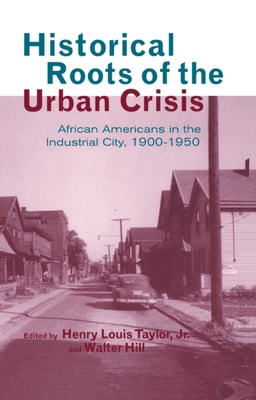
This collection of 12 new essays will tell the story of how the gradual transformation of industrial society into service-driven postindustrial society affected black life and culture in the city between 1900 and 1950, and it will shed light on the development of those forces that wreaked havoc in the lives of African Americans in the succeeding epoch.
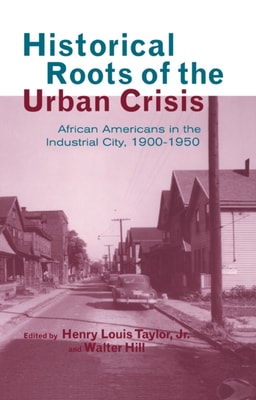
This collection of 12 new essays will tell the story of how the gradual transformation of industrial society into service-driven postindustrial society affected black life and culture in the city between 1900 and 1950, and it will shed light on the development of those forces that wreaked havoc in the lives of African Americans in the succeeding epoch.
Southern cotton planters and Northern textile mill owners maintained what has been called "e;an unholy alliance between the lords of the lash and the lords of the loom.
Southern cotton planters and Northern textile mill owners maintained what has been called "e;an unholy alliance between the lords of the lash and the lords of the loom.
This book concentrates upon the historic associations of the marketplace in the work of Aristotle, Adam Smith, Karl Marx, and demonstrates how what markets were imagined to entail for society was critical to each author's understanding of the central social problems of their time.
This book concentrates upon the historic associations of the marketplace in the work of Aristotle, Adam Smith, Karl Marx, and demonstrates how what markets were imagined to entail for society was critical to each author's understanding of the central social problems of their time.
How Chile became home to the world's most radical free-market experiment-and what its downfall suggests about the fate of neoliberalism around the globeIn The Chile Project, Sebastian Edwards tells the remarkable story of how the neoliberal economic model-installed in Chile during the Pinochet dictatorship and deepened during three decades of left-of-center governments-came to an end in 2021, when Gabriel Boric, a young former student activist, was elected president, vowing that "e;If Chile was the cradle of neoliberalism, it will also be its grave.
This new edition is an updated assessment of the ideas and strategies of early French socialists, incorporating recent research which observes the practical and scientific nature of socialist proposals.
This book offers a comprehensive exploration of Gunnar Myrdal's life, as well as his significant scientific, political and international contributions.
The industrial revolution and the creation of the modern (national) state are two of the most important historical processes to have occurred in Europe during the 19th century.
The industrial revolution and the creation of the modern (national) state are two of the most important historical processes to have occurred in Europe during the 19th century.
This book examines the political origins of financial institutions across fifteen developed democracies, with focused case studies on the US, France, Japan, Austria, and Germany.
This book examines the political origins of financial institutions across fifteen developed democracies, with focused case studies on the US, France, Japan, Austria, and Germany.
Economists in the post-Cold War era are increasingly circumspect about universal, one-size-fits-all conceptions of human behaviour and economic institutions.
Economists in the post-Cold War era are increasingly circumspect about universal, one-size-fits-all conceptions of human behaviour and economic institutions.
Originally published in 1987 to commemorate the 40th anniversary of the Marshall Plan, this fascinating collection of essays, from an eminent 'insider' to the Marshall Plan, combines economics, politics and history to provide authoritative and personal insights into the creation of one of the greatest foreign aid programmes of the twentieth century.
Originally published in 1987 to commemorate the 40th anniversary of the Marshall Plan, this fascinating collection of essays, from an eminent 'insider' to the Marshall Plan, combines economics, politics and history to provide authoritative and personal insights into the creation of one of the greatest foreign aid programmes of the twentieth century.
In this title, first published in 1978, Sir Arthur Lewis considers the development of the international economy in the forty years leading up to the First World War, with the adoption of the gold standard, a rapid growth in world trade, the opening up of the continents by the railways, vast emigration from Europe, India and China, and large-scale international investment.
In this title, first published in 1978, Sir Arthur Lewis considers the development of the international economy in the forty years leading up to the First World War, with the adoption of the gold standard, a rapid growth in world trade, the opening up of the continents by the railways, vast emigration from Europe, India and China, and large-scale international investment.
'A masterclass in spotting the early signs of a crisis' Nouriel Roubini'This is the historical perspective we need' John Kay'A first point of entry for anybody who wants to learn how the world sleep-walked into multiple crashes' Daron Acemoglu'Fascinating, well-written and authoritative' Tim Harford-----------------------------------------------------------------The global economy has weathered the most tumultuous century in modern financial history.
Based on a timely reassessment of the classic arguments of Weber, Schumpeter, Hayek, Popper, and Parsons, this book reconceptualizes actually-existing capitalism.
Based on a timely reassessment of the classic arguments of Weber, Schumpeter, Hayek, Popper, and Parsons, this book reconceptualizes actually-existing capitalism.
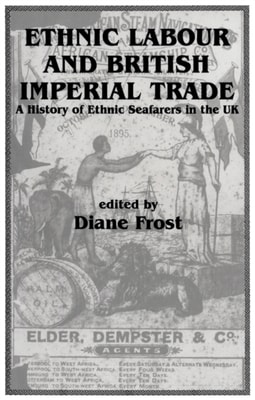
This collection of essays identifies a neglected but significant component of Britain's maritime and labour history, that of ethnic labour drawn from Britain's colonies in West Africa, the Middle East and Asia.
This collection of essays identifies a neglected but significant component of Britain's maritime and labour history, that of ethnic labour drawn from Britain's colonies in West Africa, the Middle East and Asia.
As small, open economies the Nordic states have always been more dependent on foreign trade than larger powers, and have thus had a historic preference for free trade.
As small, open economies the Nordic states have always been more dependent on foreign trade than larger powers, and have thus had a historic preference for free trade.