The Financial Image: Finance, Philosophy, and Contemporary Film draws on a broad range of narrative feature films, documentaries, and moving image installations in the US, Europe, and Asia.
The book illustrates financial markets from the point of view of their subjectivity, namely by analysing one of the most prominent figures among market operators: the speculator.
The Financial Image: Finance, Philosophy, and Contemporary Film draws on a broad range of narrative feature films, documentaries, and moving image installations in the US, Europe, and Asia.
The book illustrates financial markets from the point of view of their subjectivity, namely by analysing one of the most prominent figures among market operators: the speculator.
This book seeks to contribute a multi-dimensional, multi-layered and gendered approach to the illicit economy in the historiography of early modern Europe.
This book seeks to contribute a multi-dimensional, multi-layered and gendered approach to the illicit economy in the historiography of early modern Europe.
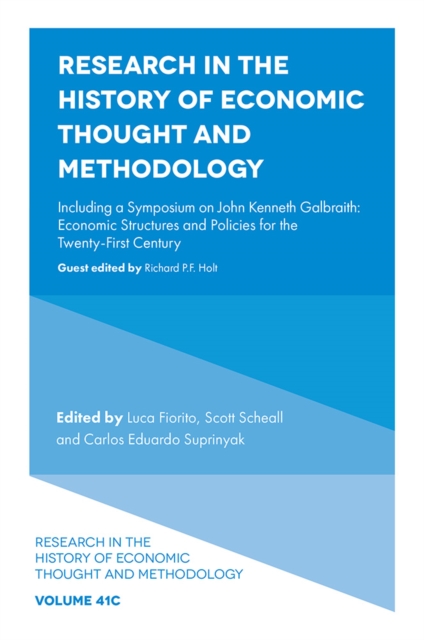
Research in the History of Economic Thought and Methodology (RHETM) is a book series dedicated to an interdisciplinary approach to a broad range of topics related to the history and methodology of economics.
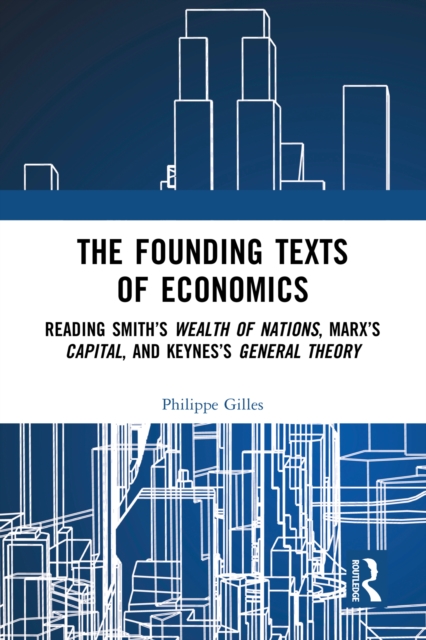
Smith's Wealth of Nations, Marx's Capital, and Keynes's General Theory are three paradigmatic texts which are foundational to any study of economics or political economy.
Smith's Wealth of Nations, Marx's Capital, and Keynes's General Theory are three paradigmatic texts which are foundational to any study of economics or political economy.
Research in the History of Economic Thought and Methodology (RHETM) is a book series dedicated to an interdisciplinary approach to a broad range of topics related to the history and methodology of economics.
First published in 1980, Wealth and The Wealthy in the Modern World looks at the careers of the very wealthy and the extent of wealth-holding and wealth distribution in the major Western nations since the Industrial Revolution.
La historia económica de España y muchos de los problemas actuales no se entienden sin la influencia de los grupos de presión y los pactos de sangre de las élites con el poder político.
First published in 1983, The Planned Economies of Eastern Europe provides a penetrating analysis of the Eastern European economies, beginning with an examination of the Soviet model on which they are based.
The emergence of coal-based fuel economy over the course of the nineteenth century was one of the most significant features of America's Industrial Revolution, but the transition from wood to mineral energy sources was a gradual one that transpired over a number of decades.
Featuring essays on topics ranging from the pandemic to antideflationist paranoia and the crisis of classical liberalism, this volume explores the various ways in which socialism statism is the 'deadliest virus' which constantly endangers the spontaneous process of social cooperation.
This anthology, drawn from the autobiographies of seven men and women whose lives span the nineteenth century, provides a rare glimpse of the everyday lives of workers in the age of early industrialization in France.
This anthology, drawn from the autobiographies of seven men and women whose lives span the nineteenth century, provides a rare glimpse of the everyday lives of workers in the age of early industrialization in France.
This book brings together world-renowned experts and rising scholars to provide a collection of chapters examining the long-term impact of historical events on modern-day economic and political developments in Latin America.
This book brings together world-renowned experts and rising scholars to provide a collection of chapters examining the long-term impact of historical events on modern-day economic and political developments in Latin America.
Drawing on debates about the religious nature and origins of contemporary European capitalism, this book argues for a distinction between a Northern/Protestant and a Southern/Catholic spirit of capitalism.
Japan is the great economic success story of the postwar period, growing at unprecedented rates to become one of the world's most advanced industrial nations.
Most mainstream economists view capitalism's periodic breakdowns as nothing more than temporary aberrations from an otherwise unbroken path toward prosperity.
The book explores the effect of modern technological shifts on human society, showing that technologies are undergoing accelerating qualitative changes that open up new opportunities for personal development and satisfaction of wants and, simultaneously, engender risks associated with growing opportunities of human interference with nature and technogenic stress on the environment.