Studienarbeit aus dem Jahr 2021 im Fachbereich BWL - Wirtschafts- und Sozialgeschichte, Note: 1,0, Katholische Universität Eichstätt-Ingolstadt, Sprache: Deutsch, Abstract: Zentrale Fragestellung dieser Arbeit ist es, die Kontinuitäten sowie Divergenzen der Frühsozialisten als ideelle Vorgänger mit den Ideen und den Theorien Marx und Engels zu untersuchen.
Leonid Hurwicz (1917-2008) was a major figure in modern theoretical economics whose contributions over sixty-five years spanned at least five areas: econometrics, nonlinear programming, decision theory, microeconomic theory, and mechanism design.
Leonid Hurwicz (1917-2008) was a major figure in modern theoretical economics whose contributions over sixty-five years spanned at least five areas: econometrics, nonlinear programming, decision theory, microeconomic theory, and mechanism design.
International Equilibrium and Bretton Woods brings together the papers presented at a special conference of the Organisation for Economic Co-operation and Development commemorating the 75th anniversary of the Bretton Woods Conference.
International Equilibrium and Bretton Woods brings together the papers presented at a special conference of the Organisation for Economic Co-operation and Development commemorating the 75th anniversary of the Bretton Woods Conference.
This book uncovers the history of the concession stand in American moviegoing, which was coined 'The Second Box Office' by trade press magazines in the 1930s, such was its importance to the economic viability of movie theatres.
This book uncovers the history of the concession stand in American moviegoing, which was coined 'The Second Box Office' by trade press magazines in the 1930s, such was its importance to the economic viability of movie theatres.
This book recenters the agrarian question within contemporary capitalism, examining social differentiation in rural societies through a rigorous historical-comparative lens.
This book examines merchant networks from the unique perspective of moving backward in time from a specific outcome-the founding of an American commission house in Brazil in the early 1800s-to uncover a century-and-a-half's worth of the transnational networking that led to its existence.
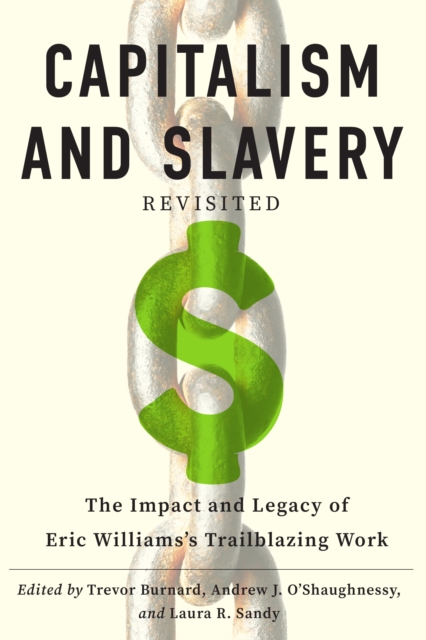
Reexamining a seminal work on British capitalism and Caribbean slavery and its continuing reverberations in the twenty-first centuryEric Williams's Capitalism and Slavery (1944), with its insightful and provocative theses about the relationship between Caribbean slavery and the growth of the British economy and the Industrial Revolution, has proved an enduring and controversial book.
Reexamining a seminal work on British capitalism and Caribbean slavery and its continuing reverberations in the twenty-first centuryEric Williams's Capitalism and Slavery (1944), with its insightful and provocative theses about the relationship between Caribbean slavery and the growth of the British economy and the Industrial Revolution, has proved an enduring and controversial book.
This book recenters the agrarian question within contemporary capitalism, examining social differentiation in rural societies through a rigorous historical-comparative lens.
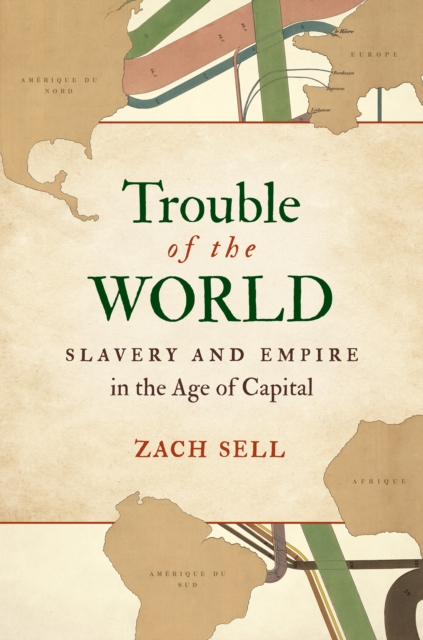
In this innovative new study, Zach Sell returns to the explosive era of capitalist crisis, upheaval, and warfare between emancipation in the British Empire and Black emancipation in the United States.
In this innovative new study, Zach Sell returns to the explosive era of capitalist crisis, upheaval, and warfare between emancipation in the British Empire and Black emancipation in the United States.
China has been an important player in the international economy for two thousand years and has historically exerted enormous influence over the development and nature of political and economic affairs in the regions beyond its borders, especially its neighbors.
This book examines merchant networks from the unique perspective of moving backward in time from a specific outcome-the founding of an American commission house in Brazil in the early 1800s-to uncover a century-and-a-half's worth of the transnational networking that led to its existence.
Ausgehend von einem mikropolitischen Ansatz und unter Einbezug der Shopfloor-Ebene hinterfragt der Band kritisch die Sozialpartnerschaft bei Bayer Leverkusen.
'A historically insightful read'Financial Times 'A wry, rollicking, and provocative history' Michael Taylor, author of The Interest'A thought-provoking analysis of Africa's relationship with economic imperialism' Astrid Madimba and Chinny Ukata, authors of It's A ContinentWe need to think differently about African economics.
Previous wage studies of the period before World War I found that real wages remained stable from 1890 to 1914 despite the continued growth of the economy.
A sequel to his Pulitzer Prize-winning Banks and Politics in America from the Revolution to the Civil War, this book by Bray Hammond focuses on how Washington struggled financially to settle the Civil War and how its measures spurred the growth of federal government.
Uprooted by the war, exposed to the full brunt of economic dislocation, and fearful of losing status in face of the growing might of big business and organized labor, the middle classes in Weimar Germany longed for a solution to their plight that neither the capitalism nor the socialism of their day could offer.
This study indicates that the agricultural production of Japan from 1873 to 1922 was higher than official records indicate, and that this higher rate of Japanese production was partially responsible for the swift economic growth of Japan.
This study of Albert Ballin, a powerful member of the banking and commercial elite in Imperial Germany and manager of the Hamburg-American Line from 1899-1918, illuminates the political and social structure of the aristocracy and the upper middle class in the German Empire.
This comprehensive account of the economic development of Spain, available for the first time in English, is generally regarded as a major achievement in Spanish historiography.
Raymond Goldsmith's book provides annual estimates of national wealth and its components for the period 1945-1958 in current and in constant (1947-1949) prices, and on a gross (undepreciated) and net (depreciated) basis.
A picture of a relentless drive for industrialization at the expense of living standards is presented in this authoritative comparison of the economic development of China in the Communist and pre-Communist periods.
In a remarkably lucid and flowing style, Loren Okroi analyzes the ideas of three leading reformer-critics in the United States and places their main arguments in the context of the economic, social, and political history of postwar America.
Before the Computer fully explores the data processing industry in the United States from its nineteenth-century inception down to the period when the computer became its primary tool.
The influential economist and philosopher Thorstein Veblen (1857-1929) was one of the most original and penetrating critics of American culture and institutions, and his work attracted and still attracts the attention of scholars from a wide range of political viewpoints and scholarly disciplines.
If any single characteristic differentiates current, neoclassical economics from the classical economics of Adam Smith and David Ricardo, it is the use of mathematics.
In 1900 the manufacture of rubber products in the United States was concentrated in several hundred small plants around New York and Boston that employed low-paid immigrant workers with no intervention from unions.
This book traces 300 years of sumo's economic and social history, examining how it survived and evolved through major historical upheavals including the Great Fire of Edo, the Meiji Restoration, and World War II.
This book traces 300 years of sumo's economic and social history, examining how it survived and evolved through major historical upheavals including the Great Fire of Edo, the Meiji Restoration, and World War II.