In the decades that followed World War II, cheap and plentiful oil helped to fuel rapid economic growth, ensure political stability, and reinforce the legitimacy of liberal democracies.
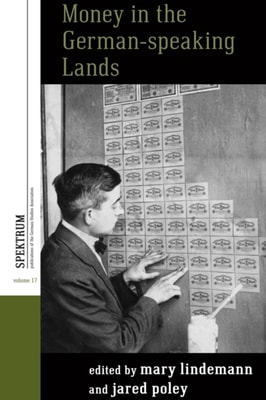
Money is more than just a medium of financial exchange: across time and place, it has performed all sorts of cultural, political, and social functions.
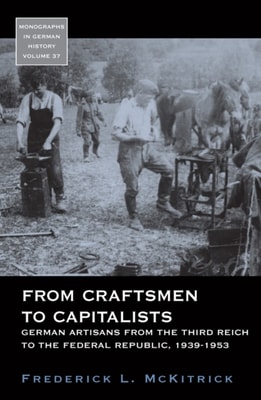
Politically adrift, alienated from Weimar society, and fearful of competition from industrial elites and the working class alike, the independent artisans of interwar Germany were a particularly receptive audience for National Socialist ideology.
A Financial Times Economics Book of the Year A brilliant narrative of early capitalism's most famous scandal, a speculative frenzy that nearly bankrupted the British state during the hot summer of 1720 and paradoxically led to the birth of modern finance.
Aglietta's path-breaking book is the first attempt at a rigorous historical theory of the whole development of US capitalism, from the Civil War to the Carter presidency.
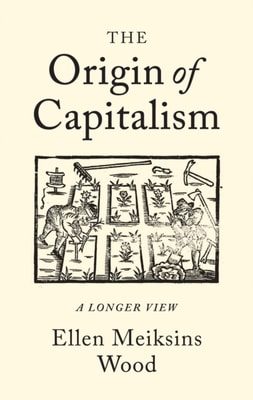
In The Origin of Capitalism, a now-classic work of history, Ellen Meiksins Wood offers readers a clear and accessible introduction to the theories and debates concerning the birth of capitalism, imperialism, and the modern nation state.
Companies that Changed the World tells the fascinating stories of 50 joint-stock companies - or companies based on that model - that have exerted a critical influence on the social and economic history of the past four hundred years.
This book provides a compelling exploration into the distinctive approaches East Asian scholars employ to articulate the peculiarities of Asia's modernity.
Analysing the relationship between economic thought and capitalism from 1750 to the present, Douglas Dowd examines the dynamic interaction of two processes: the historical realities of capitalism and the evolution of economic theory.
This is an important and unparalleled work which situated Marx's economic theory in relation to the economic theories that predate him - from mercantilism to John Stuart Mill.
This is an important and unparalleled work which situated Marx's economic theory in relation to the economic theories that predate him - from mercantilism to John Stuart Mill.
*Winner of International Studies Association (ISA)'s International Political Sociology Best Book Prize for 2017**Winner of British International Studies Association (BISA)'s International Political Economy Working Group Book Prize of 2016**Shortlisted for the ISA Book Prize* Mainstream historical accounts of the development of capitalism describe a process which is fundamentally European - a system that was born in the mills and factories of England or under the guillotines of the French Revolution.
*Winner of International Studies Association (ISA)'s International Political Sociology Best Book Prize for 2017**Winner of British International Studies Association (BISA)'s International Political Economy Working Group Book Prize of 2016**Shortlisted for the ISA Book Prize* Mainstream historical accounts of the development of capitalism describe a process which is fundamentally European - a system that was born in the mills and factories of England or under the guillotines of the French Revolution.
Research in the History of Economic Thought and Methodology is an annual research series which presents materials in two fields, both broadly considered: the history of economic thought and the methodology of economics.
This book provides a comprehensive analysis of Bhutan’s economic growth and productivity dynamics from 1990 to 2022, with a special focus on hydropower development.
In this collection of essays David A Dyker explores some of the most difficult and fascinating aspects of the process of transition from autocratic "e;real socialism"e; to a capitalism that is sometimes democratic, sometimes authoritarian.
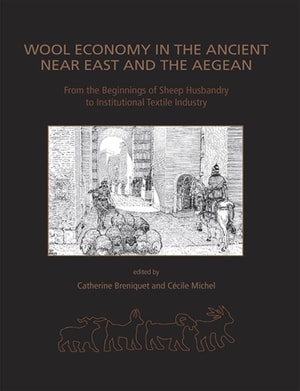
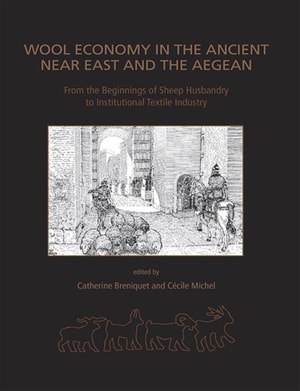
The history of the Ancient Near East covers a huge chronological frame, from the first pictographic texts of the late 4th millennium to the conquest of Alexander the Great in 333 BC.
The history of the Ancient Near East covers a huge chronological frame, from the first pictographic texts of the late 4th millennium to the conquest of Alexander the Great in 333 BC.
The analysis of silk is a fascinating topic for research in itself but here, focusing on the 9th and 10th centuries, Marianne Vedeler takes a closer look at the trade routes and the organization of production, trade and consumption of silk during the Viking Age.
The analysis of silk is a fascinating topic for research in itself but here, focusing on the 9th and 10th centuries, Marianne Vedeler takes a closer look at the trade routes and the organization of production, trade and consumption of silk during the Viking Age.
The forgotten majority of German merchants in London between the end of the Hanseatic League and the end of the Napoleonic Wars became the largest mercantile Christian immigrant group in the eighteenth century.
Over the past decade, the "e;German Model"e; of industrial organization has been the subject of vigorous debate among social scientists and historians, especially in comparison to the American one.
The story of the miners of Zonguldak presents a particularly graphic local lens through which to examine questions that have been of major concern to historians most prominently, the development of the state, the emergence of capitalism, and the role of the working classes in these large processes.
In the 19th Century, economic growth was accompanied by large-scale structural change, known as industrialization, which fundamentally affected western societies.
During the past decade, the role of Germany's economic elites under Hitler has once again moved into the limelight of historical research and public debate.
The Communist Party dictatorships in Hungary and East Germany sought to win over the masses with promises of providing for ever-increasing levels of consumption.
Relates charity movements to religious impulse, Enlightenment 'improvement' and the fears of the Protestant ruling elite that growing social problems, unless addressed, would weaken their rule.
Business historians and economic historians frequently contribute to our understanding of strategic management, and strategy scholars often rely on a deep understanding of historical context to make sense of classic strategy issues.
Britain's rise to global dominance from the 16th century owed as much to the vision and creativity of traders, industrialists and bankers as it did to wars of conquest fought by military men.