What the loans and defaults of a sixteenth-century Spanish king can tell us about sovereign debt todayWhy do lenders time and again loan money to sovereign borrowers who promptly go bankrupt?
In this volume, Albert Hirschman reconstructs the intellectual climate of the seventeenth and eighteenth centuries to illuminate the intricate ideological transformation that occurred, wherein the pursuit of material interests--so long condemned as the deadly sin of avarice--was assigned the role of containing the unruly and destructive passions of man.
How the fate of the Jews has been shaped by the development of capitalismThe unique historical relationship between capitalism and the Jews is crucial to understanding modern European and Jewish history.
The first global history of the middle class While the nineteenth century has been described as the golden age of the European bourgeoisie, the emergence of the middle class and bourgeois culture was by no means exclusive to Europe.
_______________'Enormously entertaining' - Sunday Times'Exhaustive and convincingly argued' - Observer'A complicated story well told, from which financial lessons emerge naturally' - Financial Times_______________A unique look at the financial world and its troubled history, from the disaster that befell Spain in the sixteenth century to the 2008 global financial crisisIn the sixteenth century, Spanish conquistadors discovered the New World.
The definitive biography of John Maynard Keynes, the most significant economic thinker of the world's most consequential century'A wonderfully lucid exposition of complicated ideas .
The first book of its kind: a fascinating and entertaining examination of hedge funds todayShortlisted for the Financial Times/Goldman Sachs Business Book of the Year Award'An enormously satisfying book: a gripping chronicle of the cutting edge of the financial markets and a fascinating perspective on what was going on in these shadowy institutions as the crash hit' ObserverWealthy, powerful, and potentially dangerous, hedge-find managers have emerged as the stars of twenty-first century capitalism.
In September 2008 the Lehman Brothers bankruptcy ignited panic throughout the financial system, sparking a chain reaction that led to the worst global economic crisis since the Great Depression.
In September 2008 the Lehman Brothers bankruptcy ignited panic throughout the financial system, sparking a chain reaction that led to the worst global economic crisis since the Great Depression.
"e;Economists agree about many things--contrary to popular opinion--but the majority agree about culture only in the sense that they no longer give it much thought.
The untold story of how FDR did the unthinkable to save the American economyThe American economy is strong in large part because nobody believes that America would ever default on its debt.
From the point of view of economic history, the ideal way to study any institution of commercial law would be to compare the information contained in legal codes and treatises with the material relating to its application in economic life as manifested by actual contracts, letters, and business records found in archives and other repositories.
International trade has shaped the modern world, yet until now no single book has been available for both economists and general readers that traces the history of the international economy from its earliest beginnings to the present day.
Assembling contributions from top thinkers in the field, this companion offers a comprehensive and sophisticated exploration of the history of economic thought.
This history of coiffure in modern France illuminates a host of important twentieth-century issues: the course of fashion, the travails of small business in a modern economy, the complexities of labour reform, the failure of the Popular Front, the temptations of Petainism, all accompanied by a parade of waves, chignons, and curls.
This new edition of a classic feminist book explains how one of the great historical revolutions - the ongoing movement toward equality between the sexes - has come about.
Price theory has provided solutions to myriad problems affecting society without invoking any precepts beyond those encapsulated in the standard economic postulate.
Korea, one of the original 'Tiger Economies', experiences a traumatic and largely unanticipated economic crisis in 1997-98 from which the country is still recovering.
In the early postwar era, Britain enjoyed a very close economic relationship with Australia and New Zealand through their common membership of the Sterling Area and the Commonwealth Preference Area.
This book is the first to challenge current orthodoxy that Chamberlain's appeasement policy before World War Two was justified by Britain's inability to pay for rearmament.
This book presents a penetrating new analysis of the end of the empire, located at the intersection of politics, economy and society in Britain and the colonies.
This volume is concerned with the development of business and economic relations between Britain and Japan from the early seventeenth century up to the late twentieth century.
Longlisted for the Financial Times and Schroders Business Book of the Year AwardA novel economic interpretation of how religions have become so powerful in the modern worldReligion in the twenty-first century is alive and well across the world, despite its apparent decline in North America and parts of Europe.
How to sustain an international system of cooperation in the midst of geopolitical struggleCan the international economic and legal system survive today's fractured geopolitics?
The Classical Economists Revisited conveys the extent, diversity, and richness of the literature of economics produced in the period extending from David Hume's Essays of 1752 to the final contributions of Fawcett and Cairnes in the 1870s.
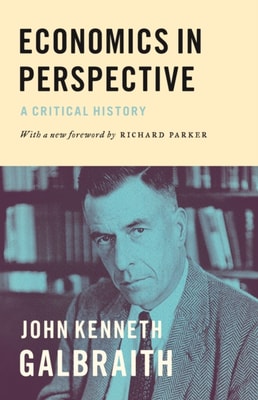
In Economics in Perspective, renowned economist John Kenneth Galbraith presents a compelling and accessible history of economic ideas, from Aristotle through the twentieth century.
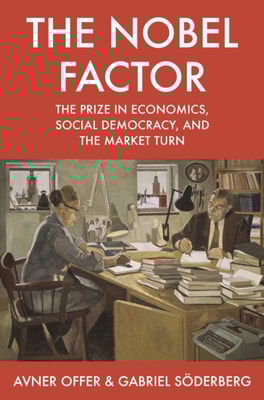
How the creation of the Nobel Prize in Economics changed the economics profession, Sweden, and the worldEconomic theory may be speculative, but its impact is powerful and real.
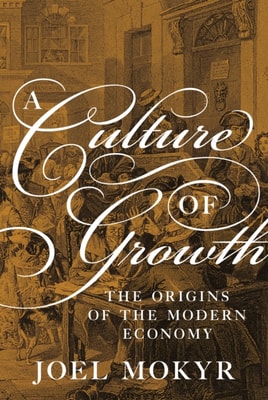
From Nobel Prizewinning economist Joel Mokyr, a revealing look at why Enlightenment culture sparked the Industrial RevolutionDuring the late eighteenth century, innovations in Europe triggered the Industrial Revolution and the sustained economic progress that spread across the globe.
How American industries rose to dominate the economic landscape in the twentieth centuryFor much of the twentieth century, American corporations led the world in terms of technological progress.
Brazil is the world's sixth-largest economy, and for the first three-quarters of the twentieth century was one of the fastest-growing countries in the world.