Governmentality, Biopower, and Everyday Life synthesizes and extends the disparate strands of scholarship on Foucault's notions of governmentality and biopower and grounds them in familiar social contexts including the private realm, the market, and the state/military.
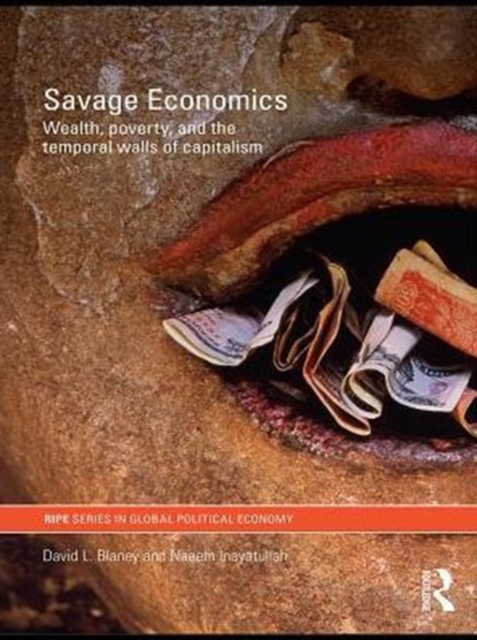
The global economy is dominated by a powerful set of established and emerging capitalisms, from the long-standing capitalist economies of the West to the rising economies of the BRIC (Brazil, Russia, India and China) countries.
The global economy is dominated by a powerful set of established and emerging capitalisms, from the long-standing capitalist economies of the West to the rising economies of the BRIC (Brazil, Russia, India and China) countries.
Divided into four parts and comprising Tarek Heggy's writings on the Egyptian mind, this volume makes an attempt to diagnose the illnesses of contemporary Egyptian political and socio-economic actuality and prescribe two solutions: a liberal political system and a modern market economy.
Divided into four parts and comprising Tarek Heggy's writings on the Egyptian mind, this volume makes an attempt to diagnose the illnesses of contemporary Egyptian political and socio-economic actuality and prescribe two solutions: a liberal political system and a modern market economy.
For this important selection from Weber, sections of text from Weber's major works (Gesammelte, Aufsatze Zur Religionssoziologie, including The Protestant Ethic and the Spirit of Capitalism; General Economic History; and The Agrarian Sociology of Ancient Civilisations) have been carefully edited and substantially translated to form a coherent and integrated volume.
For this important selection from Weber, sections of text from Weber's major works (Gesammelte, Aufsatze Zur Religionssoziologie, including The Protestant Ethic and the Spirit of Capitalism; General Economic History; and The Agrarian Sociology of Ancient Civilisations) have been carefully edited and substantially translated to form a coherent and integrated volume.
This book concentrates upon the historic associations of the marketplace in the work of Aristotle, Adam Smith, Karl Marx, and demonstrates how what markets were imagined to entail for society was critical to each author's understanding of the central social problems of their time.
This book concentrates upon the historic associations of the marketplace in the work of Aristotle, Adam Smith, Karl Marx, and demonstrates how what markets were imagined to entail for society was critical to each author's understanding of the central social problems of their time.
This book was written with the purpose of analyzing the challenges faced by the post-apartheid government in South Africa with regard to reform of higher education.
This book was written with the purpose of analyzing the challenges faced by the post-apartheid government in South Africa with regard to reform of higher education.
This innovative book challenges the most powerful and pervasive ideas concerning political economy, international relations, and ethics in the modern world.
This innovative book challenges the most powerful and pervasive ideas concerning political economy, international relations, and ethics in the modern world.
Fascism and Political Theory offers both students and researchers a thematic analysis of fascism, focusing on the structural and ideological links between fascism, capitalism and modernity.
Fascism and Political Theory offers both students and researchers a thematic analysis of fascism, focusing on the structural and ideological links between fascism, capitalism and modernity.
Neoliberalism is based on the systematic use of state power to impose, under the veil of 'non-intervention', a hegemonic project of recomposition of capitalist rule in most areas of social life.
Neoliberalism is based on the systematic use of state power to impose, under the veil of 'non-intervention', a hegemonic project of recomposition of capitalist rule in most areas of social life.
Based upon distinguishing capitalism from other economic systems, as well as analysis of capitalist change across its stages of development, Richard Westra argues that the economic tendencies we refer to as globalization constitute a world historic transition away from capitalism.
Based upon distinguishing capitalism from other economic systems, as well as analysis of capitalist change across its stages of development, Richard Westra argues that the economic tendencies we refer to as globalization constitute a world historic transition away from capitalism.
The romantic comedy has long been regarded as an inferior film genre by critics and scholars alike, accused of maintaining a strict narrative formula which is considered superficial and highly predictable.
The romantic comedy has long been regarded as an inferior film genre by critics and scholars alike, accused of maintaining a strict narrative formula which is considered superficial and highly predictable.
From his early economic works on, Marx conceived the labour of any kind of society as a set of production activities and analysed the historical modes of production as specific ways of distributing and exchanging these activities.
From his early economic works on, Marx conceived the labour of any kind of society as a set of production activities and analysed the historical modes of production as specific ways of distributing and exchanging these activities.
Following the publication of the seminal Fear of Freedom, Erich Fromm applied his unique vision to a critique of contemporary capitalism in The Sane Society.
Following the publication of the seminal Fear of Freedom, Erich Fromm applied his unique vision to a critique of contemporary capitalism in The Sane Society.
First published in 1985, Theories of Modern Capitalism provides a succinct study of Marxist and non-Marxist theories of Capitalism, its recent development, and the prospects of a transition to socialism.
This collection draws together a distinguished group of authors to explore how capitalism contributes to the development and underdevelopment of the Third World.
This collection draws together a distinguished group of authors to explore how capitalism contributes to the development and underdevelopment of the Third World.
This book throws light onto the nature and causes of three different but strongly interconnected crises in contemporary societies worldwide: an economic crisis, an ecological crisis and a normative (moral and political) crisis.