The development and use of the atomic bombs at Hiroshima and Nagasaki number among the formative national experiences for both Japanese and Americans as well as for 20th-century Japan-US relations.
This is the second volume in the author's ongoing inquiry into the extent of income inequality in the East European socialist countries and the effect of market-oriented reforms on patterns of income distribution.
This is the second volume in the author's ongoing inquiry into the extent of income inequality in the East European socialist countries and the effect of market-oriented reforms on patterns of income distribution.
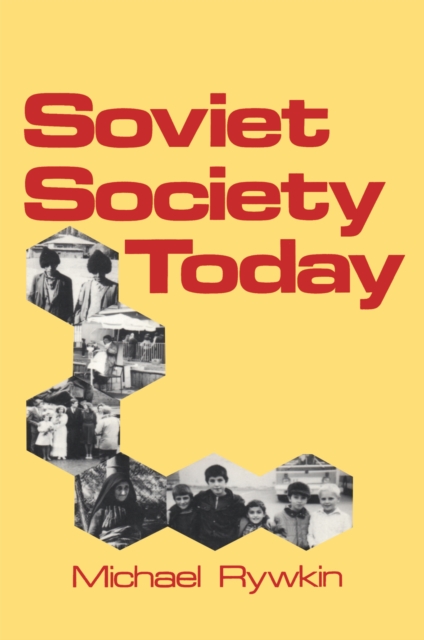
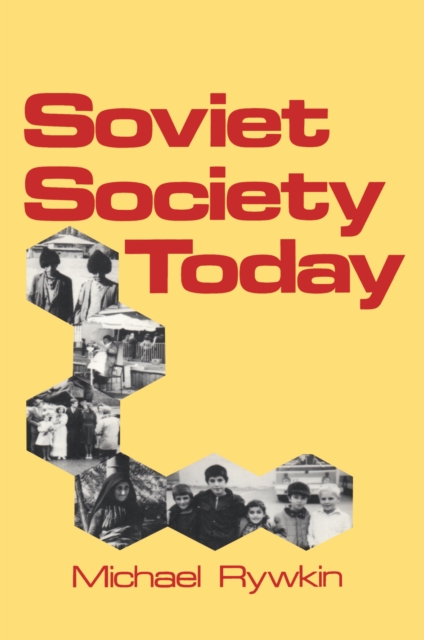
A systematic overview of life in the Soviet Union, this book includes chapters on the territorial divisions and ethnic composition of the country; the governmental and party system; Russian and minority cultures; the family; education; health care; sports; military service; classes and social privilege; poverty; prices and wages; the economic system, work, and the standard of living.
A systematic overview of life in the Soviet Union, this book includes chapters on the territorial divisions and ethnic composition of the country; the governmental and party system; Russian and minority cultures; the family; education; health care; sports; military service; classes and social privilege; poverty; prices and wages; the economic system, work, and the standard of living.
Celebrating twenty years of transition from socialism to capitalism, this book is designed to be the core textbook for undergraduate courses in transition economics and comparative economic systems.
Celebrating twenty years of transition from socialism to capitalism, this book is designed to be the core textbook for undergraduate courses in transition economics and comparative economic systems.
This volume compares the planning of economic conditions under the very different political systems of Soviet Russia, Fascist Germany and Italy and Democratic America, with some discussion of partial economic planning in Great Britain.
This volume compares the planning of economic conditions under the very different political systems of Soviet Russia, Fascist Germany and Italy and Democratic America, with some discussion of partial economic planning in Great Britain.
First published in 1983, this important and stimulating book is a thoughtful contribution to the debate about the first steps that needed to be taken to build a socialist society in the 1980s.
First published in 1983, this important and stimulating book is a thoughtful contribution to the debate about the first steps that needed to be taken to build a socialist society in the 1980s.
Class Theory and History takes an ambitious and ground-breaking look at the entire history of the Soviet Union and presents a new kind of analysis of the history of the USSR: examining its birth, evolution, and death in class terms.
Class Theory and History takes an ambitious and ground-breaking look at the entire history of the Soviet Union and presents a new kind of analysis of the history of the USSR: examining its birth, evolution, and death in class terms.
First published in 1979, Political Economy and Soviet Socialism is an integrated selection of papers written over the past 12 years of Russian history, which offers a unique insight into some important and controversial issues.
First published in 1979, Political Economy and Soviet Socialism is an integrated selection of papers written over the past 12 years of Russian history, which offers a unique insight into some important and controversial issues.
First published in 1973, Efficiency Criteria for Nationalised Industries asks by what criteria we should judge the efficiency of nationalised industries, what we mean by saying they should be run commercially and where the public interest should lie.
First published in 1973, Efficiency Criteria for Nationalised Industries asks by what criteria we should judge the efficiency of nationalised industries, what we mean by saying they should be run commercially and where the public interest should lie.
First published in 1961, The Soviet Economy is a well informed work which seeks to acquaint students with the structure and problems of the economy of the USSR.
First published in 1961, The Soviet Economy is a well informed work which seeks to acquaint students with the structure and problems of the economy of the USSR.
The reasons, methods, and outcomes of system change in general, and in Russia and Eastern Europe in particular are analyzed, using the analytical apparatus developed in the monograph.
The reasons, methods, and outcomes of system change in general, and in Russia and Eastern Europe in particular are analyzed, using the analytical apparatus developed in the monograph.
Examines the nature and the mode of operation of the centrally planned economy, assessing its strengths and the weaknesses that eventually led to its demise.
Examines the nature and the mode of operation of the centrally planned economy, assessing its strengths and the weaknesses that eventually led to its demise.
Analyses the main institutional and policy determinants of the foreign trade behaviour of a centrally planned economy and studies factors that affect the level and pattern of foreign trade.
Analyses the main institutional and policy determinants of the foreign trade behaviour of a centrally planned economy and studies factors that affect the level and pattern of foreign trade.
First published in 1987, this is an analysis of the contemporary breakdown of political and economic systems within the Eastern European communist countries.
First published in 1987, this is an analysis of the contemporary breakdown of political and economic systems within the Eastern European communist countries.