In this 37th issue of the Research in Political Economy series, Jan Toporowski and leading experts offer a unique and insightful overview of Polish Marxism after Luxemburg, serving as an introduction to some key themes and the ideas of several Polish political economists.
COVID-19 in the African Continent examines the development, achievements, and challenges that have resulted owing to COVID-19 pandemic and how these precarious socioeconomic situations are being managed in African countries.
COVID-19 in the African Continent examines the development, achievements, and challenges that have resulted owing to COVID-19 pandemic and how these precarious socioeconomic situations are being managed in African countries.
Advances in Mergers and Acquisitions stands out from the competition due to its focus on three key characteristics: studies from scholars in different countries, with different research questions, relying on different theoretical perspective.
Advances in Mergers and Acquisitions stands out from the competition due to its focus on three key characteristics: studies from scholars in different countries, with different research questions, relying on different theoretical perspective.
The global health crisis, exacerbated by the COVID-19 outbreak, has challenged all sectors of society, including health, economics, finance, and social inequality.
The global health crisis, exacerbated by the COVID-19 outbreak, has challenged all sectors of society, including health, economics, finance, and social inequality.
Current political discourse emphasizes the globalized nature of security threats, and focusing on Latin America, this book identifies local complexities of Human Security.
In recent decades, the mainstream microeconomic and macroeconomic analysis was proven to be insufficient for exploring the dynamic and complex interactions among humans, institutions, and nature in our real economy.
Empirical Research in Banking and Corporate Finance is the 21st volume of Advances in Financial Economics and deals with International Corporate Governance.
Empirical Research in Banking and Corporate Finance is the 21st volume of Advances in Financial Economics and deals with International Corporate Governance.
In this revised and expanded edition of Long Waves of Capitalist Development, Ernest Mandel seeks to explain the underlying determinants of the booms and slumps of the trade cycle.
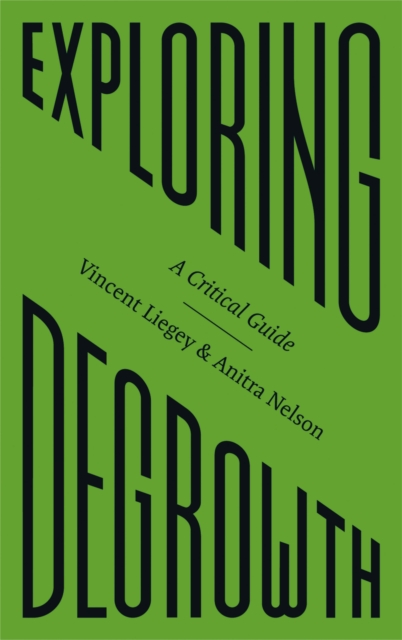
Degrowth in tourism is the voluntary shift to rebuild destinations and local economies in a way in which consumption, production and the exploitation of resources are minimal.
Degrowth in tourism is the voluntary shift to rebuild destinations and local economies in a way in which consumption, production and the exploitation of resources are minimal.
A defining work of Econophysics, republished for the first time since 1983, Laws of Chaos is an attempt to construct a non-deterministic theoretical framework for the foundations of political economy.
New Developments in Islamic Economics: Examples from Southeast Asia investigates the latest developments in a vibrantand fast-moving area of practical financial and economic study.
New Developments in Islamic Economics: Examples from Southeast Asia investigates the latest developments in a vibrantand fast-moving area of practical financial and economic study.
Platform Economics tackles head on the rhetoric surrounding the so-called "e;sharing economy"e;, which has muddied public debate and has contributed to a lack of policy and regulatory intervention.
Platform Economics tackles head on the rhetoric surrounding the so-called "e;sharing economy"e;, which has muddied public debate and has contributed to a lack of policy and regulatory intervention.
Richard Mattessich's Accounting and Analytical Methods (1964) and Yuji Ijiri's Theory of Accounting Measurement (1975) are two classic works of American accounting literature written by eminent scholars.
Richard Mattessich's Accounting and Analytical Methods (1964) and Yuji Ijiri's Theory of Accounting Measurement (1975) are two classic works of American accounting literature written by eminent scholars.
Stigma is a corrosive social force by which individuals and communities throughout history have been systematically dehumanised, scapegoated and oppressed.
Stigma is a corrosive social force by which individuals and communities throughout history have been systematically dehumanised, scapegoated and oppressed.
Yugoslavia's twentieth-century bore witness to civil war, sharp ideological struggles and a series of 'partisan ruptures'; revolutionary events that changed the face of Yugoslavian society, politics and culture, which were felt on a global level.
Artistic labour was exemplary for Utopian Socialist theories of 'attractive labour', and Marxist theories of 'nonalienated labour', but the rise of the anti-work movement and current theories of 'fully automated luxury communism' have seen art topple from its privileged place within the left's political imaginary as the artist has been reconceived as a prototype of the precarious 24/7 worker.
'Fleming's books are sparklingly sardonic and hilariously angry' - GuardianThere is a strong link between the neoliberalisation of higher education over the last 20 years and the psychological hell now endured by its staff and students.
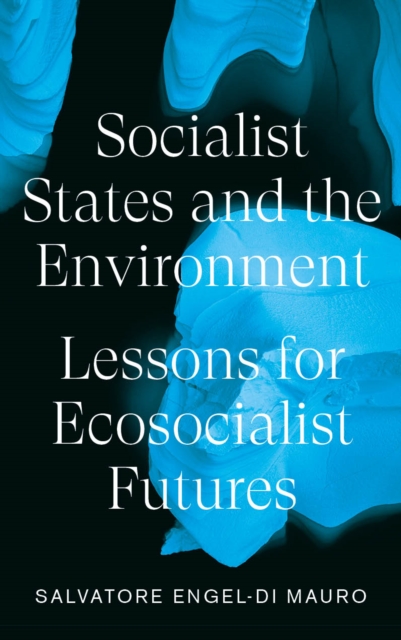
More than thirty years after the collapse of the USSR, the critique of state socialism is still used to deny alternatives to capitalism, irrespective of global capitalist ecological and social devastation.
Amidst waves of economic crises, health crises, class struggle and neo-fascist reaction, few possess the clarity and foresight of world-renowned theorist, David Harvey.
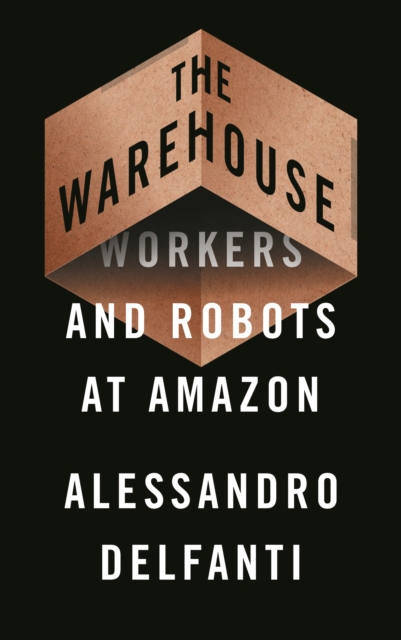
**Winner of the UALE Book Award 2021**Amazon is the most powerful corporation on the planet and its CEO, Jeff Bezos, has become the richest person in history, and one of the few people to profit from a global pandemic.
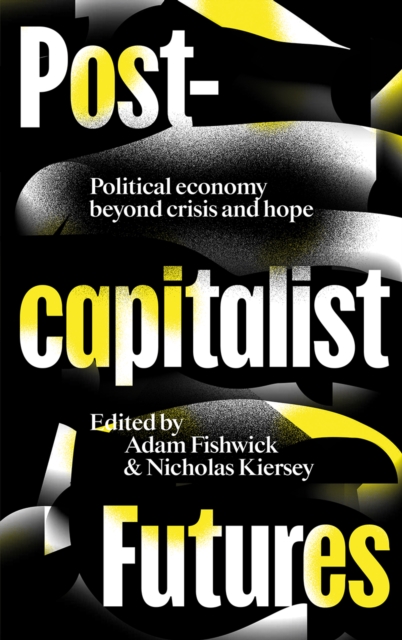
This book critically engages with the proliferation of literature on postcapitalism, which is rapidly becoming an urgent area of inquiry, both in academic scholarship and in public life.
Until now, the growing body of work on environmental anthropology has largely ignored the unavoidable impact of global capitalism on the environment and the extent to which capital itself is a key driver of climate change.