Written as a wake-up call to the field of media studies, The Message is Murder analyses the violence bound up in the everyday functions of digital media.
Considered by many to be the most innovative British Marxist writer of the twentieth century, Christopher Caudwell was killed in the Spanish Civil War at the age of 29.
Privatising Justice takes a broad historical view of the role of the private sector in the British state, from private policing and mercenaries in the eighteenth century to the modern rise of the private security industry in armed conflict, policing and the penal system.
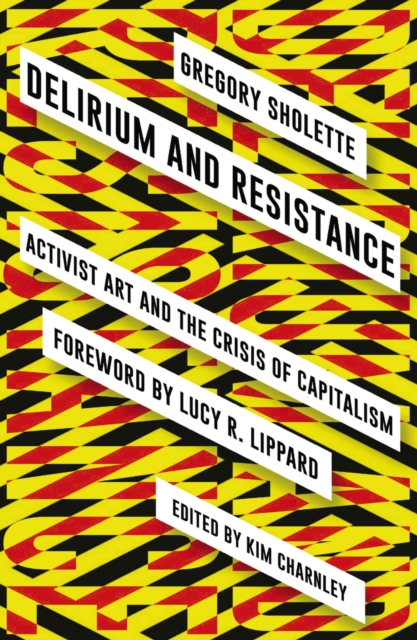
In the aftermath of the 2016 US elections, Brexit, and a global upsurge of nationalist populism, it is evident that the delirium and the crisis of neoliberal capitalism is now the delirium and crisis of liberal democracy and its culture.
We imagine that art and money are old enemies, but this myth actually reproduces a violent system of global capitalism and prevents us from imagining and building alternatives.
From industrialisation to the present day, Overripe Economy is a genealogy of the emergence of a finance-ridden, authoritarian, austerity-plagued American capitalism.
Business schools are institutions which, a decade after the financial crash, continue to act as loudspeakers for neoliberal capitalism with all its injustices and planetary consequences.
This practical introduction explains the field of Blockchain Economics, the economic models emerging with the implementation of distributed ledger technology.
Brazil is the world's sixth largest economy, has played a key role as one of the 'pink wave' administrations in Latin America, and was also responsible for wrecking the US-sponsored proposal for a Free Trade Area of the Americas.
Analysing the relationship between economic thought and capitalism from 1750 to the present, Douglas Dowd examines the dynamic interaction of two processes: the historical realities of capitalism and the evolution of economic theory.
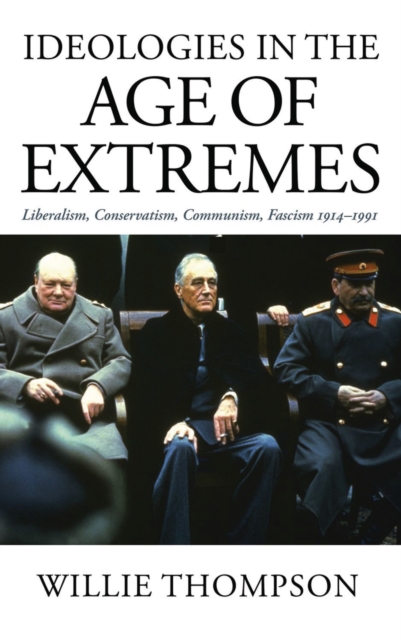
This is a history of political ideologies during the period from the First World War to the collapse of the Soviet Union, famously described by Eric Hobsbawm as 'The Age of Extremes'.
In the light of the deepening crisis of capitalism and continued non-Western capitalist accumulation, Henry Heller re-examines the debates surrounding the transition from feudalism to capitalism in Europe and elsewhere.
In this collection of essays David A Dyker explores some of the most difficult and fascinating aspects of the process of transition from autocratic "e;real socialism"e; to a capitalism that is sometimes democratic, sometimes authoritarian.
Islamist capital accumulation has split the Turkish bourgeoisie and polarized Turkish society into secular and religious social groupings, giving rise to conflicts between the state and political Islam.
The all-encompassing embrace of world capitalism at the beginning of the twenty-first century was generally attributed to the superiority of competitive markets.
Today, when it seems like everything has been privatized, when austerity is too often seen as an economic or political problem that can be solved through better policy, and when the idea of moral values has been commandeered by the right, how can we re-imagine the forces used as weapons against community, solidarity, ecology and life itself?