First published in 1997 in the wake of the fall of the Soviet Union and its agricultural policies, these editors presented a series of ten related articles on the transition to post-communist, more privatised agricultural policies, each specialising in a specific region of Central and Eastern Europe.
First published in 1997 in the wake of the fall of the Soviet Union and its agricultural policies, these editors presented a series of ten related articles on the transition to post-communist, more privatised agricultural policies, each specialising in a specific region of Central and Eastern Europe.
Capitalism and Classical Social Theory offers a rigorous introduction to classical social theory, highlighting the enduring relevance of classical works for understanding the many crises of the contemporary world.
First published in 1997 in the wake of the collapse of the Soviet Union, this volume examines the situation of Russian managers in the transition to a more capitalist and democratic system.
First published in 1997 in the wake of the collapse of the Soviet Union, this volume examines the situation of Russian managers in the transition to a more capitalist and democratic system.
First published in 1999, this volume features articles from specialists in finance on the economic transformation of Poland from a planned approach to a market-based system after the advent of Post-Communist Europe.
First published in 1999, this volume features articles from specialists in finance on the economic transformation of Poland from a planned approach to a market-based system after the advent of Post-Communist Europe.
First published in 1998, this volume focuses on the special category of countries popularly referred to as 'transition economies' through an analysis of small and medium sized enterprises (SMEs) and their role in Asian economies, with a view to assessing whether they could or should provide a model for African countries.
First published in 1998, this volume focuses on the special category of countries popularly referred to as 'transition economies' through an analysis of small and medium sized enterprises (SMEs) and their role in Asian economies, with a view to assessing whether they could or should provide a model for African countries.
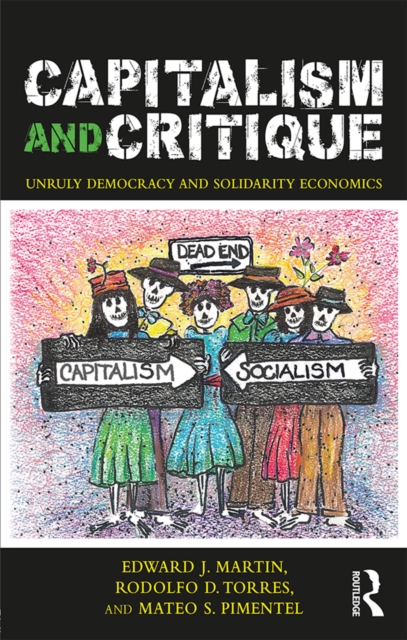
While there are signs of recovery from recent economic collapses, relatively few protective measures are in place in the United States to prevent future crises and widespread destruction of livelihoods around the globe.
While there are signs of recovery from recent economic collapses, relatively few protective measures are in place in the United States to prevent future crises and widespread destruction of livelihoods around the globe.
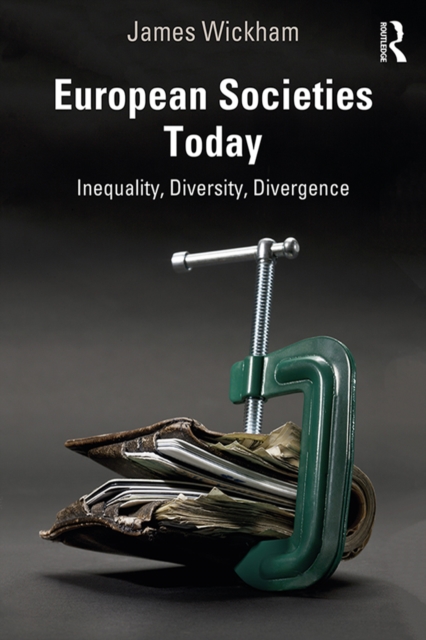
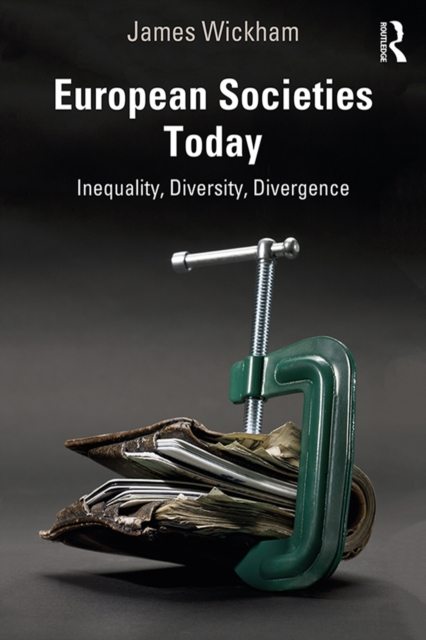
This accessible new text introduces students to contemporary European societies by examining structures of inequality, making sense of the empirical and historical contexts.
This accessible new text introduces students to contemporary European societies by examining structures of inequality, making sense of the empirical and historical contexts.
This title was first published in 1964: The purpose of the present study is to examine the issues involved in designing an efficient economic system in given historical circumstances.
An analysis of the PRC's current economic problems and a critical evaluation of the nation's efforts to solve them, this book brings together papers and speeches by Xue Muqiao, one of China's most prominent economists and one of its key spokesmen for liberal economic reform.
In February 1978, the post-Mao leadership revealed an ambitious ten-year program (1976-1985) with a $600 million capital outlay, aimed at propelling China into the front ranks of the industrialized nations by the year 2000 through the modernization of agriculture, industry, science and technology, and defense.
For the past twenty-five years, the United States has undergone a retrogression in its socioeconomic policies-facilitated and supported by most economists-thanks to the steady drumbeat of arguments by entrepreneurs and politicians who celebrate the free market for anything and everything and who advocate, among other follies, balanced budgets and r
This book, a trenchant analysis of schooling within the capitalist world system, where educational reforms are directed to the satisfaction of the business community, military industrial complex, and corporate sector, is a work combating injustice and authoritarianism prevalent in the Americas.
This book explores whether the Sandinista 'mixed economy'-a 'transitional' mixed economy-could have been stable if the Sandinistas had been able to pursue their industrialization strategy for a longer period of time.
The author discusses the traditional system of management of the economy as it existed in the early 1950s in the USSR and goes on to deal with the reforms of the 1960s and of the 1980s, country by country.
In contrasting the economic developments in the Soviet Union, in Poland, Cuba, Yugoslavia, Hungary, and China, this book evaluates the pressures and constraints of systemic changes in different types of socialist economies.
The contributors to this volume analyze the general problems of economic transition in countries of the former Eastern bloc: changing the ownership structure, abolishing the command economy, and integrating with the world economy.
The authors compare the ideologies of the free-market with religious faith, giving the World Bank the role of a secular church setting out to convert the world's underdeveloped economies to the consumer capitalist way, and so to create an enormous secular empire.
An analysis of the PRC's current economic problems and a critical evaluation of the nation's efforts to solve them, this book brings together papers and speeches by Xue Muqiao, one of China's most prominent economists and one of its key spokesmen for liberal economic reform.
In February 1978, the post-Mao leadership revealed an ambitious ten-year program (1976-1985) with a $600 million capital outlay, aimed at propelling China into the front ranks of the industrialized nations by the year 2000 through the modernization of agriculture, industry, science and technology, and defense.
This book, a trenchant analysis of schooling within the capitalist world system, where educational reforms are directed to the satisfaction of the business community, military industrial complex, and corporate sector, is a work combating injustice and authoritarianism prevalent in the Americas.
For the past twenty-five years, the United States has undergone a retrogression in its socioeconomic policies-facilitated and supported by most economists-thanks to the steady drumbeat of arguments by entrepreneurs and politicians who celebrate the free market for anything and everything and who advocate, among other follies, balanced budgets and r
The contributors to this volume analyze the general problems of economic transition in countries of the former Eastern bloc: changing the ownership structure, abolishing the command economy, and integrating with the world economy.
This book explores whether the Sandinista 'mixed economy'-a 'transitional' mixed economy-could have been stable if the Sandinistas had been able to pursue their industrialization strategy for a longer period of time.
The author discusses the traditional system of management of the economy as it existed in the early 1950s in the USSR and goes on to deal with the reforms of the 1960s and of the 1980s, country by country.