Although consumption of spirits on a global scale is vast, the spirits industry derives its profits from a relatively small number of countries and product lines.
Analysing the relationship between economic thought and capitalism from 1750 to the present, Douglas Dowd examines the dynamic interaction of two processes: the historical realities of capitalism and the evolution of economic theory.
"e;The Social Science of Hayek's 'The Sensory Order'"e; systematically examines the relevance and significance of Hayek's cognitive psychology for economics and social science, and is the only publication of its kind to do so.
Increasingly, economists have acknowledged that a major limitation to economic theory has been its failure to incorporate human values and beliefs as motivational factors.
The cognitive sciences, having emerged in the second half of the twentieth century, are recently experiencing a spectacular renewal which cannot leave unaffected any discipline that deals with human behavior.
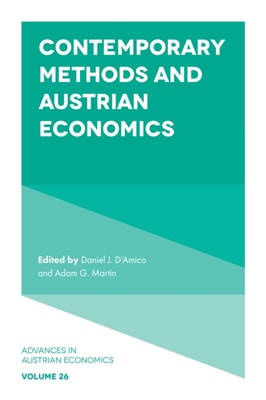
The Austrian tradition in economic thought had a profound influence on the development of post-war economics including neoclassical orthodoxy, game theory, public choice, behavioral economics, experimental economics and complexity economics.
"e;Bayesian Econometrics"e; illustrates the scope and diversity of modern applications, reviews some recent advances, and highlights many desirable aspects of inference and computations.
Volume 16 of "e;Research on Economic"e; contains a selection of thirteen papers from the Second Biannual Meeting of the Society for the Study of Economic Inequality, Berlin, July, 2007.
Debunking Economics exposes what many non-economists may have suspected and a minority of economists have long known: that economic theory is not only unpalatable, but also plain wrong.
The structure and regulation of consumption and demand has recently become of great interest to sociologists and economists alike, and at the same time there is growing interest in trying to understand the patterns and drivers of technological innovation.
The general assumption that social policy should be utilitarian--that society should be organized to yield the greatest level of welfare--leads inexorably to increased government interventions.
The collection includes refereed articles on topics in economic methodology and the history of economics, including Austrian economic methodology and Wesley Mitchell.
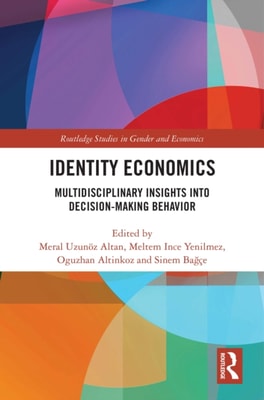
Critics contend that identity economics overemphasizes social identities as drivers of economic activity, potentially obscuring other elements including personal preferences, incentives, and market pressures.
In this revelatory book, Callum Roberts uses his lifetime's experience working with the oceans to show why they are the most mysterious places on earth, their depths still largely unexplored.
Paul Krugman, winner of the 2008 Nobel Prize in economics, shows how today's crisis parallels the events that caused the Great Depression - and explains what it will take to avoid catastrophe.
Economics and the Left presents interviews with 24 leading progressive economists, whose life work has been dedicated to both interpreting the world and changing it for the better.
Silicon Valley titans, politicians, techno-futurists and social critics have united in arguing that we are living on the cusp of an era of rapid technological automation, heralding the end of work as we know it.
Volume 40C of Research in the History of Economic Thought and Methodology features a symposium on the work of the controversial French economist Francois Perroux, edited by Katia Caldari and Alexandre Mendes Cunha, and a collection of book reviews of David M.
Volume 40C of Research in the History of Economic Thought and Methodology features a symposium on the work of the controversial French economist Francois Perroux, edited by Katia Caldari and Alexandre Mendes Cunha, and a collection of book reviews of David M.
The centerpiece of Volume 40B of Research in the History of Economic Thought and Methodology is a symposium on the work of William Baumol, edited by Erwin Dekker.
The centerpiece of Volume 40B of Research in the History of Economic Thought and Methodology is a symposium on the work of William Baumol, edited by Erwin Dekker.
Volume 40A of Research in the History of Economic Thought and Methodology features a symposium on the work of the radical economist David Gordon, edited by our own Luca Fiorito and featuring contributions from Nancy Breen, Richard McGahey, Robert Pollin, and Jim Stanford.
Volume 40A of Research in the History of Economic Thought and Methodology features a symposium on the work of the radical economist David Gordon, edited by our own Luca Fiorito and featuring contributions from Nancy Breen, Richard McGahey, Robert Pollin, and Jim Stanford.