Treating the market as a complex social category, and not just as a purely economic phenomenon, this book presents two frameworks for analyzing the market in relation to society.
Knowledge about the magnitude of the cost of capital invested in an asset and its determinants is essential for the analysis of corporate investment decisions and for assessing profitability.
The effective use of development economic theories in practice is limited, the authors contend, by the lack of explicit criterion for judging their scientific content.
From belligerent to neutral countries, the civilian war economy that developed from 1939 to 1945 created the foundations for the postwar welfare state.
Project Society After Money is an interdisciplinary project between commons theory, evolutionary political economy, media studies and sociology, that enter into a dialogue with one another in order to look at their specific theories and criticisms of money.
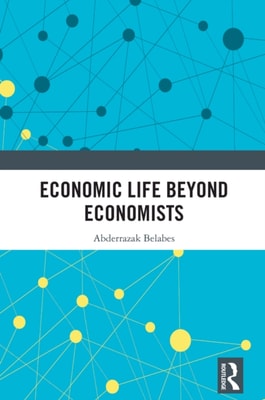
Through an examination of the work of great scholars from fields including philosophy, literature, philology, semiology, quantum physics, history, and anthropology, this book argues that building on the contribution of non-economists can open new areas of reflection in economics beyond the usual schools of thought.
Taking a multidimensional approach, this book sheds light on the evolution of organizational studies in a structured and systematic way, against the background of economic and social changes in recent decades.
The game-theoretic modelling of negotiations has been an active research area for the past five decades, that started with the seminal work by Nobel laureate John Nash in the early 1950s.
In a relatively short period of time Data Envelopment Analysis (DEA) has grown into a powerful quantitative, analytical tool for measuring and evaluating performance.
Chapters in Game Theory has been written on the occasion of the 65th birthday of Stef Tijs, who can be regarded as the godfather of game theory in the Netherlands.
This book assembles main contributions to an alternative explanation of globalisation and the political economic structures of the international system.
In this updated and expanded edition, the author explores the broad features of Hayek's economic philosophy, shows the interrelationship between the liberal philosophy and economic advance, examines Hayek's approach to the problems of a money economy, and explains Hayek's aversion to all forms of centralized economic planning.
This book argues that Keynesian economists have betrayed Keynes' theory and policy conclusions, and that the world has been misled about those policies.
This book shows how the realistic foundations and stylized facts of Post-Keynesian economics give rise to macroeconomic implications that are different from those of received wisdom with regards to employment, output growth, inflation and monetary theory, and offers an alternative to neoclassical economics and its free-market economic policies.
International Joint Ventures (IJVs) combine the resources of local and foreign firms to create independent business entities, however, their failure rate is high.
This book challenges the generally accepted theories of classical economics, explaining why the expected utility theory, even if it were true, fails to be of much help in solving economic controversies.
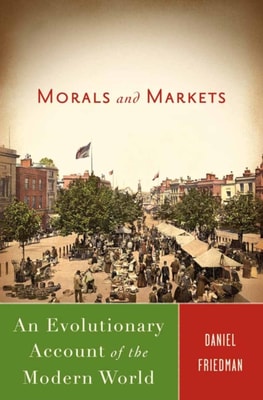
In this book, economist and evolutionary game theorist Daniel Freidman demonstrates that our moral codes and our market systems, while often in conflict, are really devices evolved to achieve similar ends, and that society functions best when morals and markets are in balance with each other.
This book provides an assessment of the impact that Keynesian economics has had over the past 70 years, with contributions by many of Keynes s leading proponents.
For Hayek, spontaneous order - the emergence of complex order as the unintended consequence of individual actions that have no such end in view - is both the origin of the Great Society and its underlying principle.
The purpose of this study is to better understand the essential interdependencies between the world economy and the global ecosystem, including human populations.
Using Karl Polanyi's analysis of the separation of politics and the economy, the book argues that the market economy is not a spontaneous process, but a 'political project' realized through institutional change where labour, land, money, and currently knowledge are commodities.
The Economics of Alfred Marshall brings together a number of leading international scholars for a timely reappraisal of Marshall's contribution to the development of economics.
This book defends equality against the objection that, due to its failure to provide incentives, it must conflict with either freedom or efficiency, or both.
Christian Ragacs develops contributions to the theory of minimum wages, while taking rationing and spill-over effects on markets other than the labour market into account.
In this new collection of essays, ranging from biography to critical surveys of opinion, the events of Robertson's life and career, his contributions to economics, the all-important influence of temperament on the development of his thought, his relationship with Keynes and the issues in his opposition to the Keynesian revolution are considered.
This book demonstrates that 'monetary analysis', as contained in Post-Keynesian monetary theories, but also in the Neo-Ricardian monetary theory of distribution and in Marx's monetary analysis, can be integrated into Post-Keynesian models of distribution of growth in a convincing way.
This succinct overview of Marshall's life and work as an economist sets his major economic contributions in perspective, by looking at his education, his travel, his teaching at Cambridge, Oxford and Bristol, his policy views as presented to government inquiries and his political and social opinions.
This review of research in school choice adapts Sen's theory of Capability developing a more complex theoretical framework for understanding education markets.