After some friendly pestering from six of his students curious about his thinking about immigration, a philosophy professor invites them to present their own ideas to him over a series of meetings throughout the term.
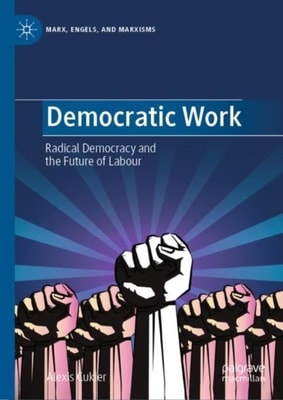
This book proposes a radical transformation of labour institutions, in order to lay the foundation for the democratization of society rather than capitalist accumulation.
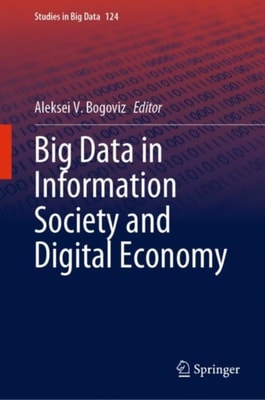
This book redefines the essence of the information society and the digital economy, offering a new approach to their management and organization based on big data.
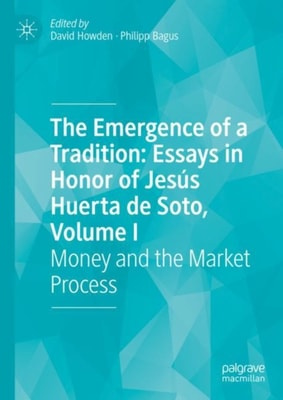
This book, the first of two volumes, explores the impact of Jesus Huerta de Soto and his role in the modern revival of the Austrian School of Economics.
This book highlights research on the behavioral biases affecting judgmental accuracy in judgmental forecasting and showcases the state-of-the-art in judgment-based predictive analytics.
This volume brings together distinguished philosophers with interdisciplinary expertise to show how the resources of philosophy can be employed in the tasks of evaluating economics and fostering policy debates.
In his brilliant interdisciplinary analysis of the global financial crisis, Joseph Vogl aims to demystify finance capitalism-with its bewildering array of new instruments-by tracing the historical stages through which the financial market achieved its current autonomy.
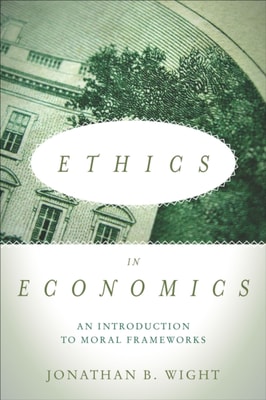
This book introduces the moral philosophy of Immanuel Kant-in particular, the concepts of autonomy, dignity, and character-to economic theory, explaining the importance of integrating these two streams of intellectual thought.
Auction Theory, Second Edition improves upon his 2002 bestseller with a new chapter on package and position auctions as well as end-of-chapter questions and chapter notes.
Global Mobility of Research Scientists: The Economics of Who Goes Where and Why brings together information on how the localization and mobility of academic researchers contributes to the production of knowledge.
Two centuries after his birth, Karl Marx is read almost solely through the lens of Marxism, his works examined for how they fit into the doctrine that was developed from them after his death.
With global demand for energy poised to increase by more than half in the next three decades, the supply of safe, reliable, and reasonably priced gas and oil will continue to be of fundamental importance to modern economies.
The writings of Sergei Bulgakov (1871–1944), like those of other major social thinkers of Russia’s Silver Age, were obliterated from public consciousness under Soviet rule.
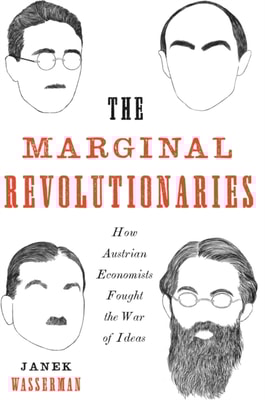
A group history of the Austrian School of Economics, from the coffeehouses of imperial Vienna to the modern-day Tea Party The Austrian School of Economics—a movement that has had a vast impact on economics, politics, and society, especially among the American right—is poorly understood by supporters and detractors alike.
The first book to bring together the key writings and speeches of civil rights activist Sadie Tanner Mossell Alexander-the first Black American economist In 1921, Sadie Tanner Mossell Alexander became the first Black American to gain a Ph.
One of the world’s most celebrated theologians argues for a Protestant anti-work ethic In his classic The Protestant Ethic and the Spirit of Capitalism, Max Weber famously showed how Christian beliefs and practices could shape persons in line with capitalism.
An intriguing look at the exploding phenomenon of unregulated private currencies and how they will change our economy forever Private currencies have always existed, from notes printed by individual banks to the S&H Green Stamps to Bitcoin.
A passionate and informed critique of mainstream economics from one of the leading economic thinkers of our time This insightful book looks at how mainstream economics' quest for scientific certainty has led to a narrowing of vision and a convergence on an orthodoxy that is unhealthy for the field, not to mention the societies which base policy decisions on the advice of flawed economic models.
Norton Garfinkle paints a disquieting picture of America today: a nation increasingly divided between economic winners and losers, a nation in which the middle-class American Dream seems more and more elusive.
The ability to understand and predict behavior in strategic situations, in which an individual's success in making choices depends on the choices of others, has been the domain of game theory since the 1950s.
This volume emphasizes the economic aspects of art and culture, a relatively new field that poses inherent problems for economics, with its quantitative concepts and tools.
From individual grains to desert dunes, from the bottom of the sea to the landscapes of Mars, and from billions of years in the past to the future, this is the extraordinary story of one of nature's humblest, most powerful, and most ubiquitous materials.
This is an expanded second edition of Nicholas Mercuro and Steven Medema's influential book Economics and the Law, whose publication in 1998 marked the most comprehensive overview of the various schools of thought in the burgeoning field of Law and Economics.
This book collects together for the first time Anthony Brewer's work on the origins and development of the theory of economic growth from the late eighteenth century and looking at how it came to dominate economic thinking in the nineteenth century.