This book employs a computable general equilibrium (CGE) model - a widely used economic model which uses actual data to provide economic analysis and policy assessment - and applies it to economic data on Singapore's tourism industry.
This volume uses historical epistemology in order to address several topics in the history of economic thought, with special emphasis on ecological economics, environmental metaphors of scarcity, and mathematical ecology.
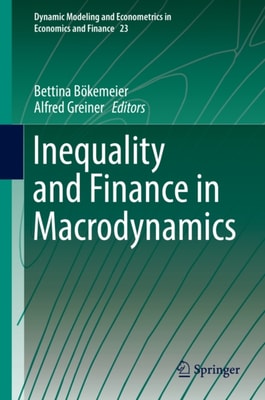
These lectures aim to help readers understand the logics and nature of the main indicators of inequality and poverty, with special attention to their social welfare underpinnings.
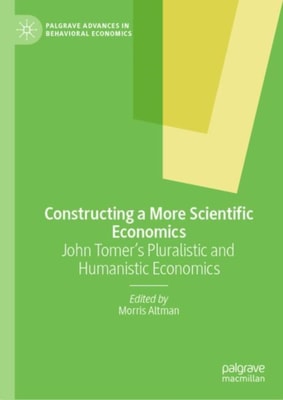
John Tomer was a leading intellectual figure in behavioural economics, making distinct contributions to the theory of the firm, social economy, choice theory, and government policy.
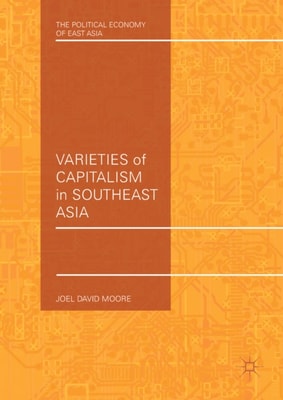
This book explains the political origins and evolution of capitalist institutions in developing countries by looking at distinct patterns in the electronics industry in three Southeast Asian countries: Thailand, Malaysia, and Singapore.
This book provides the first comprehensive introduction to multi-agent, multi-choice repetitive games, such as the Kolkata Restaurant Problem and the Minority Game.
The research and review papers presented in this volume provide an overview of the main issues, findings, and open questions in cutting-edge research on the fields of modeling, optimization and dynamics and their applications to biology, economics, energy, finance, industry, physics and psychology.
This book presents a conceptual and practical tool for those involved directly or indirectly in the planning and management of basic provision of water supply, wastewater and stormwater services in metropolitan regions by offering insights into governance paradigms and institutional arrangements for urban wastewater reuse in agriculture from Australia and India.
The book illustrates the considerable advances in modern evolutionary economics and addresses core questions of economic behaviour, interaction of heterogeneous actors in uncertain environments and the possibility of aggregating observations on a macro-economic level.
Adopting evolutionary and behavioral approaches, this volume presents the latest research advances in knowledge competencies and human capital, as well as the changing structural dynamics, highlighting their links with entrepreneurial activities.
This book presents an original empirical investigation of the market structure of airline city pair markets, shedding new light on the workings of competitive processes between firms.
This book examines the role of uncertainty on financial decisions - and, consequently, on financial markets - in the buildup to and aftermath of the Great Recession.
This book provides an evaluation of 18 voting procedures in terms of the most important monotonicity-related criteria in fixed and variable electorates.
Applying the principles of Optimal Control Theory to the problem of regional allocation of investment can be a useful tool for demonstrating how the trade-off between regional equity and overall efficiency can be overcome.
This book aims to contribute to the discussion about the implications of fuzzy logic, neural networks, digital era, and other intelligent techniques on organizations.
The book provides a comprehensive review of renewable energy from an economic perspective throughout the last two hundred years, starting from traditional renewable energy based on bio and hydro energy.
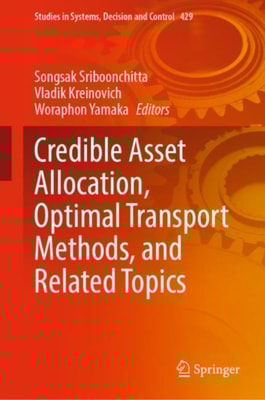
This book describes state-of-the-art economic ideas and how these ideas can be (and are) used to make economic decision (in particular, to optimally allocate assets) and to gauge the results of different economic decisions (in particular, by using optimal transport methods).
Dynamic programming (DP) has a relevant history as a powerful and flexible optimization principle, but has a bad reputation as a computationally impractical tool.
This textbook offers a comprehensive guide to the systematic structure of capitalism, while at the same time introducing readers to all three volumes of Marx's Capital.
This book consists of a dialogue between two interlocutors, Pablo and a student, who discuss a great range of issues in social philosophy and political theory, and in particular, the emergence, working properties and economic effects of institutions.
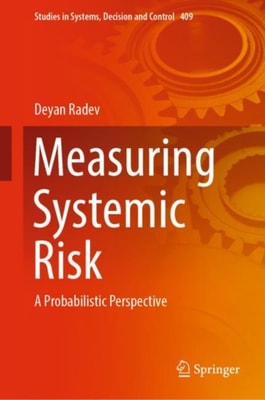
This book provides a comprehensive methodology to measure systemic risk in many of its facets and dimensions based on state-of-the-art risk assessment methods.
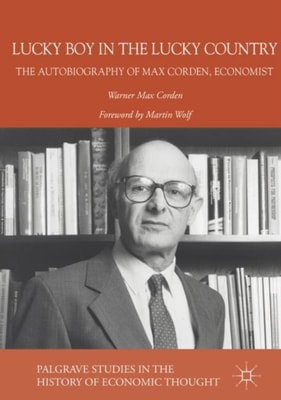
Corden has written a charming and insightful account of his professional and personal life, from his childhood in Breslau, Germany, until his retirement in Melbourne.
The common roots of success and failure in economic growth and development lie in the systemic governance and fragmentation of institutional complementarities, respectively, but not in the unilateral adaptation of market-led or state-led models.
This contributed volume collects talks originally given at the 18th International Symposium on Dynamic Games and Applications, held in Grenoble, France from July 9-12, 2018.
This Palgrave Pivot presents theoretical models that explain common historical sequences, such as wars of secession, the rise and fall of empires, and international war.
This book uses Figueroa's unified theory of capitalism to explain how economic growth has led to a new epoch, the Anthropocene, and it presents a new set of economic principles that are needed in this new age.
This textbook provides a comprehensive overview of noncooperative and cooperative dynamic games involving uncertain parameter values, with the stochastic process being described by an event tree.