Perrotta explores and charts the changing place of consumption as a source of investment in production and growth within economic writings from ancient history to the present.
This brief captures the contextual features of entrepreneurship by measuring entrepreneurial attitudes, abilities, and aspirations at both the individual- and country-level.
This book is a textual criticism of modern ideas about the work of Adam Smith that offers a new perspective on many of his famous contributions to economic thought.
This book is devoted to biased sampling problems (also called choice-based sampling in Econometrics parlance) and over-identified parameter estimation problems.
This is the first book that examines the diverse range of experimental methods currently being used in the social sciences, gathering contributions by working economists engaged in experimentation, as well as by a political scientist, psychologists and philosophers of the social sciences.
This edited volume is an outcome of the first major collaborative project between Japanese economists and political scientists, funded by the Japan Society for the Promotion of Science.
This book provides a methodology for the analysis of oligopolistic markets from an equilibrium viewpoint, considering competition within and between groups of firms.
This textbook takes a new approach to political economy: it combines the well-known non-quantitative theories with the findings of behavioral science and other disciplines such as psychology and sociology.
This book, set out over three-volumes, provides a comprehensive history of economic thought in the 20th century with special attention to the cultural and historical background in the development of theories, to the leading or the peripheral research communities and their interactions, and finally to an assessment and critical appreciation of economic theories.
This book addresses the comparative history of economic thought in Central European countries where there is a notable common historic heritage and political traits.
This book investigates why Austrian economists fail to apply the spontaneous order framework to cooperative relationships - such as a dynamic and evolving public sector - that might complement a thriving market.
This book explores an alternative approach to the conventional, market-based, view of economic theory and economic policy, at theoretical, numerical and applicable levels.
This book presents original research articles addressing various aspects of artificial intelligence as applied to economics, law, management and optimization.
This book introduces the research agenda of relational economics as a political economy for the governance of local and global economic transactions in modern societies.
This volume of intellectual biography takes the Italian economist, sociologist, political scientist Vilfredo Pareto (1848-1923) from his disillusionment with liberal and pacifist activism, to the original development of pure economics and the composition of his Treatise on General Sociology and the test of this latter on the war and post-war events.
This book explores the neglected contribution of the American and English "e;psychological"e; school to economic theory, especially to the development and refinement of the Austrian school of economics.
This book, based on lectures on natural and environmental resource economics, offers a nontechnical exposition of the modern theory of sustainability in the presence of resource scarcity.
This book revisits the forgotten history of the 'European Dependency School' in the 1970s and 1980s, explores core-periphery relations in the European integration process and the crises of the contemporary European Union from a dependency perspective, and draws lessons for alternative development paths.
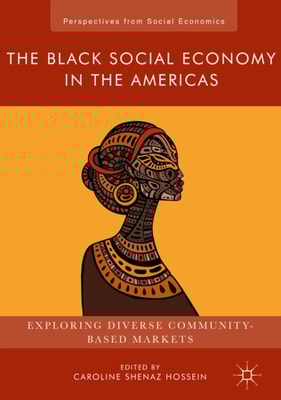
This pioneering book explores the meaning of the term "e;Black social economy,"e; a self-help sector that remains autonomous from the state and business sectors.
This edited collection demonstrates how economic history can be analysed using both quantitative and qualitative methods, connecting statistical research with the social, cultural and psychological aspects of history.
Christopher Marlowe is known not only as Shakespeare's most notable contemporary playwright, but also as one of the most intriguing figures of the English Renaissance.
A revealing look at the common causes of failures in randomized control experiments during field reseach-and how to avoid themAll across the social sciences, from development economics to political science departments, researchers are going into the field to collect data and learn about the world.
A groundbreaking new synthesis and theory of social institutionsUnderstanding Institutions proposes a new unified theory of social institutions that combines the best insights of philosophers and social scientists who have written on this topic.
A reevaluation of what money is-and what it might beQuestions about the nature of money have gained a new urgency in the aftermath of the global financial crisis.
From Nobel Prize-winning economist Michael Kremer and fellow leading development economist Rachel Glennerster, an innovative solution for providing vaccines in poor countriesMillions of people in the third world die from diseases that are rare in the first world-diseases like malaria, tuberculosis, and schistosomiasis.
Dynamic stochastic general equilibrium (DSGE) models have become one of the workhorses of modern macroeconomics and are extensively used for academic research as well as forecasting and policy analysis at central banks.
Conus is the largest genus of animals in the sea, occurring throughout the world's tropical and subtropical oceans and contributing significantly to marine biodiversity.
How trade imbalances spurred on the global financial crisis and why we aren't out of trouble yetChina's economic growth is sputtering, the Euro is under threat, and the United States is combating serious trade disadvantages.
A comprehensive introduction to the statistical and econometric methods for analyzing high-frequency financial dataHigh-frequency trading is an algorithm-based computerized trading practice that allows firms to trade stocks in milliseconds.
The first book to use the world's most popular sport to test economic theories and document novel human behaviorA wealth of research in recent decades has seen the economic approach to human behavior extended over many areas previously considered to belong to sociology, political science, law, and other fields.
How ideas in complexity can be used to develop more effective public policyComplexity science-made possible by modern analytical and computational advances-is changing the way we think about social systems and social theory.
The remarkable story and personalities behind one of the most important theories in modern economicsFinding Equilibrium explores the post-World War II transformation of economics by constructing a history of the proof of its central dogma-that a competitive market economy may possess a set of equilibrium prices.