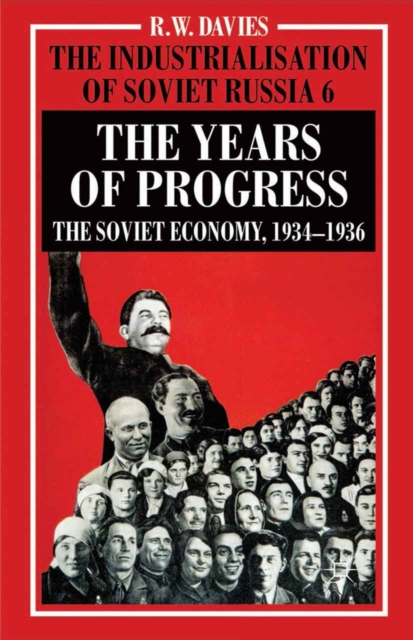
Based on extensive research in formerly secret archives, this volume examines the progress of Soviet industrialisation against the background of the rising threat of aggression from Germany, Japan and Italy, and the consolidation of Stalin's power.
Transcending Capitalism Through Cooperative Practices identifies and analyzes sustainable alternatives to capitalism by examining five diverse enterprises, including the London Symphony Orchestra, the Green Bay Packers football team, and the Lusty Lady sex club.
The book investigates the relation between technology and institutions and their mutual influence during processes of development and change and illustrates this on the development process in Argentina after 1946.
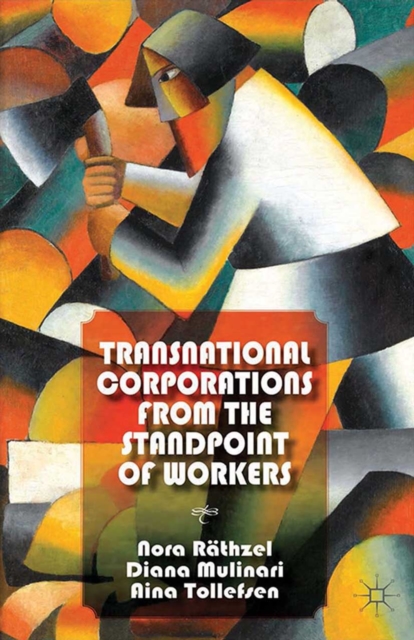
This book explores the history and global expansion of AB Volvo, one of the hundred largest corporations in the world, through the experiences of its workers in Sweden, Mexico, South Africa, and India.
Through the prism of 'Nowa Huta', a landmark of socialist industrialization, Trappmann challenges the one-sided account of Poland as a successful transition case and reveals the ambivalent role of the European Union in economic restructuring.
Economics, Strategy and the Firm draws on the increasing synthesis of ideas from economics and business strategy to explain how organizations fulfil their corporate goals.
Adopting a multi-disciplinary approach and using the case of the automotive industry as a starting point this volume discusses how industrial companies can remain competitive in spite of the current economic downturn.
The spread of the manufacturing industry is an important part of economic development, creating jobs, new products and trade and investment links between countries.
The spread of the manufacturing industry is an important part of economic development, creating jobs, new products and trade and investment links between countries.
First published in 1984, this textbook analyses, at both aggregate and micro economic levels, the contemporary industrial conditions in Third World countries and relates this to the process of economic growth and structural transformation.
First published in 1984, this textbook analyses, at both aggregate and micro economic levels, the contemporary industrial conditions in Third World countries and relates this to the process of economic growth and structural transformation.
The four sections of the book deal in succession with Marshall's key ideas on the subject, the wider context of his thought in which they are to be read, their later development by some of his pupils, and their revival in contemporary economics.
The four sections of the book deal in succession with Marshall's key ideas on the subject, the wider context of his thought in which they are to be read, their later development by some of his pupils, and their revival in contemporary economics.
First published in 1986, The Economics of Alfred Marshall is concerned with the theories of demand, supply, market structure and income distribution which the celebrated author of the Principles of Economics developed while standing on the shoulders of giants.
First published in 1986, The Economics of Alfred Marshall is concerned with the theories of demand, supply, market structure and income distribution which the celebrated author of the Principles of Economics developed while standing on the shoulders of giants.
The book conducts a comparative study on the form of enterprise, focusing on broadly defined cooperative firms in comparison with conventional capitalist firms.
The book conducts a comparative study on the form of enterprise, focusing on broadly defined cooperative firms in comparison with conventional capitalist firms.
First published in 1986, this text brings together a selection of papers written by the great Alec Nove on development economics, Marxist economies, the Soviet economy, and law and politics in the Soviet Union.
First published in 1986, this text brings together a selection of papers written by the great Alec Nove on development economics, Marxist economies, the Soviet economy, and law and politics in the Soviet Union.
In an increasingly globalised world, paradoxically regional innovation clusters have moved to the forefront of attention as a strategy for economic and social development.
In an increasingly globalised world, paradoxically regional innovation clusters have moved to the forefront of attention as a strategy for economic and social development.