This book presents an integrated analysis of the dynamics of the economics of households and farm production in the setting of a polygynous family structure and traditional agriculture in sub-Saharan rural Africa.
The nations of Subsaharan Africa experienced declining levels of food production per capita throughout the 1970s and early 1980s, particularly in the area of livestock production.
This book examines the impact of the rise and fall of new commodities, production technologies, and shifting government policies on individuals and farm families in the rural South and the interrelationship between agricultural change and community change.
This book aims to examine how the pattern of growth in the agricultural sectors has contributed to equitable growth and to assess the relevance of the relationship between agriculture and equitable growth in Punjab-Haryana for other states in India and for other low-income countries.
With the emergence of collectivization, the communal movement, and the food crisis, the development of agriculture in socialist countries has become a topic of great interest to economists.
High rates of growth in agricultural production need not be incompatible with increased employment, income, and the satisfaction of basic needs in the lower-income developing countries.
Policymakers, farmers, managers of agriculture and others look to agricultural economists for accurate estimates of the costs and returns of individual agricultural commodities.
This book provides a detailed discussion of four class-action discrimination cases that have recently been settled within the United States Department of Agriculture (USDA) and have led to a change in the way in which the USDA supports farmers from diverse backgrounds.
This book provides a detailed discussion of four class-action discrimination cases that have recently been settled within the United States Department of Agriculture (USDA) and have led to a change in the way in which the USDA supports farmers from diverse backgrounds.
This book identifies the root causes of income inequality in underdeveloped economies and proposes new solutions for structural reform in economies that have long neglected and exploited working people.
This book identifies the root causes of income inequality in underdeveloped economies and proposes new solutions for structural reform in economies that have long neglected and exploited working people.
In this practical guide TV farmer Jimmy Doherty imparts his experience and ideas to show you how to achieve the self-sufficient lifestyle and add to your life whether growing for your own pleasure - or profit!
A provocative reassessment of the relationship between states and environmental politics in Africa From climate-related risks such as crop failure and famine to longer-term concerns about sustainable urbanization, environmental justice, and biodiversity conservation, African states face a range of environmental issues.
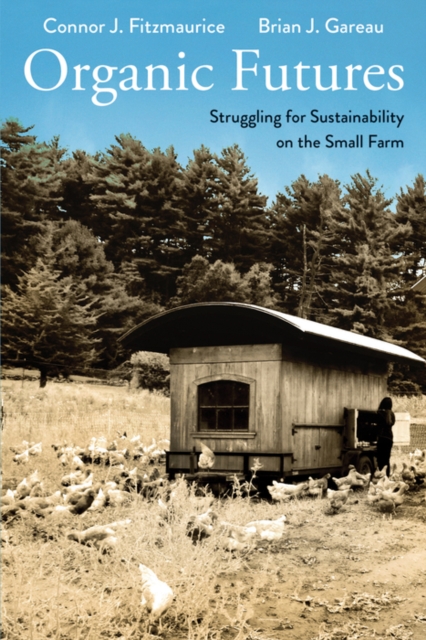
An exploration of the lived experience of small-scale organic farmers in New England that unpacks how they balance their ideals with economic realities In recent years, the popularity of organically grown produce has exploded.
An exploration of the rise of the crop strain that came to dominate the American tobacco industry and its toll on the Southern landscape that produced it Drew A.
Originally published in 1962, this book was a study of British agricultural policy since the Second World War - during a period which saw the adoption of a comprehensive system of agricultural support which stood in marked contrast to the free trade policy adhered to previously.
This book examines the international causes of hunger and malnutrition and reveals how critical elements of the global economy heighten food insecurity in the developing world.
From a war-torn and famine-plagued country at the beginning of the 1990s, Ethiopia is today emerging as one of the fastest-growing economies in Africa.
From a war-torn and famine-plagued country at the beginning of the 1990s, Ethiopia is today emerging as one of the fastest-growing economies in Africa.
From prompting a transition from hunter-gatherer to an agrarian lifestyle in ancient Mesopotamia to bankrolling Britain's imperialist conquests, strategic taxation and the regulation of beer has played a pivotal role throughout history.
From prompting a transition from hunter-gatherer to an agrarian lifestyle in ancient Mesopotamia to bankrolling Britain's imperialist conquests, strategic taxation and the regulation of beer has played a pivotal role throughout history.