Originally published in 1987, this book brings together information previously buried in specialist sources and makes it available to the student in a non-technical and well-illustrated synthesis.
Originally published in 1990, this book analysed the sensitivity of the world food system and looked at the variety of ways in which it would be affected by climate change.
Originally published in 1931 (this re-issues the 8th edition of 1953), this book gives students a comprehensive account of global climatic types and the impact of climate on economics, issues of race, health, meteorology and geography.
Originally published in 1974 this volume brings together contributions from lawyers, a nuclear physicist, a landscape architect, biologist, engineers and a former Inspector of the International Atomic Energy Agency.
Originally published in 1989, this book provides an overview of the economic dimensions of climate and human activities, and considers how the variable nature of the atmosphere must be accepted as an integral part of the management package.
Originally published in 1970, this book brings together the most significant and pertinent associations between man's economic and social activities, and the variations in the atmospheric environment.
Originally published in 1994, this book links the distant past with the urgent problems of today, taking the reader on a literary and scientific tour of global pollution from pre-history to the post-industrial age.
Originally published in 1987, this volume examines the ideals and realities of river use in 19th Century Britain and the failure of legal and technological remedies for river pollution.
Originally published in 1973 and based on papers published in The International Journal of Environmental Studies, this book discusses the impact of road vehicles on the environment.
Originally published in 1992 Economics for the Wilds argues that an economics that properly values the resources of the wilds offers the best long-term security for their future.
Originally published in 1987, this book brings together information previously buried in specialist sources and makes it available to the student in a non-technical and well-illustrated synthesis.
Originally published in 1987, this volume examines the ideals and realities of river use in 19th Century Britain and the failure of legal and technological remedies for river pollution.
This book examines our understanding of technology and suggests that machines are counterfeit organisms that seem to replace human bodies but are ultimately means of displacing workloads and environmental loads beyond our horizon.
This book examines our understanding of technology and suggests that machines are counterfeit organisms that seem to replace human bodies but are ultimately means of displacing workloads and environmental loads beyond our horizon.
Originally published in 1974, was a pioneering study which summarized, within the pre-existing framework of atmospheric knowledge, the more significant findings that emerged from the first decade of climatological analyses of meteorological satellite data.
Originally published in 1980, this book by a group of international lawyers and experts from the energy industries suggests ways in which the law may have to change to cope with developments in the oil and nuclear energy industries and the way they impact on marine pollution.
Originally published in 1974, was a pioneering study which summarized, within the pre-existing framework of atmospheric knowledge, the more significant findings that emerged from the first decade of climatological analyses of meteorological satellite data.
Originally published in 1980, this book by a group of international lawyers and experts from the energy industries suggests ways in which the law may have to change to cope with developments in the oil and nuclear energy industries and the way they impact on marine pollution.
The informal economy - broadly defined as economic activity that is not subject to government regulation or taxation - sustains a large part of the world's workforce.
The informal economy - broadly defined as economic activity that is not subject to government regulation or taxation - sustains a large part of the world's workforce.
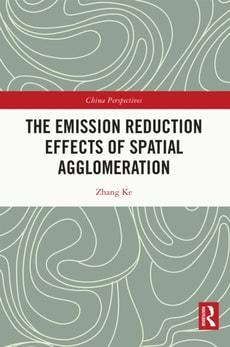
The book studies the relationship between economic agglomeration and environmental pollution from a spatial perspective through theoretical analyses and empirical discussions.
The book studies the relationship between economic agglomeration and environmental pollution from a spatial perspective through theoretical analyses and empirical discussions.
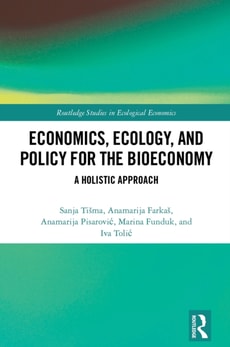
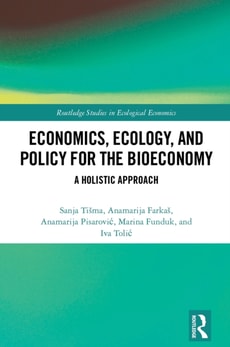
This book demonstrates that a holistic approach to the bioeconomy is essential if it is to achieve its full potential in driving economic growth while simultaneously providing ecological, social and technological benefits.
This book demonstrates that a holistic approach to the bioeconomy is essential if it is to achieve its full potential in driving economic growth while simultaneously providing ecological, social and technological benefits.
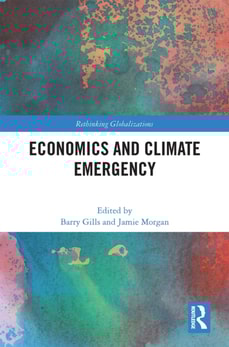
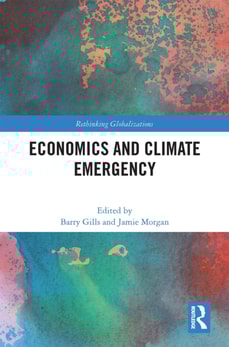
This book explores a series of connected themes focused on the role economics and other influential forms of theory and thinking have played in creating the current predicament and the scope for alternatives and how they might be framed.
This book explores a series of connected themes focused on the role economics and other influential forms of theory and thinking have played in creating the current predicament and the scope for alternatives and how they might be framed.
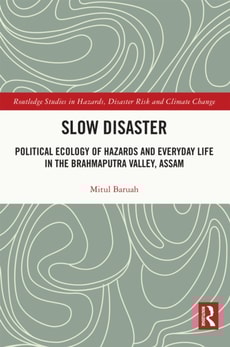
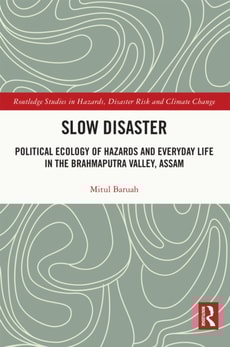
This book presents a fascinating, ethnographic account of the challenges faced by communities living in Majuli, India, one of the largest river islands in the world, which has experienced immense socio-environmental transformations over the years, processes that are emblematic of the Brahmaputra Valley as a whole.
This book presents a fascinating, ethnographic account of the challenges faced by communities living in Majuli, India, one of the largest river islands in the world, which has experienced immense socio-environmental transformations over the years, processes that are emblematic of the Brahmaputra Valley as a whole.
In this edited volume, the leading scholars in the field engage with consumers, marketers, corporations and policymakers as well as space dynamics and network formation to provide an in-depth examination of anti-consumption: a voluntary behavioural inclination to minimise rather than grow, to decelerate and simplify and to reduce the unnecessary exploitation of resources fuelled by consumer culture.
In this edited volume, the leading scholars in the field engage with consumers, marketers, corporations and policymakers as well as space dynamics and network formation to provide an in-depth examination of anti-consumption: a voluntary behavioural inclination to minimise rather than grow, to decelerate and simplify and to reduce the unnecessary exploitation of resources fuelled by consumer culture.
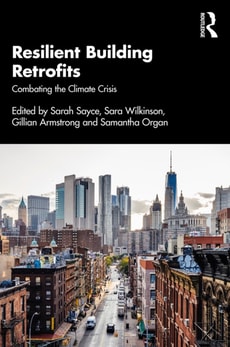
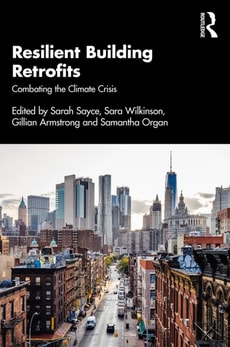
This radical book aims to inject new insight and urgency into the discourse on the retrofitting of commercial and residential buildings in the face of the climate emergency.
This radical book aims to inject new insight and urgency into the discourse on the retrofitting of commercial and residential buildings in the face of the climate emergency.
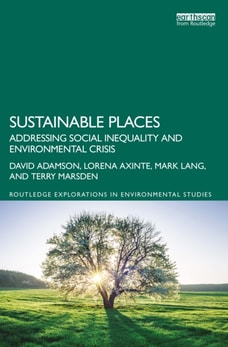
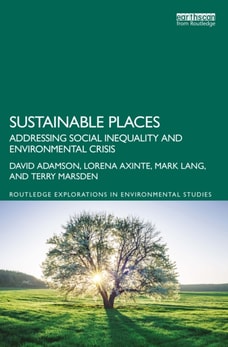
This book calls for more holistic place-based action to address the social and environmental crisis, deploying the Deep Place approach as one contribution to the toolbox of actions that will underpin the UN Decade of Action towards the Sustainable Development Goals.
This book calls for more holistic place-based action to address the social and environmental crisis, deploying the Deep Place approach as one contribution to the toolbox of actions that will underpin the UN Decade of Action towards the Sustainable Development Goals.
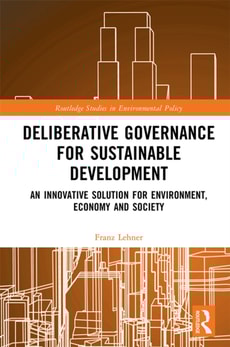
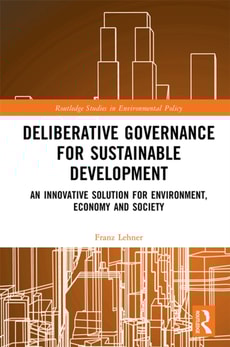
Deliberative Governance for Sustainable Development argues that governance has become the core problem of sustainable development and identifies deliberative democracy and governance as a path forward for Western societies.
Deliberative Governance for Sustainable Development argues that governance has become the core problem of sustainable development and identifies deliberative democracy and governance as a path forward for Western societies.
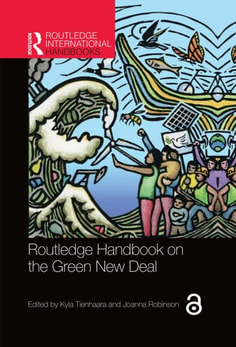
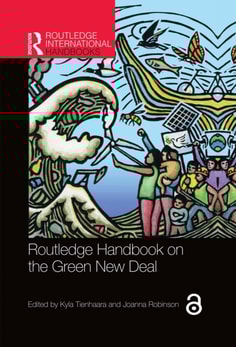
In recent years, the Green New Deal has moved from relative obscurity to front and centre of policy discussions and public debates about how to respond to the climate crisis.
In recent years, the Green New Deal has moved from relative obscurity to front and centre of policy discussions and public debates about how to respond to the climate crisis.
The solutions and tools generally offered to policymakers on environmental issues - such as carbon pricing and environmental taxation - most often emanate from neoclassical economists.