This edited book brings together in one place new studies of rural-urban interactions and their implications for regional growth and development in different regions within Asia.
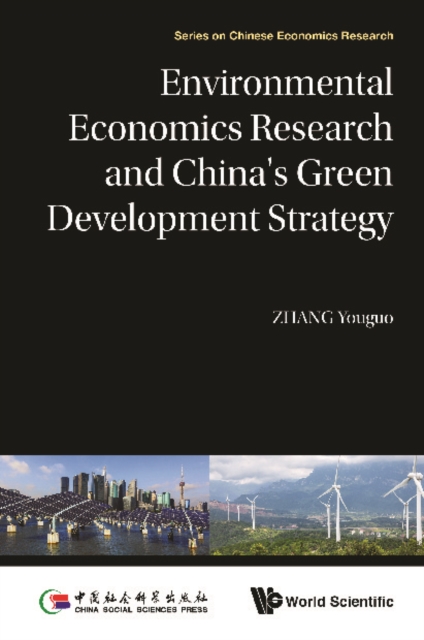
This book contributes to the understanding of environment-economy relations from the perspective of economic geography, grounded in the institutional context of China.
This book approaches Green Civilization based on the background of international initiative on sustainable development and in-depth analyzes the valuable era consensus reached by 193 countries on the UN Sustainable Development 2030 Agenda.
This book highlights the latest research on waste processing technologies, particularly for domestic, agricultural, and petroleum based pollutants, intended to achieve waste valorisation.
In this book, the authors analyze big data on global interdependence caused by the flows of commodities, money, and people, using a network science approach to obtain differing views of globalization and to clarify the facts on isolation of communities.
This book addresses major issues such as a growing world energy demand, environmental degradation due to anthropogenic greenhouse gas (GHG) emission, and risk management of disastrous events such as pandemics, abnormal climate, and earthquakes.
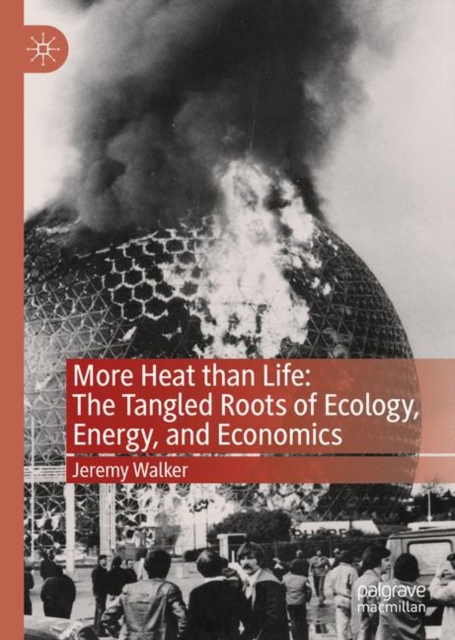
This book traces the interacting histories of the disciplines of ecology and economics, from their common origin in the ancient Greek concept of oikonomia, through their distinct encounters with energy physics, to the current obstruction of neoliberal economics to responses to the ecological and climate crisis of the so-called Anthropocene.
This book addresses a timely and compelling emerging issue related to the conservation and sustainable use of marine resources and the sustainable development of the coastal community.
This book is written by experts from Institute of Urban and Environmental Studies of the Chinese Academy of Social Sciences, and National Climate Center, this book provides an overview of China's effort to implement the Paris Agreement.
Using "e;the sharing paradigm"e; as a guiding concept, this book demonstrates that "e;sharing"e; has much greater potential to make rural society resilient, sustainable and inclusive through enriching all four sharing dimensions: informal, mediated, communal and commercial sharing.
The first 50 years of ASEAN integration has brought peace and prosperity to the Southeast Asian region, while the next 50 will undoubtedly be fraught with unprecedented challenges.
This book utilizes statistical techniques to define a quality of life (QoL) indicator combining the three dimensions of economy, health, and education.
This book focuses on high-speed rail (HSR) and new town planning and development related to HSR, approaching the issue from three different perspectives: economic cooperation at a regional level; HSR-based economic growth point at a city level; and mixed land use and building environment in the periphery area of HSR stations.
This book presents a collection of ten empirical studies on Iran's sustainable agriculture and agribusiness, grouped into three domains: agricultural prices and commodity market analysis; risk management and climate change; and natural resources and environmental economics.
This book is unique and original, constituting a pioneering study in the use of spatial economics and related analytical approaches to Brazil's Cerrado agricultural development and the formation of agro-industrial value chains.
This book conducts a holistic analysis of climate change perceptions, vulnerabilities, impacts, and adaptation, based on the primary household-data collected from the Chepang community residing in the rural Mid-Hills of Nepal.
This monograph presents potential remedies for some of the current environmental issues in developed countries in a theoretical or empirical manner with the interdisciplinary approaches of economics, statistics, and engineering.
This book systematically introduces readers to the framework of China's ETS pilots, exploring their design and operating process, the current state of the carbon market, and various barriers encountered.
The book discusses how to establish a land-use system for small and medium-sized cities in order to promote low carbon economic development and to ensure sustainable development.
This is the first book to introduce the major quantitative tools in risk management taking financial investments and logistics planning as the background: optimization and stochastic programming.
This book provides a synthesis of research findings, in terms of strategic knowledge outcomes regarding emergence of recent regional climate signals, implications for impacts assessment, and mitigation and adaptation response, relevant in the Indian context.
This book presents a critical review of the status of energy security in Asia and suggests how a country or a region collectively can achieve energy security in two broad aspects.
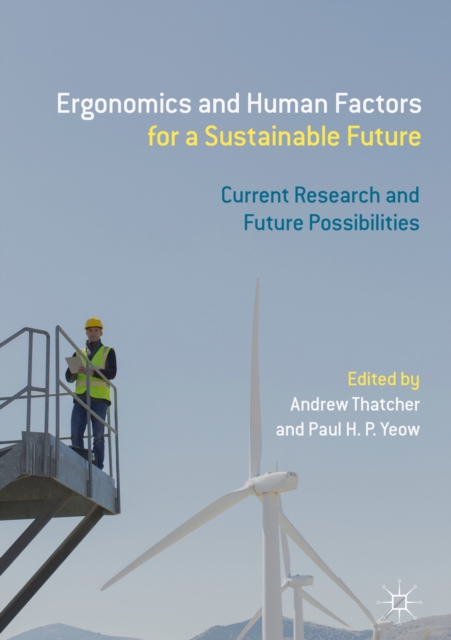
This book focuses on different sustainable products and services, such as electrical vehicles, green buildings, and biophilic and biomimetic systems, at multiple hierarchical levels within its chapters.