The authors of this book, who represent a broad range of scientific disciplines, discuss the issue of centralized versus decentralized control and regulation in the context of sustainable development.
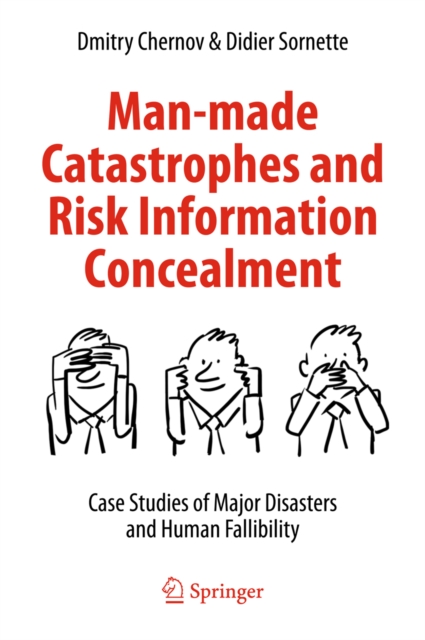
This book discusses the risks of information concealment in the context of major natural or industrial disasters - offering detailed descriptions and analyses of some 25 historical cases (Three Mile Island nuclear accident, Bhopal disaster, Challenger Space Shuttle explosion, Chernobyl nuclear disaster, Deepwater Horizon oil spill, Fukushima-Daiichi nuclear disaster, Enron's bankruptcy, Subprime mortgage crisis, Worldwide Spanish flu and SARS outbreaks, etc.
In view of the increasing quest for environmental management in businesses, this book provides a good reference to firms to understand how they may manage their supply chains to improve business and environmental performance.
The book investigates the role interest groups have played over the years to influence the governments of Lesotho and South Africa, the World Bank and project implementation authorities in changing some policy aspects of the Lesotho Highlands Water Project (LHWP).
Unravelling the intricate relationship between economic development and energy consumption, this book proposes an innovative framework for the empirical investigation of the link between the economy and natural resources.
This doctoral thesis presents a novel approach to landslide risk assessment that explores the various dimensions of landslide risk in an integrated perspective.
This book explores the idea that daily lived experiences of climate change are a crucial missing link in our knowledge that contrasts with scientific understandings of this global problem.
This book explains how income growth and better environmental qualities go hand in hand, and reviews the drivers and barriers to sustainable innovation on the basis of real-life cases.
Providing a comprehensive analysis of CO2 compression, transportation processes and safety issues for post combustion CO2 capture applications for a 900 MW pulverized hard coal-fired power plant, this book assesses techniques for boosting the pressure of CO2 to pipeline pressure values with a minimal amount of energy.
This book assesses both the effectiveness and efficiency of implemented Economic Policy Instruments (EPIs) in order to achieve water policy goals and identifies the preconditions under which they outperform alternative (e.
This book offers an in-depth analysis of Corporate Social Responsibility, gathering contributions by authors from various countries, cultures and political systems.
This book offers an in-depth analysis of the Brazilian sugarcane complex with a special focus on technological advances that promote sustainable development.
This book sets out some positive directions to move forward including government policy and regulatory options, an innovative GRID (Greening, Regenerative, Improvement Districts) scheme that can assist with funding and management, and the first steps towards an innovative carbon credit scheme for the built environment.
Presenting a complete guide for the planning, design and implementation of solar PV systems for off-grid applications, this book features analysis based on the authors' own laboratory testing as well as their in the field experiences.
This volume investigates the impact of energy technology innovations on economic development and presents new areas of research into the financial economics of energy as well as new studies into valuation, electricity pricing and the economic, regulatory and environmental costs of alternative energy sources.
This book uses the metaphor "e;The economy is society's metabolism"e; as a springboard to develop a rigorous theoretical framework for a better system of national accounts which goes "e;Beyond GDP"e; and is relevant to the age of resource depletion.
This report takes a neutral and independent point of view in attempting to show concrete ways to achieve the goal of reducing CO2 emissions and limiting global warming to the 2-degree target.
This book represents one of the first attempts by a multidisciplinary research team, encompassing the social sciences, business, architecture and planning, engineering, and finance and economics, to help rural communities discover sustainable and self-reliant paths to development and transformation.
This book reflects on the causes of resource-based conflicts and competition, and presents solutions for safely and sustainably providing resources with a focus on material flow management.
This book examines the role of The International Maritime Organization (IMO) in the prevention and control of pollution of the marine environment from vessels with a particular reference to the current north-south tensions regarding the strategy for combating climate change in the maritime sector as well as the prevention of marine pollution from the ship-breaking industry.
Examining non-technological innovations for environmentally and socially-friendly transport, this book provides the reader with a better understanding of this often overlooked topic.
This book is an introductory instrument to the main themes of environmental history, illustrating its development over time, methodological implications, results achieved and those still under discussion.
This book explores economic concepts related to disaster losses, describes mechanisms that determine the economic consequences of a disaster, and reviews methodologies for making decisions regarding risk management and adaptation.
This is an easy-to-read textbook providing the reader with the basis to comprehend the major energy technologies from a physical and economical perspective.
Demands for sustainability policies have set new challenges for business both on the individual firm level and on the level of organized business interests.
The aim of this book is to investigate critical economic aspects and price risks along international pellet supply chains and to offer new insights into the interconnections between the sector, the various supply risks within the market and guidelines for de-risking biomass supply chains.
While intercity passenger transport counts for about 2% of the total passenger transport volume the share of the total passenger kilometers traveled is estimated more than one third.
The book, the first in a series arising from the research network The Reacting Atmosphere, explains and outlines the aims of this ambitious cross-disciplinary effort.
This book explores the new rules and codes that are required in order to foster the implementation of smart city technologies with a view to meeting the environmental and energy challenges posed by dynamic contemporary cities with increasing populations.