Advanced Cultural Districts explores the organisational design issues within the cultural heritage sector, with particular focus on the advanced forms of cultural districts for local socio-economic development.
With China replacing the United States as the world's leading energy user and net oil importer, its relations with the Middle East is becoming a major issue with global implications.
This book explores the political aspects of China's climate change policy, focusing on the newly established carbon markets and carbon trading schemes.
Growth, Employment, Inequality, and the Environment deals with the fundamental economic problems of our time: employment, inequality, the environment, and quality of life.
Growth, Employment, Inequality, and the Environment deals with the fundamental economic problems of our time: employment, inequality, the environment, and quality of life.
Climate Change and Social Movements is a riveting and thorough exploration of three important campaigns to influence climate change policy in the United Kingdom.
The authors examine how far internal policies in the European Union move towards the objective of reducing greenhouse gas emissions in the EU by 80-95 per cent by 2050, and how or whether the EU's 2050 objective to 'decarbonise' could affect the EU's relations with a number of external energy partners.
This book examines how the news media in general, and investigative journalism in particular, interprets environmental problems and how those interpretations contribute to the shaping of a discourse of risk that can compete against the omnipresent and hegemonic discourse of modernisation in Chinese society.
This book analyzes the impacts of current and possible future GM crop applications and shows that these technologies can contribute substantially to sustainable agricultural development and food security.
Drawing on historical and contemporary evidence, this book argues that growing environmental degradation and wealth inequality are linked to how nature is exploited to create economic wealth.
Both Taiwan and China are extremely populous nations that, due to population pressures and continuing high growth levels, have experienced challenges in sustainable development.
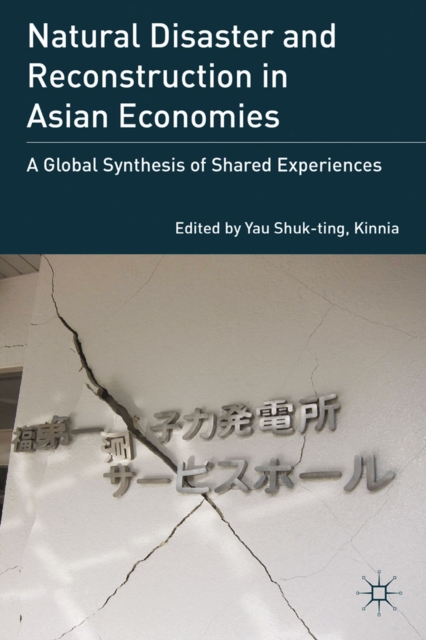
Based on conference proceedings presented at The Chinese University of Hong Kong in November 2012, Natural Disaster and Reconstruction in Asian Economies offers leading insight into and viewpoints on disasters from scholars and journalists working in Japan, China, the United States, and Southeast Asia.
Bringing together renewable energy and energy security, this book covers both the politics and political economy of renewables and energy security and analyzes renewable technologies in diverse and highly topical countries: Japan, China and Northern Europe.
A comprehensive examination of the inability of liberal capitalism to generate the technological innovations necessary to prevent dangerous climate change.
Experts from business, academia, governmental agencies and non-profit think tanks to form a transnational and multi-disciplinary perspectives on the combined challenges of environmental sustainability and energy security in the United States and Germany.
Having previously defined a good society as a sustainable society with a high level of development, significant provision of meaningful jobs, and low levels of inequality and social ills, Toward a Good Society in the Twenty-first Century provides a wide range of principles and policies that would be necessary if we are to achieve a good society.
Researchers and practitioners explore the effect of evolving global economic and political powers on energy security within the UK and puts forward practical options for moving towards a more energy secure system over both the short and long terms.
Analyzes quantitatively in a comprehensive, consistent, and integrated manner the production structure and productivity of postwar Japanese agriculture for the latter half of the 20th century, more specifically, 1957-97.
Analyses quantitatively in a comprehensive, consistent, and integrated manner the production structure and productivity of post-war Japanese agriculture for the latter half of the twentieth century, more specifically, 1957-97.
The contributors illustrate what twin analytical and practical challenges emerge from juxtaposing cultural, economic, historical, postcolonial, virtual, architectural, literary, security and political stances to the concept of the 'global city'.
With frequent discoveries of energy resources in remote and undeveloped areas, the importance of transnational oil and gas pipelines is set to grow ever more prominent.
Bringing together contributions from leading researchers, this volume reflects on the political, institutional and social factors that have shaped the recent expansion of wind energy, and to consider what lessons this experience may provide for the future expansion of other renewable technologies.
Combining theory, case studies and speculative fiction, a range of contributors, from leading UK academics to pioneering renewable activists, create a compelling picture of the potential perks and pitfalls of a low carbon future.
Although the title of this volume and its major focus will be on one major aspect of global sustainability - climate change - this volume continues with the overall framing of the series: global sustainability is a multi-faceted, global, multi-generational, economic, social, environmental, and cultural phenomenon and challenge to our species.