While more than 2,700 emergency removals of hazardous materials have taken place under Superfund, implementing the long-term cleanup program has been the object of considerable controversy.
This book clearly and authoritatively addresses significant issues of water policy in the western United States at a time when the growing scarcity of western water and the role of the Bureau of Reclamation in the allocation of that resource are becoming increasingly urgent issues.
In this book, Bowes and Krutilla bring together what is known and relevant about valuing the nonmarket services of the public forests and propose a new theoretical framework that allows multiple uses, the biological dynamics of the forest, and the institutional and economic realities of public forest management to be taken into account in forest planning and budgeting.
In this book, Bowes and Krutilla bring together what is known and relevant about valuing the nonmarket services of the public forests and propose a new theoretical framework that allows multiple uses, the biological dynamics of the forest, and the institutional and economic realities of public forest management to be taken into account in forest planning and budgeting.
Economists and others have long believed that by balancing the costs of such public goods as air quality and wilderness areas against their benefits, informed policy choices can be made.
Economists and others have long believed that by balancing the costs of such public goods as air quality and wilderness areas against their benefits, informed policy choices can be made.
In this pioneering study, Krutilla and Fisher put the amenity resources of natural environments into an analytical framework comparable to that for the extractive resources.
In this pioneering study, Krutilla and Fisher put the amenity resources of natural environments into an analytical framework comparable to that for the extractive resources.
With contributions from a wide array of economists, ecologists, and government agency professionals, Economics and Ecological Risk Assessment: Applications to Watershed Management provides a multidisciplinary approach to environmental decision-making at a watershed level.
Economic development and the environment are presumed to be in conflict, but the latter part of the twentieth century experienced a series of economic changes that increasingly questioned this view.
Economic development and the environment are presumed to be in conflict, but the latter part of the twentieth century experienced a series of economic changes that increasingly questioned this view.
In today's world - despite the dramatic anthropogenic environmental changes - a proper understanding of the relationship between humanity and nature requires a certain detachment.
In today's world - despite the dramatic anthropogenic environmental changes - a proper understanding of the relationship between humanity and nature requires a certain detachment.
In recent times not only have traditional areas of public economics such as taxation, public expenditure, public sector pricing, benefit cost analysis, and fiscal federalism thrown up new challenges but entirely new areas of research and inquiry have emerged.
In recent times not only have traditional areas of public economics such as taxation, public expenditure, public sector pricing, benefit cost analysis, and fiscal federalism thrown up new challenges but entirely new areas of research and inquiry have emerged.
Ian Steedman is recognised internationally as one of the leading economic theorists of his time and has made major contributions to the development of economic theory and economic thought, as substantiated by his work on Marx, Sraffa, Marshall, Jevons and Wicksteed.
Ian Steedman is recognised internationally as one of the leading economic theorists of his time and has made major contributions to the development of economic theory and economic thought, as substantiated by his work on Marx, Sraffa, Marshall, Jevons and Wicksteed.
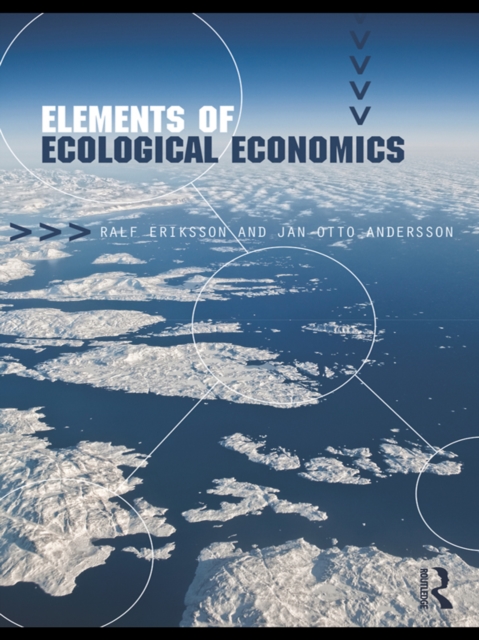
Elements of Ecological Economics provides a comprehensive introduction to the field of ecological economics, an interdisciplinary project trying to give answers to the problems related to the overexploitation of the earth's resources today.
Elements of Ecological Economics provides a comprehensive introduction to the field of ecological economics, an interdisciplinary project trying to give answers to the problems related to the overexploitation of the earth's resources today.
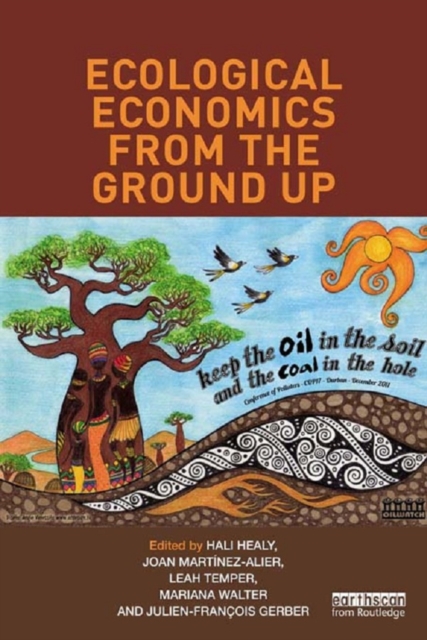
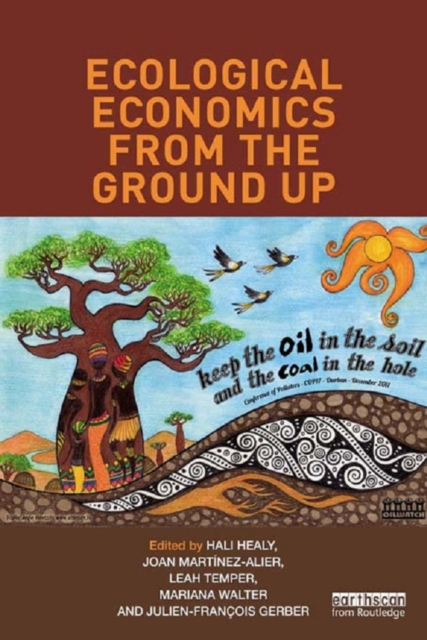
Ecological Economics from the Ground Up takes a unique and much-needed bottom-up approach to teaching ecological economics and political ecology, using case studies that focus on a wide range of internationally relevant topics, to teach the principles, concepts, methods and tools of these fields, which are seen as increasingly important in the context of the current triple social, economic and environmental crisis.
Ecological Economics from the Ground Up takes a unique and much-needed bottom-up approach to teaching ecological economics and political ecology, using case studies that focus on a wide range of internationally relevant topics, to teach the principles, concepts, methods and tools of these fields, which are seen as increasingly important in the context of the current triple social, economic and environmental crisis.
This book aims to explore the avenue of landscape economics and provides the building blocks (from different scientific disciplines) for an economic analysis of landscapes.
This book aims to explore the avenue of landscape economics and provides the building blocks (from different scientific disciplines) for an economic analysis of landscapes.
As the world's biggest polluter, the environmental challenges that China faces in controlling its airborne emissions are crucial, not only to its own population in terms of tackling the severe domestic air pollution, but also to the planet as it faces calls from the international community to accept its responsibilities in cutting greenhouse gases.
As the world's biggest polluter, the environmental challenges that China faces in controlling its airborne emissions are crucial, not only to its own population in terms of tackling the severe domestic air pollution, but also to the planet as it faces calls from the international community to accept its responsibilities in cutting greenhouse gases.
Although it is recognised that Thomas Robert Malthus was wrong when he posited a contradiction between population increase and agricultural growth, there are increasing signs that he could be proved right in the future.