In 2001 Germany and Austria became the last EU states to lift transnational controls restricting access to their labour markets for citizens of ex-communist countries.
Muslim minorities in China and India form only a small fraction of their respective populations, yet as they principally live in troubled border states, they are of key strategic importance in the war on terror.
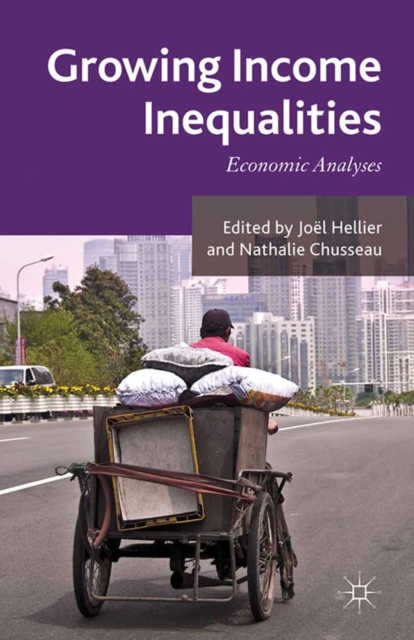
This book explores the widening gap between the wage packets of skilled and unskilled workers that has become a pressing issue for all states in the globalized world economy.
In a unique undertaking, Andrew Yuengert explores and describes the limits to the economic model of the human being, providing an alternative account of human choice, to which economic models can be compared.
Based on the findings of a large-scale, comparative research project, this volume systematically assesses the institutional design and national influence of the Open Method of Coordination in Social Inclusion and Social Protection (pensions and health/long-term care), at the European Union level and in ten EU Member States.
A state-of-the-art assessment of welfare provision, policy and reform at national and at EU level which spans the whole of Europe - East, West and Central.
This book looks at two aspects of Islamic activity in the Middle East and North Africa, the development of social capital and the provision of welfare services, within the context of economic liberalisation programmes to see whether the retrenchment of the state under liberalisation has created a space for Islamic-based activities.
This book examines the theory and practice of performance budgeting, which aims make government more effective by linking the funding of government agencies to the results they deliver.
Why hope matters as a metric of economic and social well-beingIn a society marked by extreme inequality of income and opportunity, why should economists care about how people feel?
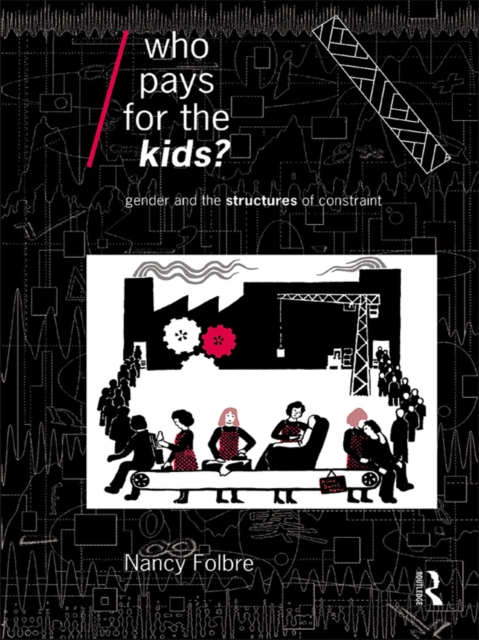
Three paradoxes surround the division of the costs of social reproduction:* Women have entered the paid labour force in growing numbers, but they continue to perform most of the unpaid labour of housework and childcare.
Current debates concerning the future of social security provision in advanced capitalist states have raised the issue of a citizen's basic income (CBI) as a possible reform package: a proposal based on the principles of individuality, universality and unconditionality which would ensure a minimum income guaranteed for all members of society.
Current debates concerning the future of social security provision in advanced capitalist states have raised the issue of a citizen's basic income (CBI) as a possible reform package: a proposal based on the principles of individuality, universality and unconditionality which would ensure a minimum income guaranteed for all members of society.
Economic growth is generally regarded by governments and most ordinary people as a panacea for all problems, including issues caused by the COVID pandemic.
Economic growth is generally regarded by governments and most ordinary people as a panacea for all problems, including issues caused by the COVID pandemic.
Many of the major international and intrastate crises and conflicts, but also the threat to democratic principles, are driven by belief systems and ideologies.
Originally published in 1982, this book gives a concise commentary on the development and performance of car ownership prediction procedures and a wide-ranging survey of the modelling techniques associated with forecasting.