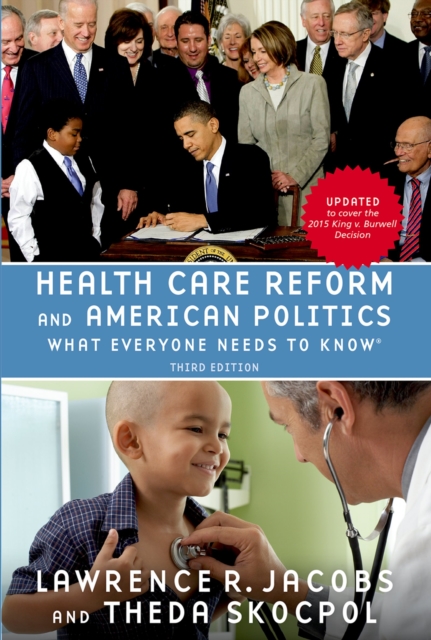
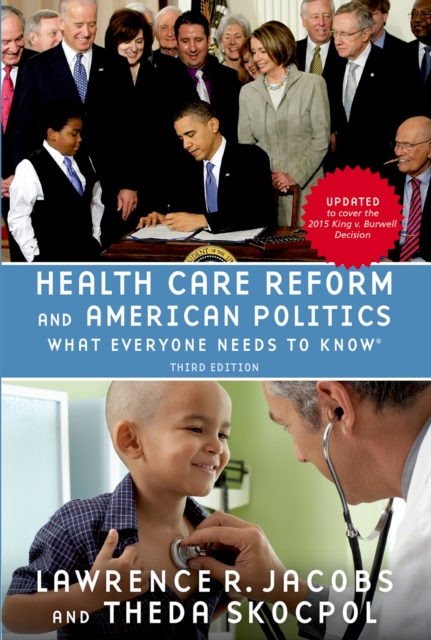
This book explores the role of the welfare state in the overall wealth and wellbeing of nations and in particular looks at the American welfare state in comparison with other developed nations in Europe and elsewhere.
This volume, arising from a PSE-CEPREMAP-DIMeco conference, includes contributions by the some of the best-known researchers in happiness economics and development economics, including Richard Easterlin, who gave his name to the 'Easterlin paradox' that GDP growth does not improve happiness over the long run.
Human Development is widely recognised as the overriding goal of development, yet its realization is challenged by growing inequality, macro-economic fluctuations, and recurrent financial crises.
This book focuses on market law and policy in sub-Saharan Africa, showing how markets can be harnessed by poorer and developing economies to help make the markets work for them: to help them integrate into the world economy and provide a better standard of living for their people while preserving their values of inclusive development.
This book focuses on market law and policy in sub-Saharan Africa, showing how markets can be harnessed by poorer and developing economies to help make the markets work for them: to help them integrate into the world economy and provide a better standard of living for their people while preserving their values of inclusive development.
Historically, the welfare state of the 20th century, which was built on the foundation of an industrial economy, seems poorly adapted to a 21st-century information age.
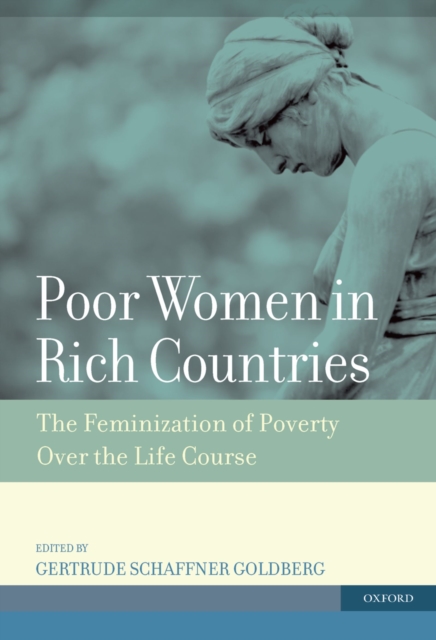
The transformation of women's lives over the past century is among the most significant and far-reaching of social and economic phenomena, affecting not only women but also their partners, children, and indeed nearly every person on the planet.
Historically, the welfare state of the 20th century, which was built on the foundation of an industrial economy, seems poorly adapted to a 21st-century information age.
The welfare state has, over the past forty years, come under increasing attack from liberals who consider comprehensive welfare provision inimical to liberalism.
The welfare state has, over the past forty years, come under increasing attack from liberals who consider comprehensive welfare provision inimical to liberalism.
How big of a role have national cultures--the collection of values, beliefs, attitudes and preferences--played in the formation of social and economic identities?
How big of a role have national cultures--the collection of values, beliefs, attitudes and preferences--played in the formation of social and economic identities?
The Oxford Handbook of Economics and Human Biology provides an extensive and insightful overview of how economic conditions affect human well-being and how human health influences economic outcomes.
The transformation of women's lives over the past century is among the most significant and far-reaching of social and economic phenomena, affecting not only women but also their partners, children, and indeed nearly every person on the planet.
The first book to study women's poverty over the life course, this wide-ranging collection focuses on the economic condition of single mothers and single elderly women--while also considering partnered women and immigrants--in eight wealthy but diverse countries: Canada, France, Germany, Italy, Japan, Sweden, the United Kingdom, and the United States.
American food aid to foreigners long has been the most visible-and most popular-means of providing humanitarian aid to millions of hungry people confronted by war, terrorism and natural cataclysms and the resulting threat-often the reality-of famine and death.
American food aid to foreigners long has been the most visible-and most popular-means of providing humanitarian aid to millions of hungry people confronted by war, terrorism and natural cataclysms and the resulting threat-often the reality-of famine and death.
The development discourse has long been dominated by best practices prescriptions for reform, but these are not a useful way of responding to the governance ambiguities of the early 21st century.
This book discusses Public-Private Partnerships (PPPs) and their potential to protect and maintain critical infrastructure in a variety of global governmental settings.
Over the last few decades universities in Australia and overseas have been criticized for not meeting the needs and expectations of the societies in which they operate.
The book compares neoclassical and Marxian economics and points out that both the schools of thought seek to analyze how a capitalist society functions.
Written by 43 authors from Africa, Europe and Latin America, this book presents 19 topics addressing poverty in the context of Sustainable Development Goals (SDGs), leadership in implementing SDGs, and SDGs in service delivery and local government.
This book explores how political, social, economic and institutional factors in eight emerging economies have combined to generate diverse outcomes in their move towards universal health care.
This cutting edge collection examines Japan's population issue, exploring how declining demographic trends are affecting Japan's social structure, specifically in the context of Greater Tokyo, life infrastructure, public finance and the economy.
This textbook contains a rigorous exposition of the mathematical foundations of two of the most important topics in politics and economics: voting and apportionment, at the level of upper undergraduate and beginning graduate students.
Why hope matters as a metric of economic and social well-beingIn a society marked by extreme inequality of income and opportunity, why should economists care about how people feel?