In this book, an international group of philosophers, economists and theologians focus on the relationship between justice, luck and responsibility in health care.
This collection of contributions from a diverse group of prominent international scientists and policy makers brings together their in-depth analyses and innovative ideas about how to resolve the 'energy for development' predicament.
Through analysis of the European Union Emissions Trading Scheme (EU ETS) and the Clean Development Mechanism (CDM), this book demonstrates how to use a variety of econometric techniques to analyze the evolving and expanding carbon markets sphere, techniques that can be extrapolated to the worldwide marketplace.
This volume contains articles from leading analysts and researchers on sustainable transportation, who provide critical reflections on how automobile-related climate policies have evolved up to now in Europe and around the world, in view of the widely recognized need to substantially curb global emissions of greenhouse gases in the coming decades.
In a concise and crisp manner, this book presents the state of the art in ecological economics, an interdisciplinary field focused on the analysis of sustainability of global, national and regional economic systems.
This volume - like the NATO Advanced Research Workshop on which it is based - addresses the fundamental science that contributes to our understanding of the potential risks from ecological terrorism, i.
Fifty years after the famous essay "e;The Problem of Social Cost"e; (1960) by the Nobel laureate Ronald Coase, Law and Economics seems to have become the lingua franca of American jurisprudence, and although its influence on European jurisprudence is only moderate by comparison, it has also gained popularity in Europe.
Computational Models in the Economics of Environment and Development provides a step-by-step guide in designing, developing, and solving non-linear environment-development models.
Shaili touches upon the most relevant issues of our times which most often are closed door conversations in a highly readable, heroic and engaging way.
This book is a compilation of nineteen articles, on various urban issues that provide considerable challenges not only for the national government, but also for the city managers in contemporary India.
Met de recente decentralisaties in de care ontstaat er een nieuw speelveld waarbij beleidsterreinen in elkaar overvloeien en de burger en de cliënt centraal staan.
This book is particularly concerned with China's path to green development and how it can be understood, exploring questions such as how the goal of Chinese-led green development can be achieved.
The characteristics and reasons for urban poverty are manifold and seem to repeat across class structures: migration, culture shock, real estate costs and unrealistic expectations of city life, a lack of financial education, corporate cultures that perpetuate stereotypical workforces, a glamourised entrepreneurial culture that focuses on icons of spending instead of struggle, and economically and politically, the rise of the cashless credit economy and the demise of the thrift economy and its conservative icons.
Class insecta is numerically the largest class of the largest phylum outnumbering the total number of all the other known species of the rest of the animal kingdom.
This volume is a collection of essays that provide a comprehensive coverage of multiple aspects of the discourse on environment, development and sustainability.
This book Food in a Planetary Emergency is a timely overview of the current food systems and the required transformations to respond to the challenges of climate change, population pressures, biodiversity loss and use of natural resources, such as soils, water and phosphorus.
This book focuses on urbanization as an attendant consequence of industrialization and sheds light on urban problems such as housing shortages and poverty of jobless people, and the housing and social policies implemented by central and local governments to deal with these problems.
This important volume focuses on the sensitive issue of interrelationships between national parks situated near or within urban areas and their urban environment.
This timely contribution to the global literature on health inequities approaches the subject through a synthesis and analysis of relevant published literature on India.
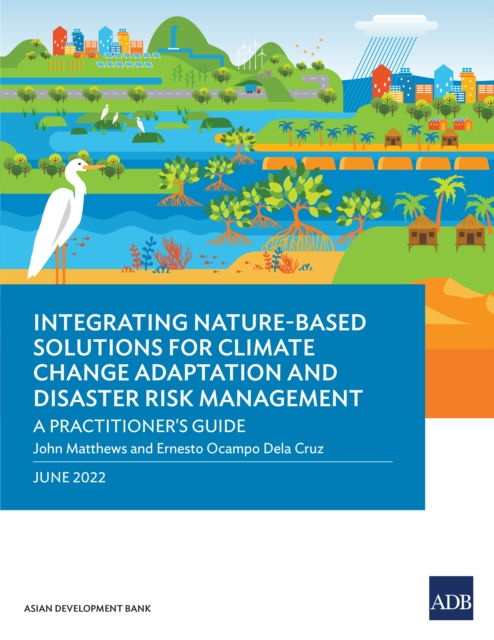
Nature-based solutions (NBS) are interventions to protect, restore, and sustainably manage natural or modified ecosystems to support both biodiversity and human well-being.
The CAREC Health Strategy 2030 aims to enhance health security through regional cooperation, benefiting the Central Asia Regional Economic Cooperation (CAREC) region's population (including migrants and vulnerable population groups), health system managers and workers, and active development partners; and CAREC countries' ministries of health.
ADB's corporate strategic framework Strategy 2030 calls for strengthening of its country-focused approach and promoting knowledge management to apply innovative approaches in the bank's operations.
The Greater Mekong Subregion COVID-19 Response and Recovery Plan 2021-2023 complements the national recovery plans of the GMS countries, which aims to facilitate regional cross-border cooperation.
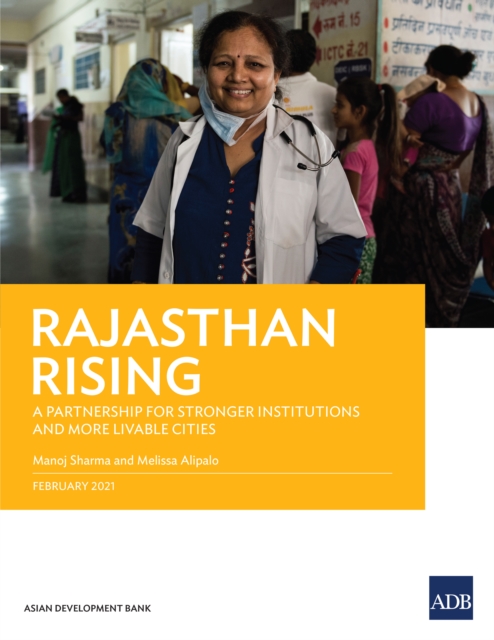
Since 1998, the Asian Development Bank and the Government of Rajasthan have partnered to bring sustainable development to the cities and towns of Rajasthan, in northwest India.
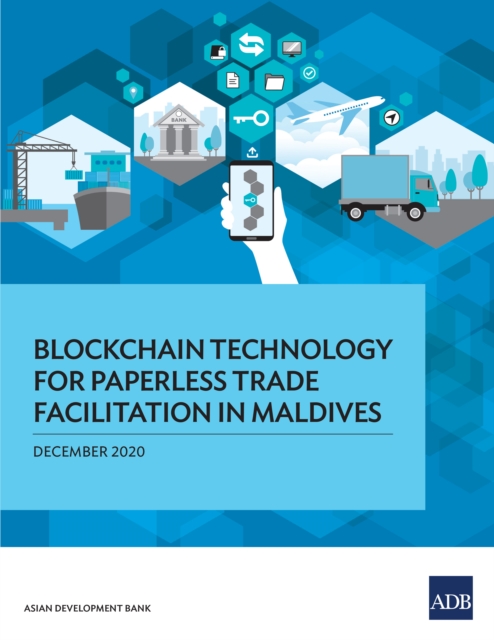
The Asian Development Bank, under the South Asia Subregional Economic Cooperation program, is helping Maldives implement a robust domestic and regional trade system.
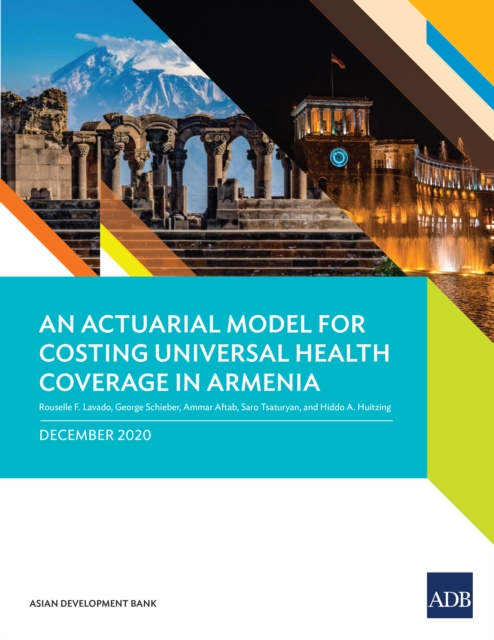
The Asian Development Bank seeks to assist the Government of Armenia in undertaking major health financing reforms to achieve universal health coverage (UHC) within the context of the Sustainable Development Goals and improving health system performance.
This report is a key resource for understanding the dynamic trade and production linkages of South and Central Asian economies to support data-driven policy making and implementation.
This report is a key resource for understanding the dynamic trade and production linkages of East Asian economies to support data-driven policy making and implementation.
The Asian Development Bank (ADB), in collaboration with the United Nations Environment Programme (UN Environment), prepared this tool compendium to help address the issues, challenges, and barriers faced by developing countries from Asia and the Pacific in the successful implementation of the environmental dimensions of the Sustainable Development Goals (SDGs).