Consistency and Viability of Islamic Economics Systems and the Transition Process outlines the transition problem for non-market economies and creates an analytic framework for understanding the cause and effect of these economies.
Using original qualitative ethnographic field interviews and quantitative field survey results, Consumption, Informal Markets, and the Underground Economy explores the rationale for and model of 'off the books' consumption in a borderlands environment.
The financial crisis and the ensued 'great recession' are primarily caused by the excessive liquidity that was created in the last thirty years or so of inequality that benefited greatly the financial sector, deregulation and financial liberalisation as well as financial innovation.
Using the frameworks of systems theory, modernization, and the world system, New Age Globalization presents a composite multilevel, multidirectional picture of globalization informed by eight different but interdependent subsystems.
One of the major obstacles unions face in building influence in the workplace is the opposition and resistance from those that own those workplaces, namely, the employers.
This collected edition captures the essence of private equity development in emerging markets, examining the evolution of the private equity industry as well as exit opportunities, financial performance, and anticipated future trends.
By examining a sector of the economy that was exposed to increased imports more than four decades ago, Crumley illuminates the economic pressures, resistance, and reform that help to shape Russia's agrarian sector today.
Core-Periphery Relations and Organization Studies draws together postcolonial and indigenous thinking through the conceptual lens of core-periphery relations to advance debate in organization studies.
International business (IB) research on Asian firms is on the rise, challenging conventional theories and providing opportunities for IB researchers to address several paradoxical issues such as ownership advantage and risk-returns.
Provides an understanding of how HRM policies and practices differ across countries and how the development of management practice may be affected by different institutional and cultural contexts.
This book is a one-stop reference for practitioners and academics in finance, business and economics, providing a holistic reference to the international agriculture business.
Through the prism of 'Nowa Huta', a landmark of socialist industrialization, Trappmann challenges the one-sided account of Poland as a successful transition case and reveals the ambivalent role of the European Union in economic restructuring.
This book is based on an international comparison observing a series of universities, where diversity remains huge when considering how single institutions position themselves in terms of quality standards and combine resources, as well as the alternatives they have access to given their organizational and cultural governance path dependence.
This volume examines the main factors for developing country trade performance in the last thirty years, their own trade policies, market access issues they face, and their increasingly more effective participation in the WTO and the Doha Round of multilateral trade negotiations.
Submerging Markets is a valuable resource asset to the world academic community, government agencies, global business organizations and anyone interested in the impact of the new financial regulations and reforms implemented after the 2008 crisis, relative to the possible and probable future economic growth rates of the emerging markets (BRICS).
In 2001 Germany and Austria became the last EU states to lift transnational controls restricting access to their labour markets for citizens of ex-communist countries.
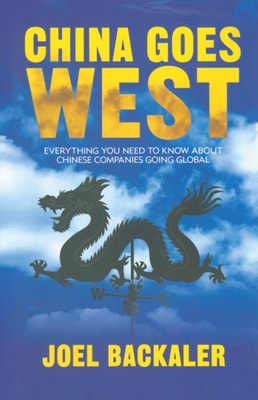
Presenting an unrivalled perspective into the inner-workings of Chinese corporations and their expansion plans for international markets, this book combines executive interviews and first-hand accounts providing the sorely needed context to the rise of Chinese companies in home and overseas markets and how the West can successfully compete.
Emerging market economies account for eighty percent of the world's population and some 75% of its trade growth in the foreseeable future, following US Department of Commerce data.
The rise of emerging market luxury brands, digital and online innovations, and growth in consumption globally has opened the doors for seasoned luxury houses and new players to expand their horizons.
This book provides researchers and students with an understanding of the basic legal tenets of the Islamic finance industry, studying the real economic effects of those tenets using the tools of the modern economic theory.
This book explores the widening gap between the wage packets of skilled and unskilled workers that has become a pressing issue for all states in the globalized world economy.
This third annual volume of the International Place Branding Yearbook looks at the case for applying brand and marketing strategies to the economic, social, political and cultural development of cities, towns and regions around the world to help them compete in the global, national and local markets.
An examination of how Botswana overcame the legacies of exceptional resource deficiency and colonial neglect, to transform itself from one of the poorest nations of the world to a middle income economy.
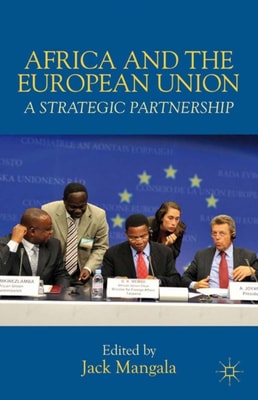
The adoption of the Joint Africa-EU Strategy (JAES) in 2007 was a watershed moment in Africa-EU relations, one that sought to 'reinvent' a historical relationship to meet the challenges posed by complex interdependencies, expanding globalization, and growing competition, all framed by the gradual dislocation of the West as the epicenter of world politics.
Explores the transformations that have taken place in Japanese workplaces since the dawn of the new millennium in terms of management practices, particularly in the areas of Human Resource Management and organizational culture.