This book addresses the evolution of the strategies, structures, ownership patterns and performances of large European corporations since the early 1960s.
To convey the image of a responsible power willing to contribute to regional stability and cooperation, China has shifted from a single-minded preference for bilateralism to an active participation in East Asian regionalism in the recent decades.
To convey the image of a responsible power willing to contribute to regional stability and cooperation, China has shifted from a single-minded preference for bilateralism to an active participation in East Asian regionalism in the recent decades.
For the last 60 years, Saudi Arabia has assumed a vital economic role and has been situated on the center stage of the global economic and political scene.
For the last 60 years, Saudi Arabia has assumed a vital economic role and has been situated on the center stage of the global economic and political scene.
This book endeavors to examine the impact of China's rapid ascendance as a donor on the "e;international development assistance regime"e; over the past two decades.
The book arose from a multi-disciplinary study which looked at the development of global-local manufacturing clusters in the context of a developing, Asian economy.
The book arose from a multi-disciplinary study which looked at the development of global-local manufacturing clusters in the context of a developing, Asian economy.
First published in 1993, this title explores the underlying ideologies and decision-making procedures that codify the rules of the post-World War II liberal, now defunct Soviet socialist, mercantilist and South preferential trade regimes.
First published in 1993, this title explores the underlying ideologies and decision-making procedures that codify the rules of the post-World War II liberal, now defunct Soviet socialist, mercantilist and South preferential trade regimes.
The first edition established itself as one of the leading books to situate the issue of intellectual property within the discipline of International Political Economy (IPE).
The first edition established itself as one of the leading books to situate the issue of intellectual property within the discipline of International Political Economy (IPE).
The introduction examines the Russian Federation as a whole, and consists of an essay written by an acknowledged expert focusing on the evolution of the relationship between the central state and the regions, followed by a chronology, demographic and economic statistics, and a review of the Federal Government.
The introduction examines the Russian Federation as a whole, and consists of an essay written by an acknowledged expert focusing on the evolution of the relationship between the central state and the regions, followed by a chronology, demographic and economic statistics, and a review of the Federal Government.
In the same way that no economy starts out with the best set of economic policies, no economy starts out with the best institutions to support the policy-making process.
In the same way that no economy starts out with the best set of economic policies, no economy starts out with the best institutions to support the policy-making process.
This book examines the political origins of financial institutions across fifteen developed democracies, with focused case studies on the US, France, Japan, Austria, and Germany.
This book examines the political origins of financial institutions across fifteen developed democracies, with focused case studies on the US, France, Japan, Austria, and Germany.
In noting that the actions of entities other than states in the economic arena can and often do have a profound effect on human rights, this book poses the question as to how international human rights law can and should address that situation.
In noting that the actions of entities other than states in the economic arena can and often do have a profound effect on human rights, this book poses the question as to how international human rights law can and should address that situation.
Neoliberalism is based on the systematic use of state power to impose, under the veil of 'non-intervention', a hegemonic project of recomposition of capitalist rule in most areas of social life.
Neoliberalism is based on the systematic use of state power to impose, under the veil of 'non-intervention', a hegemonic project of recomposition of capitalist rule in most areas of social life.
The most important issue for development centres on the debate about the centrality of knowledge, technology and innovation to the process of economic development.
The most important issue for development centres on the debate about the centrality of knowledge, technology and innovation to the process of economic development.
Since the General Agreement on Trade in Services (GATS) was created in 1995, there has been international pressure towards the liberalization of education all over the world, as well as new challenges to the traditional internationalization rationale in the field of higher education.
Since the General Agreement on Trade in Services (GATS) was created in 1995, there has been international pressure towards the liberalization of education all over the world, as well as new challenges to the traditional internationalization rationale in the field of higher education.
The transformation of the Vietnamese economy from socialist planning to a market economy has led to Vietnam having one of the fastest economic growth rates in the world; and to also to Vietnam engaging much more with the international economy, joining the World Trade Organisation in 2006.
The transformation of the Vietnamese economy from socialist planning to a market economy has led to Vietnam having one of the fastest economic growth rates in the world; and to also to Vietnam engaging much more with the international economy, joining the World Trade Organisation in 2006.
Originally published in 1987 to commemorate the 40th anniversary of the Marshall Plan, this fascinating collection of essays, from an eminent 'insider' to the Marshall Plan, combines economics, politics and history to provide authoritative and personal insights into the creation of one of the greatest foreign aid programmes of the twentieth century.
Originally published in 1987 to commemorate the 40th anniversary of the Marshall Plan, this fascinating collection of essays, from an eminent 'insider' to the Marshall Plan, combines economics, politics and history to provide authoritative and personal insights into the creation of one of the greatest foreign aid programmes of the twentieth century.
In this title, first published in 1978, Sir Arthur Lewis considers the development of the international economy in the forty years leading up to the First World War, with the adoption of the gold standard, a rapid growth in world trade, the opening up of the continents by the railways, vast emigration from Europe, India and China, and large-scale international investment.
In this title, first published in 1978, Sir Arthur Lewis considers the development of the international economy in the forty years leading up to the First World War, with the adoption of the gold standard, a rapid growth in world trade, the opening up of the continents by the railways, vast emigration from Europe, India and China, and large-scale international investment.
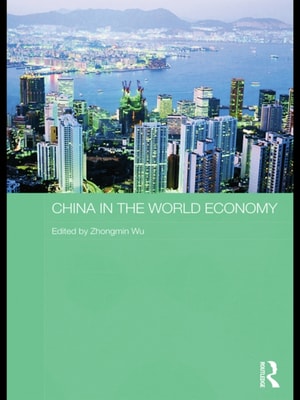
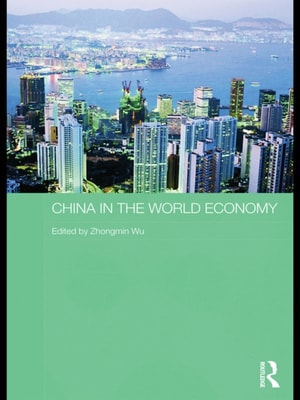
China's economy continues to grow at a great rate, with important consequences for China's society and environment, as well as for the wider world economy.
China's economy continues to grow at a great rate, with important consequences for China's society and environment, as well as for the wider world economy.
'A masterclass in spotting the early signs of a crisis' Nouriel Roubini'This is the historical perspective we need' John Kay'A first point of entry for anybody who wants to learn how the world sleep-walked into multiple crashes' Daron Acemoglu'Fascinating, well-written and authoritative' Tim Harford-----------------------------------------------------------------The global economy has weathered the most tumultuous century in modern financial history.
Based on a timely reassessment of the classic arguments of Weber, Schumpeter, Hayek, Popper, and Parsons, this book reconceptualizes actually-existing capitalism.
Based on a timely reassessment of the classic arguments of Weber, Schumpeter, Hayek, Popper, and Parsons, this book reconceptualizes actually-existing capitalism.