Recent economic history suggests that a key element in economic growth and development for many countries has been an aggressive export policy and a complementary import policy.
The present volume contains the texts of the papers and criti- cal commentary presented at the one-day conference "e;Financing the world economy in the nineties"e; at Tilburg University (23 March 1988).
This book contains the key-note lectures and a selection of papers that were presented at the 15th Conference of the European Association for Research in Industrial Econo- mics (EARlE) held under the auspices of GRASP at Erasmus University Rotterdam in 1988, plus an introductory chapter by the Editors.
This book is the outgrowth of the editors' conviction that there is a need for a current and comprehensive examination of international economic issues within the framework of institutional economics.
Since I first published Management of Foreign Exchange Risk (Lexington Books, 1978), financial innovation-spurred, in part, by exploding volatility in currency prices-has revolutionized the theory and praxis of foreign exchange risk management.
In less developed countries (LDCs) there is considerable concern that the developments in the Central and Eastern European Countries (CEECs) may lead to a more inward looking European Union (EU).
At the end of 1992, things will never again be the same inside the European Economic Community (EEC), because, as that year draws to a close, the aims of the Single Act of European Union (SAEU), which became law in July, this year, will have become effective - thus creating a 'real' Common Market.
The papers collected in this volume are those presented at the fourteenth Colloquium arranged by the Societe Universitaire Europeenne de Recher- ches Financieres (SUERF), which took place in Helsinki in May 1988.
This compact volume is meant as a modest contribution to the ongoing debate on how to transform in particular the radically reforming Eastern European economies into more productive sociopolitical organizations.
Lawrence Klein, University of Pennsylvania Jaime Marquez, Federal Reserve BoarrI* All examination of the economics literature over the last twenty years reveals a marked tendency towards polarisation.
Modeling North American Economic Integration presents descriptions of the models and the central results obtained by four teams of economic modelers who analyze the impact of the North American Free Trade Agreement (NAFTA) on the economies of Canada, Mexico and the USA.
This volume brings together an interdisciplinary group of scholars around an important question: how has migration changed in Europe as the European Union has enlarged, and what are the consequences for countries (and for migrants themselves) inside and outside of these redrawn jurisdictional and territorial borders?
In the context of the continuous advance of information technologies and biomedicine, and of the creation of economic blocs, this work analyzes the role that data protection plays in the integration of markets.
Exploiting econometric techniques aimed at dealing with the dynamics of economic systems and the heterogeneity of agents performances, the volume integrates innovation-based reasoning with ex-post analyses, and presents ex-ante analyses able to evaluate the role of climate change policies by using computable general equilibrium models such as the Global Trade Analysis Project for Energy (GTAP-E).
This seminal book results from a NATO Advanced Research Workshop at the University of Cambridge with Russian co-directorship, enabling the first formal dialogue between NATO and Russia about security issues in the Arctic Ocean.
This unique book investigates the implications of the rising importance of supra-national regional organizations for global governance in general, and for the United Nations, in particular.
This uniquely interdisciplinary volume analyzes the challenges posed by the heterogeneity of the world where radically different players are crammed into increasingly limited political, commercial, social, and ecological space.
The book contributes to the growing literature pertaining to empirical and policy issues in international trade, foreign capital flows and issues in finance, implications for India and emerging economies related to trade and development interface, and analysis of sector level growth and development in India.
This volume offers to compare and explain variances of regionalism in Asia by disclosing the distinctive features of regional arrangements and how they evolved during the 1990s and 2000s against the background of a changing global environment.
A persistently large trade finance gap is an ongoing global challenge, particularly for small and medium-sized enterprises, which continue to face significant barriers to access financing.
Aid for trade has an important role to play in supporting Asia and the Pacific's recovery from the coronavirus disease (COVID-19) pandemic, especially for the region's lower-middle-income and least developed countries.
This publication features a broad suite of statistical indicators characterizing the supply-and-use interactions of economic sectors within and across 25 economies of Asia and the Pacific.
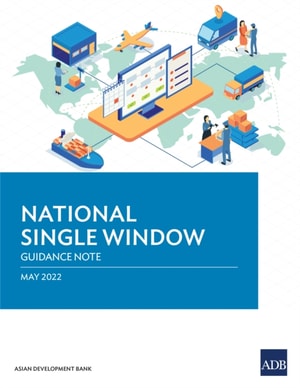
The national single window (NSW) enables an environment for traders and transport service providers to interact efficiently with cross-border regulatory agencies in international trade.
The Regional Comprehensive Economic Partnership (RCEP) is a milestone achievement in the regional economic integration led by the Association of Southeast Asian Nations (ASEAN) over the last 3 decades.
This report presents the findings of the second Provincial Facilitation for Investment and Trade (ProFIT) survey in the Lao People's Democratic Republic (Lao PDR).
The services sector is becoming a key driver of economic development in most members of the Central Asia Regional Economic Cooperation (CAREC) Program.
Members of the Central Asia Regional Economic Cooperation (CAREC) Program rely on open-sea ports of third-party countries outside borders as conduits for exports and imports.
This publication builds on a vision for Assam, the largest state in northeast India, to follow an outward-looking growth strategy and become a $75 billion economy by 2025.
The Greater Mekong Subregion Economic Cooperation Program Strategic Framework 2030 (GMS-2030) aims to strengthen regional cooperation and integration in critical areas.