Anhand des Maastricht-Urteils ist ein grundlegender Justizkonflikt zwischen Bundesverfassungsgericht und Europäischem Gerichtshof über die letztverantwortliche Kontrolle der Gemeinschaftskompetenzen festzustellen.
Economic globalization has intensified on the basis of new international links, especially in the field of foreign direct investment, financial capital flows and telecommunications liberalization.
The economic transfonnation taking place in Eastern Europe and Asia is in particular a challenge for Japan and Gennany, because these two states as the immediate neighbors of the developing regions are directly affected and also because they are the strongest economic powers in their regions and have the necessary potential to influence developments there.
Many European, Latin American and Asian countries have experience with regional policies aiming to reduce regional disparities in GDP per capita and/or to develop problem regions helping to recover from its GDP decrease.
In Understanding International Trade, Reto Foellmi and Stefan Legge provide a clear, structured, and profound introduction to the theory of international trade.
On the Trail of Capital Flight from Africa investigates the dynamics of capital flight from Angola, Cote d'Ivoire, and South Africa, countries that have witnessed large-scale illicit financial outflows in recent decades.
On the Trail of Capital Flight from Africa investigates the dynamics of capital flight from Angola, Cote d'Ivoire, and South Africa, countries that have witnessed large-scale illicit financial outflows in recent decades.
This book takes as its subject the intensely private discussions that arise when ordinary people confront life and death choices and struggle with decisions in a world of medical and scientific complexity.
This book takes as its subject the intensely private discussions that arise when ordinary people confront life and death choices and struggle with decisions in a world of medical and scientific complexity.
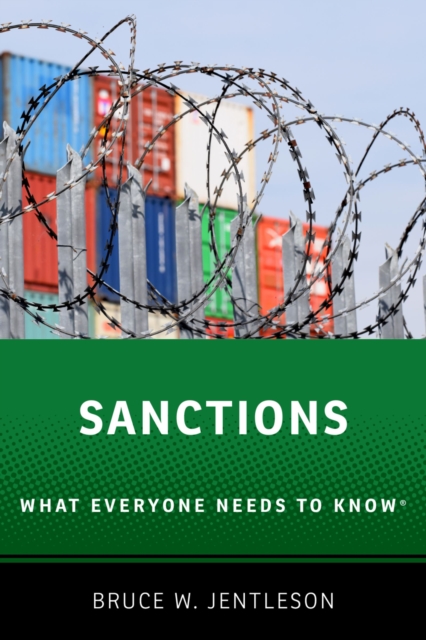
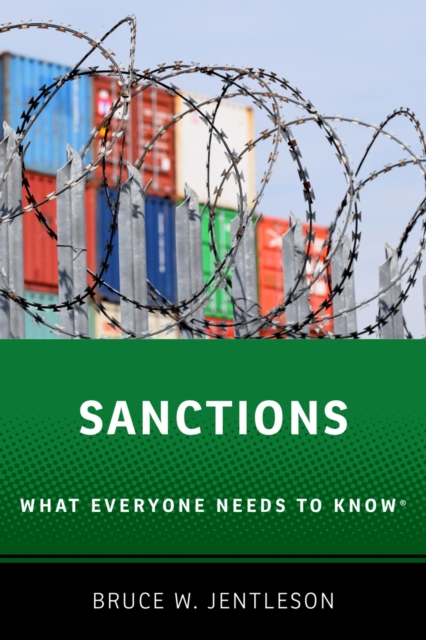
A concise, authoritative overview of a little-understood yet extremely important phenomenon in world politics: the use of economic sanctions by one country to punish another.
A concise, authoritative overview of a little-understood yet extremely important phenomenon in world politics: the use of economic sanctions by one country to punish another.
The rules and regulations governing international trade have grown at an exponential rate in the years since the Uruguay Round agreements established the WTO in 1995.
The rules and regulations governing international trade have grown at an exponential rate in the years since the Uruguay Round agreements established the WTO in 1995.
The Trade & Cooperation Agreement (TCA) is the treaty which regulates free trade and economic arrangements between the European Union (EU) and the United Kingdom (UK) post-Brexit.
In an era of mounting global crises—from climate change and inequality to debt, migration, and artificial intelligence—the role of multilateralism has never been more urgent.
In an era of mounting global crises—from climate change and inequality to debt, migration, and artificial intelligence—the role of multilateralism has never been more urgent.
This book fills the urgent need for a comprehensive understanding of the law, institutions, and processes shaping international economic dispute settlement within and beyond Africa.
It examines the context in which multi-national companies operate and how the key players interact with each other and with the external business environment.
This book fills the urgent need for a comprehensive understanding of the law, institutions, and processes shaping international economic dispute settlement within and beyond Africa.
It examines the context in which multi-national companies operate and how the key players interact with each other and with the external business environment.
This book, the second of two volumes, presents a global perspective, with case studies from each continent, on the political economy of indigenous populations.
This book, the second of two volumes, presents a global perspective, with case studies from each continent, on the political economy of indigenous populations.
This book, the first of two volumes, presents a global perspective, with case studies from each continent, on the political economy of indigenous populations.
This book, the first of two volumes, presents a global perspective, with case studies from each continent, on the political economy of indigenous populations.