This book explains how the US dollar serves as the primary reserve currency for the international financial system and assesses its prospects for the future.
This book explores interactions between the new generation EU FTA and the WTO dispute settlement mechanisms, adopting an innovative, comprehensive approach.
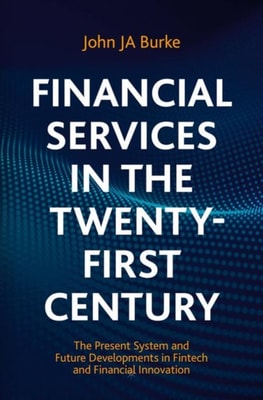
This book exemplifies the potential of FinTech to deliver important economic and societal gains, such as enhancing competition and financial inclusion to deliver tailored financial products and services at more affordable prices and at greater convenience.
This book examines and proposes a legal framework for the creation of a regional space agency for Latin America especially in regard of pivotal aspects such as institutional structures, transfer of competences and cooperation agreements facilitating Latin America to act with one voice on the international space stage.
This book looks into the relationship between financial development, economic growth, and the possibility of a potential capital flight in the transmission process.
Oil and Gas in Trinidad and Tobago presents a historical economic review of the energy sector of Trinidad and Tobago, followed by a detailed evaluation of policies associated with resource abundance and the effects on the economy from various perspectives, including industrialization, labor productivity, education, export diversification, and competitiveness.
This book is for people who want to know what to do with the money they save: so that it's there when they need it - to buy a home, pay for college, etc.
This handbook provides a reference resource to showcase insightful and nuanced perspectives on Africa's agriculture, industry, services, and manufacturing sectors; factors affecting the sectors' competitiveness; and the sectors' contribution to employment, economic growth, and sustainable development.
This book examines cooperation between the US and the EU on financial regulatory reform, notably at the outset and the first three years of the global financial crisis.
This book evaluates the institutional environments of China and the United States, and the West more broadly, and how they affect their trading relationship, with specific emphasis on intellectual property theft and other allegations of unfair competition.
This book is an in-depth study of how to promote integrity and avoid fraud & corruption in the work of international organisations, in particular multilateral development banks, such as the European Investment Bank, World Bank, Asian/Inter-American/African Development Banks and European Bank for Reconstruction and Development.
This book analyses several aspects on the efficient resource allocation in the aftermath of the global financial crisis and the European sovereign debt crisis.
The book builds on an important emergent body of discussion which questions, both empirically and theoretically, the conventional neoclassical doctrine that economies are more efficient if the state withdraws from it.
With the ongoing evolution of the digital society challenging the boundaries of the law, new questions are arising - and new answers being given - even now, almost three decades on from the digital revolution.
This book offers in-depth legal and political analysis concerning the compatibility of the Westphalian state model with globalization and the digital revolution.
This book explains the consequences of global policy initiatives against money laundering, terrorist financing, and tax evasion on financial centres located in offshore jurisdictions in the Caribbean region.
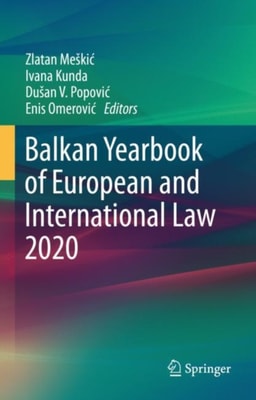
The second volume of the Balkan Yearbook of European and International Law (BYEIL) focuses on the United Nations Convention on Contracts for the International Sale of Goods (CISG), which was signed 40 years ago.
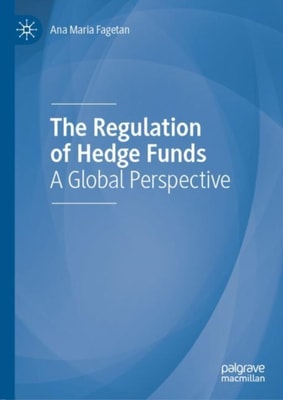
This book analyses elements of international finance, comparing the regulation of hedge funds in United States, Europe, the UK, and off-shore jurisdictions in the aftermath of the financial crisis.
This book adopts a comprehensive approach, combining the views of economists and political scientists, to assess the threats of maintaining the non-collaborative stance that prevailed in the response to past crises, and to explore new solutions to the present emergency.
This novel book, motivated by the recent introduction of a major innovation in information technology, explores the possibility of the Internet being made available to millions of poor people in developing countries, who are not yet connected.
This book paints a wide canvas of the immense global economic potential of ten most important cash generating crops spread over Asia, Africa and Latin America, namely, Arecanut, Cashew Nut, Coconut, Cinchona, Cocoa, Coffee, Tea, Oil Palm, Rubber and Wattle.
This book provides a rigorously chronological journey through the economic history of modern Spain, always with an eye opened to what happens in the international economy and a focus on economic policy making and institutional change.