The Census Bureau has recently begun releasing official statistics that measure the movements of firms in and out of business and workers in and out of jobs.
America's expansion to one of the richest nations in the world was partly due to a steady increase in labor productivity, which in turn depends upon the invention and deployment of new technologies and on investments in both human and physical capital.
Your guideusing the compelling stories of changemakers and the tools of economicsto the transformation and future possibilities of the business and economics of space.
Every day, in every sector of our economy, a business shuts down while another starts up, jobs are created while others are cut, and workers are hired while others are laid off.
Since the 1970s, the striking increase in immigration to the United States has been accompanied by a marked change in the composition of the immigrant community, with a much higher percentage of foreign-born workers coming from Latin America and Asia and a dramatically lower percentage from Europe.
As the Clinton administration considers major overhauls in health insurance, welfare, and labor market regulation, it is important for economists and policymakers to understand the impact of social and welfare programs on employment rates.
As the structure of the economy has changed over the past few decades, researchers and policy makers have been increasingly concerned with how these changes affect workers.
Redistribution, or subsidies and regulations intended to help the poor, unemployed, and financially distressed, have changed in many ways since the onset of the recent financial crisis.
Despite international and national guarantees of equal rights, there remains a great deal to be done to achieve global employment equality for individuals with disabilities.
Despite international and national guarantees of equal rights, there remains a great deal to be done to achieve global employment equality for individuals with disabilities.
Redistribution, or subsidies and regulations intended to help the poor, unemployed, and financially distressed, have changed in many ways since the onset of the recent financial crisis.
Expectations, Employment and Prices brings Keynesian economics into the 21st century by providing a new paradigm that explains how high unemployment could potentially persist forever without a little help from the government.
An intense debate has played out in recent years regarding how to implement a so-called "e;flexicurity system"e;-a labor market reform that combines flexibility, particularly in the hiring and firing process of firms, with security in the employment and income of the workforce.
Expectations, Employment and Prices brings Keynesian economics into the 21st century by providing a new paradigm that explains how high unemployment could potentially persist forever without a little help from the government.
The Oxford Handbook of Economics and Human Biology provides an extensive and insightful overview of how economic conditions affect human well-being and how human health influences economic outcomes.
The development discourse has long been dominated by best practices prescriptions for reform, but these are not a useful way of responding to the governance ambiguities of the early 21st century.
The Oxford Handbook of Offshoring and Global Employment deals with a key issue of our time: How do globalization, economic growth and technological developments interact to impact employment?
The Oxford Handbook of Offshoring and Global Employment deals with a key issue of our time: How do globalization, economic growth and technological developments interact to impact employment?
Many of the best and brightest citizens of developing countries choose to emigrate to wealthier societies, taking their skills and educations with them.
This book explains how three major mechanisms of globalization international trade, international migration, and the activities of multinational companies have altered working conditions and labor rights around the world during the late 20th century.
With much of Europe plagued by high levels of unemployment, it has become widely accepted that the culprit is labor market rigidity and that the prescription can only be labor market deregulation: lower wages, higher earnings inequality, greater decentralization in bargaining, less generous unemployment benefits, more hiring flexibility, and less job security.
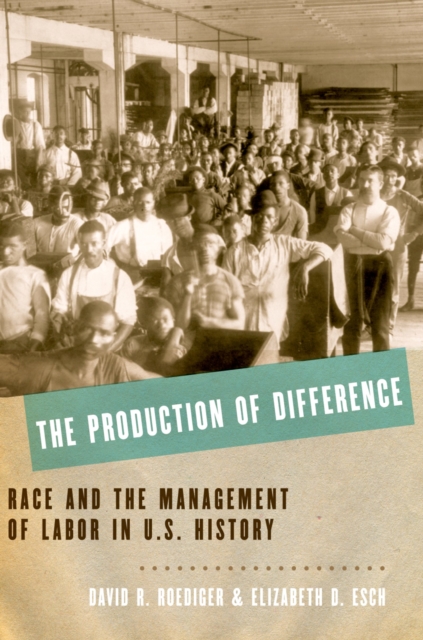
By the mid-eighteenth century, the transatlantic slave trade was considered to be a necessary and stabilizing factor in the capitalist economies of Europe and the expanding Americas.
A comprehensive examination of the nature, causes, and consequences of internal migration in developing countriesDespite the key role of rural-urban migration in structural transformation and the persistence of lower living standards in the countryside, active policies to reduce, or even reverse, movement into towns are common in major developing regions.