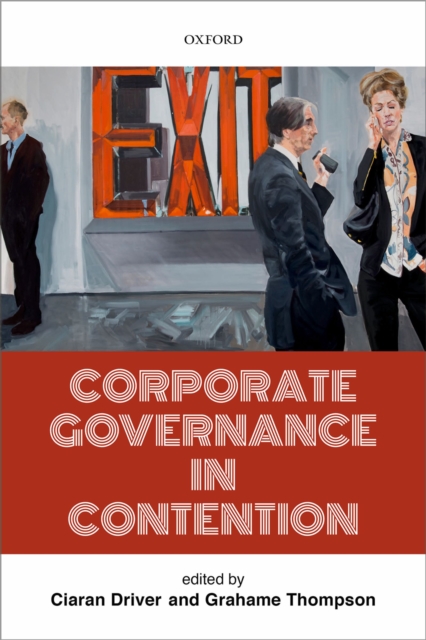
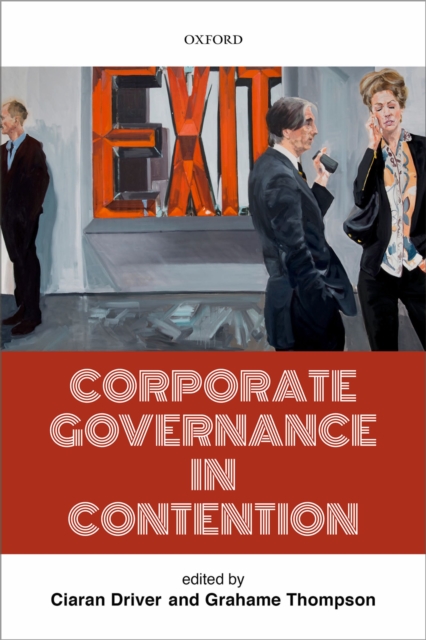
Corporate governance is a complex idea that is often inappropriately simplified as a cookbook of recommended measures to improve financial performance.
Corporate governance is a complex idea that is often inappropriately simplified as a cookbook of recommended measures to improve financial performance.
This graduate textbook offers advanced and contemporary readings in international trade and economic development and provides an overview of the fundamental topics in this area.
The recent financial crisis has created a public outcry over top-executive pay packages and has led to calls for reform of executive pay in Europe and the US.
International Migration Law provides a detailed and comprehensive overview of the international legal framework applicable to the movement of persons across borders.
International Migration Law provides a detailed and comprehensive overview of the international legal framework applicable to the movement of persons across borders.
The book provides a comprehensive, comparative treatment of the development of New Investment Funds (NIFs)--private equity, hedge funds, and sovereign wealth funds--and their impact upon labour and employment.
Globally, there is a commitment to eliminate poverty; and yet the politics that have caused anti-poverty policies to succeed in some countries and to fail in others have been little studied.
This collection of essays, from leading economic experts on the UK labour market, provides an overview of the key issues concerning the performance of the labour market, and the policy issues surrounding it, with a focus on the recent recession and its aftermath.
This collection of essays, from leading economic experts on the UK labour market, provides an overview of the key issues concerning the performance of the labour market, and the policy issues surrounding it, with a focus on the recent recession and its aftermath.
Over the last fifteen years, the deregulation of Britain's labour market has led to economic growth, employment opportunities, and a more diverse workforce: the 'fat years'.
Most information about the incomes of people in Britain today, such as provided by official statistics, tells us how much inequality there is or how many poor people there are in a given year and compares those numbers with the corresponding statistics from the previous year.
Over the last fifteen years, the deregulation of Britain's labour market has led to economic growth, employment opportunities, and a more diverse workforce: the 'fat years'.
Developed countries, especially in Europe, face a number of issue related to migration: social and economic disruptions caused by the declining demand for unskilled labour and resulting unemployment, a shortage of skilled labour in many professions, increasing international competition for highly qualified human capital, radical demographic changes, and the forthcoming expansion of the European Union, which will trigger further immigration into major European countries and create new market opportunities in Central and Eastern Europe.
The Oxford Handbook of Economic Inequality presents a new and challenging analysis of economic inequality, focusing primarily on economic inequality in highly developed countries.