This volume examines the main factors for developing country trade performance in the last thirty years, their own trade policies, market access issues they face, and their increasingly more effective participation in the WTO and the Doha Round of multilateral trade negotiations.
In 2001 Germany and Austria became the last EU states to lift transnational controls restricting access to their labour markets for citizens of ex-communist countries.
Analyzes quantitatively in a comprehensive, consistent, and integrated manner the production structure and productivity of postwar Japanese agriculture for the latter half of the 20th century, more specifically, 1957-97.
Analyses quantitatively in a comprehensive, consistent, and integrated manner the production structure and productivity of post-war Japanese agriculture for the latter half of the twentieth century, more specifically, 1957-97.
This book proposes new methods of detecting causality among several dynamic variables and of estimating divisions of nominal income changes into changes in output and prices.
An examination of how Botswana overcame the legacies of exceptional resource deficiency and colonial neglect, to transform itself from one of the poorest nations of the world to a middle income economy.
Malaysia's 40-year strategy of 'poverty eradication' has met with a great deal of success, yet has caused controversy for its links to ethnically-oriented social restructuring.
The term financialization is a term that has become popular to describe developments within the global economy, and particularly within developed industrialized economies, over the past thirty years.
An in-depth analysis of one of the most important and complex issues of the post-Soviet era, namely the (re-)integration of this highly interconnected region.
During the 1980s Britain became one of the world's most market-oriented economies, an approach which resulted in three severe recessions and a deepening degree of inequality.
In a challenge to conventional views on modern monetary and fiscal policy, this book presents a coherent analysis of how money is created, how it functions in global exchange rate regimes, and how the mystification of the nature of money has constrained governments, and prevented states from acting in the public interest.
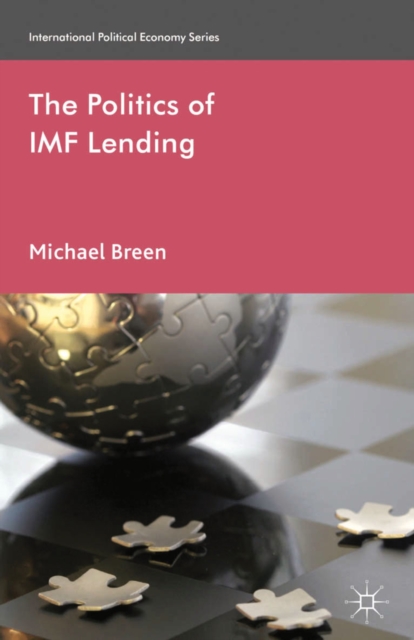
As national governments continue to disagree over how to respond to the aftermath of the global financial crisis, two of the few areas of consensus were the decisions to increase the IMF's capacity to respond and remove the policies designed to limit the use of its resources.
Control Systems Theory, a newly developing theoretical perspective, starts from an important insight into human behaviour: that people attempt to control the world around them as they perceive it.
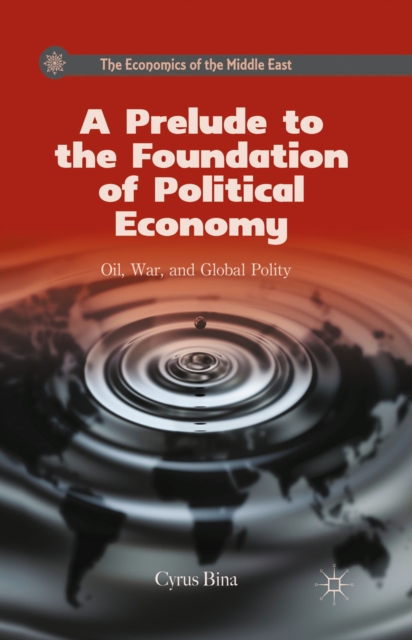
A Prelude to the Foundation of Political Economy is a groundbreaking volume of theory and strategy on political economy and polity of the twenty-first century.
Governments have at their disposal many economic instruments to promote national security, such as sanctions, foreign aid, international trade, international finance and laws blocking funds for international terrorism.
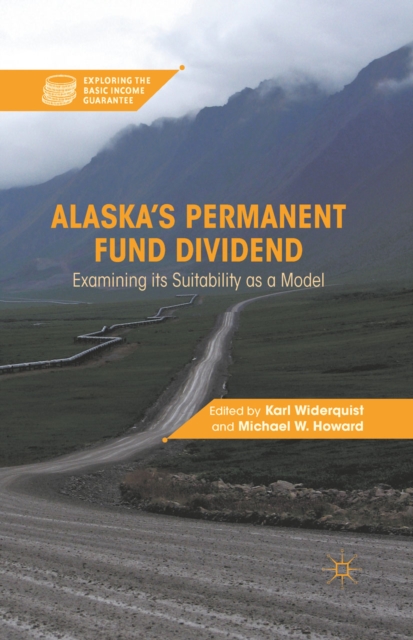
This exciting and timely collection brings together international and national scholars and advocates to provide historical overviews of efforts to pass basic income guarantee legislation in their respective countries and/or across regions of the globe.
Written by a group of international experts, this book focuses on three interdependent themes: (a) origins and consequences of the current debt crisis; (b) the systemic nature of the crisis; (c) national and international policy efforts to avoid a global collapse and bring about lasting reforms in the Euro zone and in the financial system.
This collection of essays from eminent scholars discusses different phases and measures of economic development, evaluating the success of national economic transitions and providing valuable policy lessons for developing economies.
This volume explores the measurement of economic and social progress in our societies, and proposes new frameworks to integrate economic dimensions with other aspects of human well-being.
Emerging Europe has suffered a severe economic crisis in recent years, and is only gradually recovering; the prospects for a convergence with the rest of the EU are still uncertain.
A Basic Income Guarantee (BIG) is the unconditional government-ensured guarantee that all citizens will have enough income to meet their basic needs without a work requirement.
Through comparative studies of aid-supported infrastructure projects in East Asia and Sub-Saharan Africa, the book examines how aid could assist development processes by facilitating development of local endogenous institutions.
Zahlan's detailed study examines recent and current performance of Arab countries and their organizations in scientific research in relation to their socio-economic development.
The term 'housing crisis' has recently been associated with rising foreclosure rates and tottering financial institutions, particularly in the US and Europe.
Moving from the birth of Europe to the current crisis, this irreverent and topical book questions the relevance of the European Union today, addressing issues ranging from immigration and Turkish integration to the sovereign debt crisis, and whether this will prove to be merely the beginning of intractable economic challenges.