The term 'housing crisis' has recently been associated with rising foreclosure rates and tottering financial institutions, particularly in the US and Europe.
This fully revised second edition of Bain and Howells' Monetary Economics provides an up-to-date examination of monetary policy as it is practised and the theory underlying it.
Moving from the birth of Europe to the current crisis, this irreverent and topical book questions the relevance of the European Union today, addressing issues ranging from immigration and Turkish integration to the sovereign debt crisis, and whether this will prove to be merely the beginning of intractable economic challenges.
Testing for a Unit Root is now an essential part of time series analysis but the literature on the topic is so large that knowing where to start is difficult even for the specialist.
The authors interrogate the condition of the neoliberal project in the wake of the global crisis and neoliberalism's predicted death in 2007, both in terms of the regulatory structures of finance-led capitalism in Europe and North America, and the impact of new centres of capitalist power on global order.
This book focuses on Japan's recent recovery from a decade-long stagnation, with particular attention to the unfinished policy agenda and the international spillovers of Japan's policies, through background studies (both analytical and descriptive) by IMF economists.
This book looks at the provision of finance in the Middle East and North Africa (MENA) by the IMF and World Bank in return for economic liberalization, exploring the political motivations of funding and geo-politics in recipients.
This book looks at two aspects of Islamic activity in the Middle East and North Africa, the development of social capital and the provision of welfare services, within the context of economic liberalisation programmes to see whether the retrenchment of the state under liberalisation has created a space for Islamic-based activities.
Inspired by the experience of some advanced economies, a number of emerging market economies have recently adopted rules limiting the budget deficit, expenditure level, or indebtedness of the public sector, while others consider them for eventual adoption.
This book examines how Japan should cope with fiscal challenges, as demands on the budget from an ageing society have necessitated the reigning in of public debt and the revamp of the pension and healthcare systems.
This book represents the latest developments and policy debate on the rapid growth of banking sector credit to the private sector, which continues to occupy the minds of academics and policymakers alike in many Central and Eastern European countries.
This book examines the theory and practice of performance budgeting, which aims make government more effective by linking the funding of government agencies to the results they deliver.
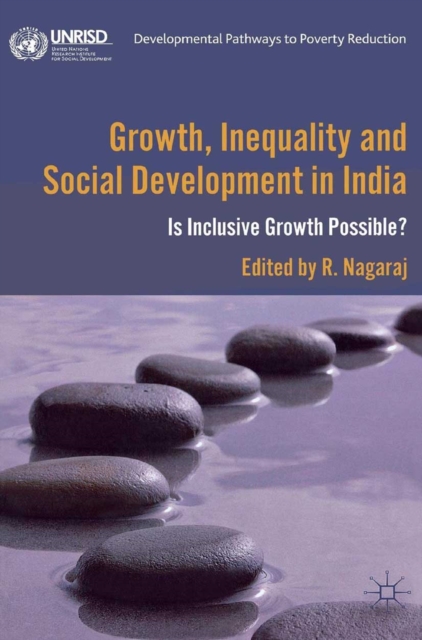
With six essays exploring different aspects of economic growth, poverty, inequality and social security, this book offers a critical perspective on India's development experience since independence.
This book centres on the effects of the political and later economic crisis which seriously affected the European Union and its impact on the seemingly endless UK debate over Britain's position within the EU.
The Principle of Large Numbers indicates that macro fluctuations have weak microfoundations; persistent business cycles and interrupted technologies can be better characterized by macro vitality and meso foundations.
The Principle of Large Numbers indicates that macro fluctuations have weak microfoundations; persistent business cycles and interrupted technologies can be better characterized by macro vitality and meso foundations.
This collection brings together significant new contributions to the Sraffa--based theories of production and distribution, from post-Keynesian arguments concerning monetary and macro economics to the history of thought and methodology.
This collection brings together significant new contributions to the Sraffa--based theories of production and distribution, from post-Keynesian arguments concerning monetary and macro economics to the history of thought and methodology.
President Nixon's new economic policy of August 1971, aggravated by the oil problem since October 1973 caused chaos and uncertainty in the international trade and currency system.
President Nixon's new economic policy of August 1971, aggravated by the oil problem since October 1973 caused chaos and uncertainty in the international trade and currency system.
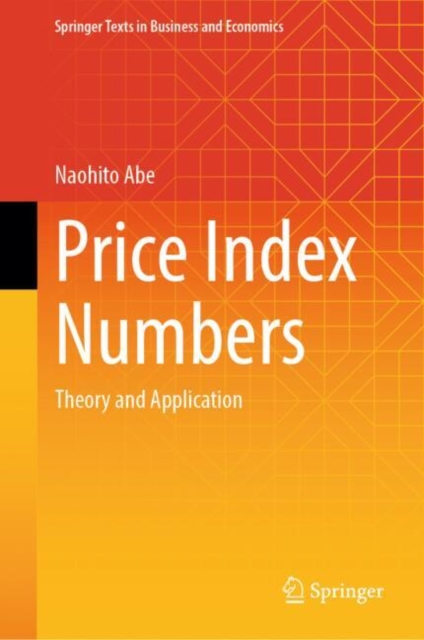
This textbook offers a comprehensive yet concise introduction to the theory behind price indices, covering the basics, historical background, necessary mathematical foundations, and contemporary cutting-edge theories.
Monetary and Financial Integration in West Africa details the progress, challenges faced, and potential of the project intended to create a West African Monetary Zone (WAMZ) between Gambia, Ghana, Guinea, Nigeria and Sierra Leone.
Monetary and Financial Integration in West Africa details the progress, challenges faced, and potential of the project intended to create a West African Monetary Zone (WAMZ) between Gambia, Ghana, Guinea, Nigeria and Sierra Leone.
This book covers a wide range of topics within mathematical modelling and the optimization of economic, demographic, technological and environmental phenomena.
This book covers a wide range of topics within mathematical modelling and the optimization of economic, demographic, technological and environmental phenomena.
The book looks at the National incomes of 1924 to 1931 was originally published in 1932 before the publication of the Age and Occupation 1931 Census but after the 1930 Census of Production.
The book looks at the National incomes of 1924 to 1931 was originally published in 1932 before the publication of the Age and Occupation 1931 Census but after the 1930 Census of Production.
Central banks have evolved over many years, and sometimes centuries, as policy-making, not profit-making, institutions, and yet they are structured legally and financially like 'for-profit' companies of the twenty-first century.
Central banks have evolved over many years, and sometimes centuries, as policy-making, not profit-making, institutions, and yet they are structured legally and financially like 'for-profit' companies of the twenty-first century.
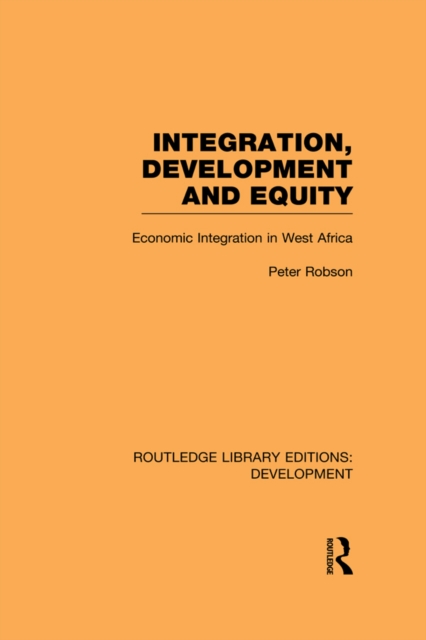
This reissue, first published in 1983, is an authoritative study of economic integration among the states of West Africa, focusing upon the issues and experience of the four main initiatives for regional integration in West Africa, namely the Economic Community of West African States, the Mano River Union, the Communaute Economique de l'Afrique de l'Ouest, and the recent initiative for the establishment of an economic and monetary union between Senegal and the Gambia.
This reissue, first published in 1983, is an authoritative study of economic integration among the states of West Africa, focusing upon the issues and experience of the four main initiatives for regional integration in West Africa, namely the Economic Community of West African States, the Mano River Union, the Communaute Economique de l'Afrique de l'Ouest, and the recent initiative for the establishment of an economic and monetary union between Senegal and the Gambia.