In recent years, the major industrialized nations have developed cooperative procedures for supervising banks, harmonized their standards for bank capital requirements, and initiated cooperative understanding about securities market supervision.
Providing a unique perspective on economic history and policy, this book shows how a daring method once recommended by top economists could be adapted to help America pay for the things it needs.
This volume brings together market practitioners, policymakers, development specialists, and academics from developed and emerging market countries to examine the underlying causes of the Asian financial crisis and ways of preventing future crises in emerging markets.
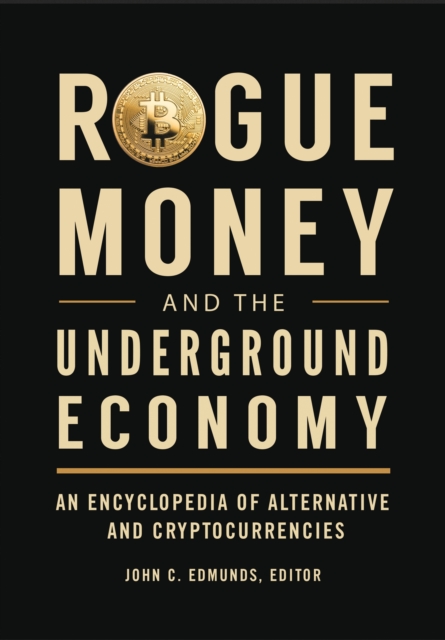
This easy-to-use guide covers the history, development, and current workings of cryptocurrencies and the underground economy, both in the United States and around the world.
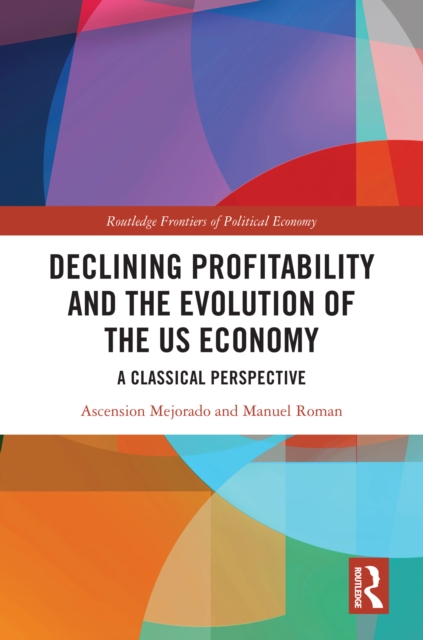
The 1970s were a pivotal decade for the US economy: deindustrialization broke the power of the labor unions and made possible the redistribution of income in favor of corporate profits; globalization and offshore investments opened alternatives to domestic nonfinancial capital accumulation; domestic productivity growth declined; and labor-saving technology empowered superstar corporations to rapidly gain market share.
Since the creation of the euro and a European Central Bank, the European Union has persistently pursued financial market integration throughout periods of economic growth, membership enlargements, financial breakdown, and political crisis.
Saudi Arabia (1986) is a major study of the political and administrative development of Saudi Arabia following its establishment as a leading world exporter of oil.
The Communist Economic Challenge (1965) examines the substantial industrial development in the Soviet Union, and its European satellites, and China, looking at Khrushchev's boast that by 1970 the USSR's industrial output would surpass that of the USA.
This book highlights the critical relationship between China and the Association of Southeast Asian Nations (ASEAN) associated with its trade interdependency.
This textbook helps students truly understand how to apply the principles behind corporate finance in a real world context from both a firm and investor perspective.
This book gives an overall description of China's manufacturing industry in the process of China's industrialization and comprehensively analyzes the development status, level, stage, problems, tasks and future development prospects of China's manufacturing industry.
This book offers a fresh perspective on the early history of macroeconomics, by examining the macro-dynamic models developed from the late 1920s to the late 1940s, and their treatment of economic instability.
Economists broadly define financial asset price bubbles as episodes in which prices rise with notable rapidity and depart from historically established asset valuation multiples and relationships.
Dieses eBook: "Zur Kritik der politischen Ökonomie" ist mit einem detaillierten und dynamischen Inhaltsverzeichnis versehen und wurde sorgfältig korrekturgelesen.
This volume provides a detailed and comprehensive assessment of the performance of the Spanish economy in the 1990s and examines Spain's future prospects versus European Economic and Monetary Union.
This volume brings together some of the best-known and highly-regarded academics in the field to present a timely and comprehensive review of the prospects for economic integration and development in Southern Africa, and to analyse alternative strategies and policies for the future.
Time and Money argues persuasively that the troubles which characterise modern capital-intensive economies, particularly the episodes of boom and bust, may best be analysed with the aid of a capital-based macroeconomics.
In recent times the US economy has been characterised by burgeoning budget and current account deficits and increasing amounts of foreign capital inflows.
This book gathers a collection of English language essays by Jes's Huerta de Soto over the past ten years, examining the dynamic processes of social cooperation which characterize the market, with particular emphasis on the role of both entrepreneurship and institutions.
This book scientifically tests the assertion that accommodative monetary policy can eliminate the "e;crowd out"e; problem, allowing fiscal stimulus programs (such as tax cuts or increased government spending) to stimulate the economy as intended.
This book pleads for a new orientation of government economic policy, as well as central bank policy, rejecting the traditional government stabilization policy that leads to a dead-end of economic instability and social inequality in the long run.
This book explores Portugal's response to the 2008 economic crisis and how the country regained the trust of the global capital markets through investor support.
Die Finanzkrisen seit 2007 und deren realwirtschaftliche Folgen für fast alle westlichen Industrieländer haben die herausragende Bedeutung von Finanzmärkten und Bankensystemen in den wissenschaftlichen Fokus gerückt.
Written in honor of Emeritus Professor Georges Prat (University of Paris Nanterre, France), this book includes contributions from eminent authors on a range of topics that are of interest to researchers and graduates, as well as investors and portfolio managers.
This book investigates why Austrian economists fail to apply the spontaneous order framework to cooperative relationships - such as a dynamic and evolving public sector - that might complement a thriving market.