National income estimates date back to the late 17th century, but only in the half-century since the Second World War have economic accounts developed in their present form, becoming an indispensable tool for macroeconomic analysis, projections and policy formulation.
On February 6, 1989, the Federal Home Loan Bank Board contacted Mid America Institute to inquire whether it would undertake an independent, academically oriented analysis of the insolvency resolution crisis in the thrift industry.
Through analysis of the European Union Emissions Trading Scheme (EU ETS) and the Clean Development Mechanism (CDM), this book demonstrates how to use a variety of econometric techniques to analyze the evolving and expanding carbon markets sphere, techniques that can be extrapolated to the worldwide marketplace.
The book contributes to the growing literature pertaining to empirical and policy issues in international trade, foreign capital flows and issues in finance, implications for India and emerging economies related to trade and development interface, and analysis of sector level growth and development in India.
This book offers a selection of intensely researched essays focused on the critical planning objectives and policy priorities that would enhance the promotion of inclusive growth in a developing country.
ADB became a Task Force for Climate-Related Financial Disclosures (TCFD) supporter in November 2021 and this report represents ADB's first climate-related financial disclosures under the TCFD framework.
This publication provides an overview of institutional investors' interest in green bonds issued in Cambodia, along with an assessment of the perspectives of local arrangers and underwriters on their clients' interest in green bond issuances.
This report explores how the central securities depository and real-time gross settlement (CSD-RTGS) linkage model could be applied to collective investment scheme (CIS) passporting frameworks in Asia to enhance the post-trade efficiency of the region's bond markets.
Active use of local currency-denominated bonds for cross-border collateral transactions could help the development of regional bond markets by mitigating risks, reducing the credit costs of financial institutions, and expanding market liquidity.
These guidelines explain the ASEAN+3 Multi-Currency Bond Issuance Framework (AMBIF) and relate AMBIF Elements to the corresponding features of the professional Cambodian bond market.
This report is a key resource for understanding the dynamic trade and production linkages of South and Central Asian economies to support data-driven policy making and implementation.
This report is a key resource for understanding the dynamic trade and production linkages of East Asian economies to support data-driven policy making and implementation.
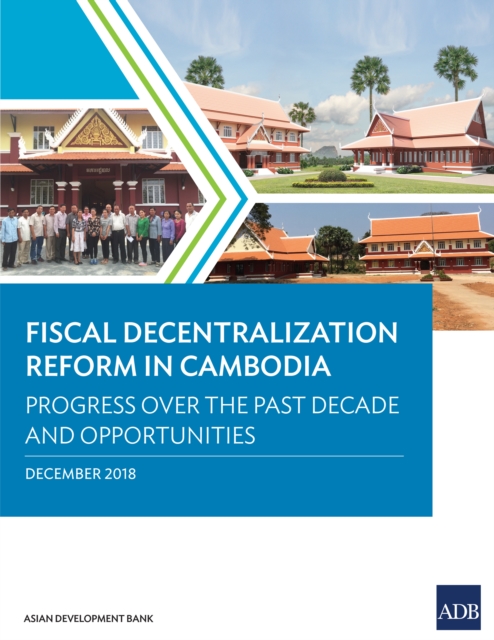
This report reviews Cambodia's progress in fiscal decentralization since passing the Law on Administrative Management of the Capital, Provinces, Municipalities, Districts and Khans (Organic Law, 2008) and commencing the National Program for Democratic Development, 2010-2019 (which was extended to 2020).
The Key Indicators for Asia and the Pacific 2018, the 49th edition of this series, includes the latest available economic, financial, social, and environmental indicators for the 48 regional members of the Asian Development Bank.
This technical note explains why countries should cement strong public private partnerships (PPP) to help bridge deep funding gaps and build the climate-resilient infrastructure they need.
The ASEAN+3 Bond Market Guide series provides member-specific information on the investment climate, rules, laws, opportunities, and characteristics of local bond markets in Asia and the Pacific.
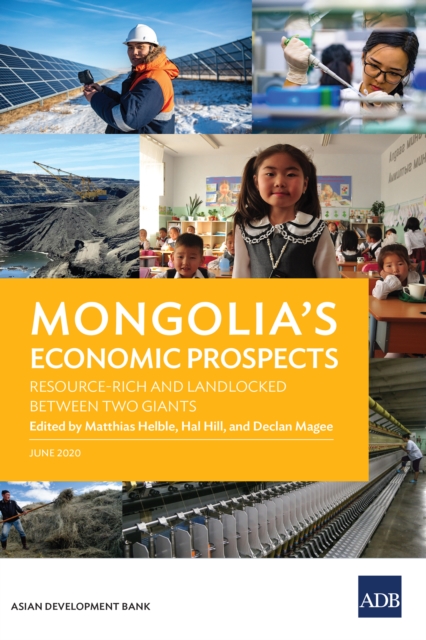
This publication examines Mongolia's recent economic development and outlines reforms that would help the country take advantage of its many opportunities.
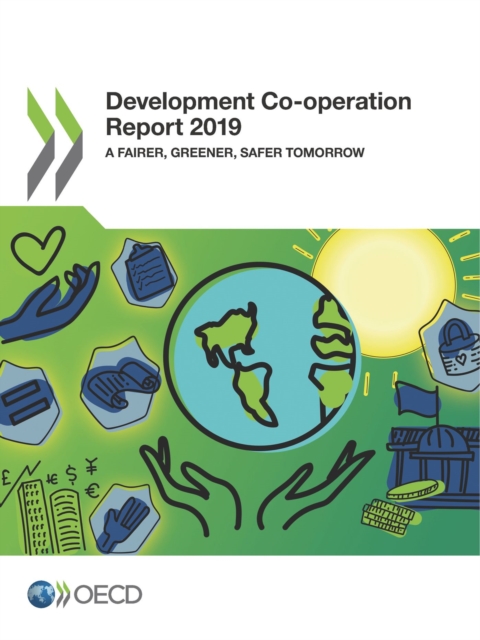
This 57th edition of the Development Co-operation Report is intended to align development co-operation with today's most urgent global priorities, from the rising threat of climate change to the flagging response to the Sustainable Development Goals and the 2030 Agenda.
This 57th edition of the Development Co-operation Report is intended to align development co-operation with today's most urgent global priorities, from the rising threat of climate change to the flagging response to the Sustainable Development Goals and the 2030 Agenda.
Cette publication compare les aspects cles des methodologies statistiques utilisees par les pays membres de l'OCDE pour compiler les indicateurs de l'industrie, du commerce de detail et de la construction.
Ce manuel a pour but de clarifier les questions theoriques que posent les concepts de stocks et flux de capital fixe et de fournir des lignes directrices pour le calcul d'estimations.
Norway has high levels of GDP per capita and inclusiveness, helped by business dynamism, sound petroleum-wealth management and comprehensive welfare and public services.
Norway has high levels of GDP per capita and inclusiveness, helped by business dynamism, sound petroleum-wealth management and comprehensive welfare and public services.
With some 200 indicators, the 2017 edition of the OECD Science, Technology and Industry (STI) Scoreboard shows how the digital transformation affects science, innovation, the economy, and the way people work and live.