This book bridges the gap between Islamic and conventional (micro)economics by demonstrating how modern tools and theories of microeconomics can be applied to Islamic assumptions regarding economics and finance.
This book gives readers advanced insights into macroeconomics with historical perspectives and proposes policies to resolve the problems the Japanese economy faces.
This book bridges the gap between Islamic and conventional (micro)economics by demonstrating how modern tools and theories of microeconomics can be applied to Islamic assumptions regarding economics and finance.
The free market underpins our economy and our way of thinking around enterprise and value, but it is also a major factor in the sustainability problems that we now live with.
The free market underpins our economy and our way of thinking around enterprise and value, but it is also a major factor in the sustainability problems that we now live with.
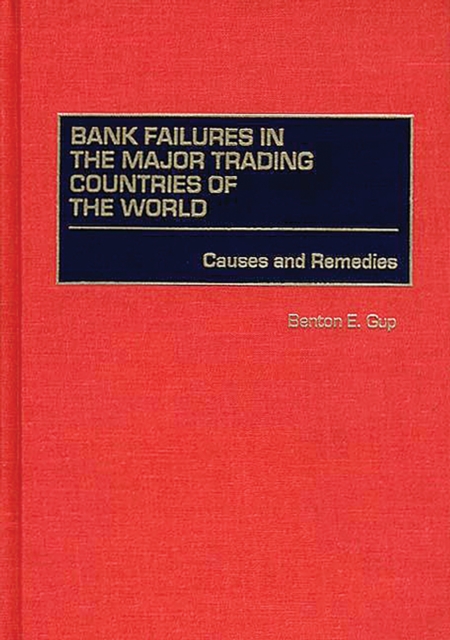
Bank failures, near failures, and crises are common throughout the world, and particularly in the major G-10 trading countries, including the United States, Germany, and Japan.
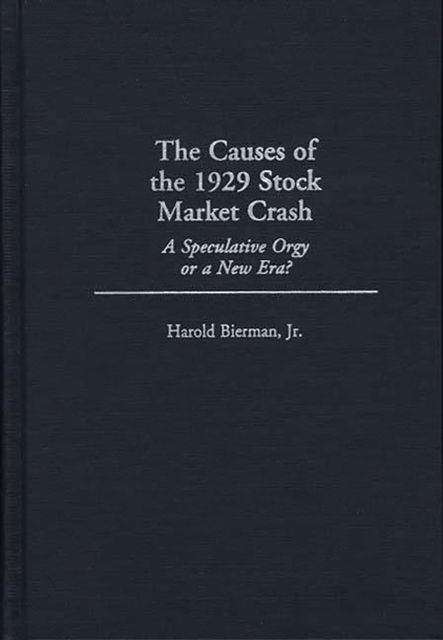
Attempting to reveal the real causes of the 1929 stock market crash, Bierman refutes the popular belief that wild speculation had excessively driven up stock market prices and resulted in the crash.
Now in its fourth edition, Economics: The Basics continues to provide an engaging and topical introduction to the key issues in contemporary economics.
Now in its fourth edition, Economics: The Basics continues to provide an engaging and topical introduction to the key issues in contemporary economics.
The definition of a olda has evolved intensively over the years due to demographic changes, and the ageing population is one of the most frequently discussed issues in recent decades.
Saudi Arabia (1986) is a major study of the political and administrative development of Saudi Arabia following its establishment as a leading world exporter of oil.
This work focuses on the service economy, it introduces the fundamentals of markets, consumer choice, financial assessment, risk avoidance, and other topics.
El mundo moderno de producción y consumo necesita herramientas prácticas y científicas para la toma de decisiones, ayudas que proporciona la microeconomía a los productores y los consumidores.
This book covers the main topics of welfare economics - general equilibrium models of exchange and production, Pareto optimality, un- certainty, externalities and public goods - and some of the major topics of social choice theory - compensation criteria, fairness, voting.
A political economy analysis of the history of food security in the Arab world, including the role played by the global food price crisis in the Arab Spring and the Arab response aiming at greater food sovereignty via domestic food production and land acquisition overseas - the so-called land grab.
This book is novel in that it reveals significant issues of economics, management and business fields currently observed in network industries such as public utilities and transportation, and provides empirical evidence of their mechanisms and policy implications from various perspectives.
The Communist Economic Challenge (1965) examines the substantial industrial development in the Soviet Union, and its European satellites, and China, looking at Khrushchev's boast that by 1970 the USSR's industrial output would surpass that of the USA.
This book discusses ideas for stakeholders to develop strategies to access and use financial products and services such as deposits, loans, and fund transfer mechanism, insurance, payment services, and intermediaries, distribution channels at economical prices in order to cater to the needs of the poor and underprivileged people.
Risk Adjustment, Risk Sharing and Premium Regulation in Health Insurance Markets: Theory and Practice describes the goals, design and evaluation of health plan payment systems.
This book analyzes the changes brought on to economic and business activities in Latin America due to the new scenarios, environments and social dynamics the world is facing as a result of the COVID-19 pandemic, at both micro- and macroeconomic levels.