This book brings together in one place the work of one of our most respected economic theorists, on a field in which he has played a large part in originating: the New Institutional Economics.
This work provides a unified and simple treatment of dynamic economics using dynamic optimization as the main theme, and the method of Lagrange multipliers to solve dynamic economic problems.
This book examines transaction cost economics, the influential theoretical perspective on organizations and industry that was the subject of Oliver Williamson's seminal book,Markets and Hierarchies (1975).
Population Dynamics fills the gap between the classical supply-side population theory of Malthus and the modern demand-side theory of economic demography.
The apparel and textile industries have always been at the mercy of rapidly changing styles and fickle customers who want the latest designs while they are still in fashion.
Taking South Africa as an important case study of the challenges of structural transformation, Structural Transformation in South Africa offers a new micro-meso level framework and evidence linking country-specific and global dynamics of change, with a focus on the current challenges and opportunities faced by middle-income countries.
This is the third volume in a new, definitive, six-volume edition of the works of Joseph Stiglitz, one of today's most distinguished and controversial economists.
This is the third volume in a new, definitive, six-volume edition of the works of Joseph Stiglitz, one of today's most distinguished and controversial economists.
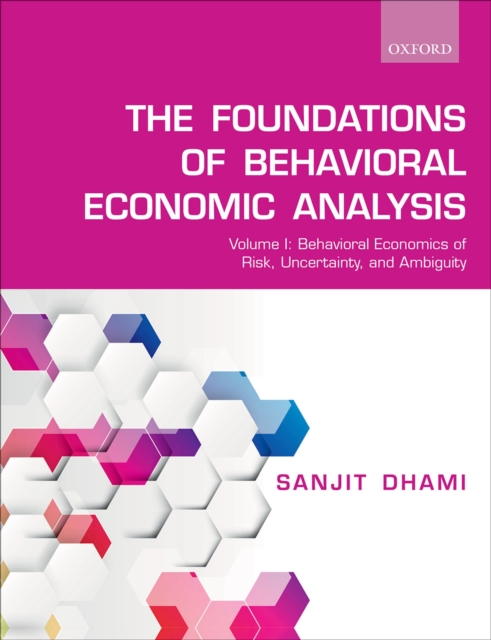
This first volume of The Foundations of Behavioral Economic Analysis covers the opening topic found in this definitive introduction to the subject: the behavioral economics of risk, uncertainty, and ambiguity.
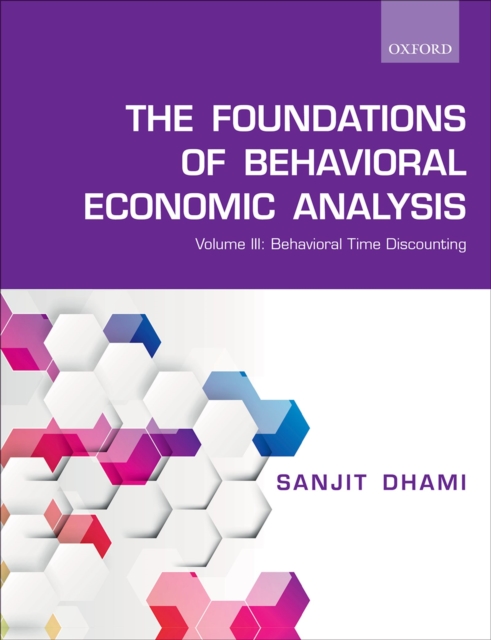
Taken from the first definitive introduction to behavioral economics, The Foundations of Behavioral Economic Analysis: Behavioral Time Discounting is an authoritative and cutting edge guide to this essential topic for advanced undergraduate and postgraduate students.
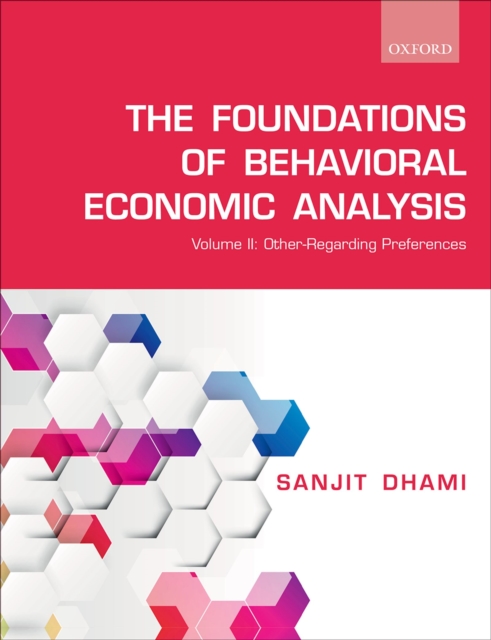
Taken from the first definitive introduction to behavioral economics, The Foundations of Behavioral Economic Analysis: Other-Regarding Preferences is an authoritative and cutting edge guide to this essential topic for advanced undergraduate and postgraduate students.
Edith Penrose was a remarkable woman and distinguished scholar who lived through, and witnessed at first hand, many of the major events of the 20th century; the great depression in the US; the rise of Nazism in Europe; the second world war when she worked as a special adviser to the US Ambassador in London; post-war reconstruction, assisting Eleanor Roosevelt with the drafting of the Universal Declaration of Human Rights; the McCarthy era; and the oil crisis of the 1970s.
A theft amounting to GBP1 was a capital offence in 1260 and a judge in 1610 affirmed the law could not then be applied since GBP1 was no longer what it was.
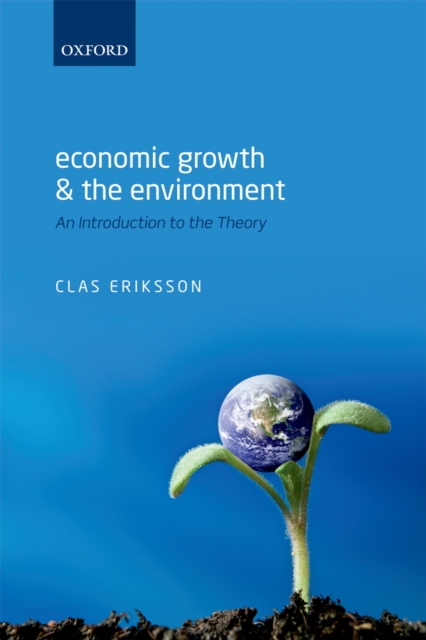
Economic Growth and the Environment explores the debate on how to reconcile economic growth with protection of the natural environment, and the closely related discussion on whether an increasing scarcity of natural resources will eventually force economic growth to cease.
This collection of essays, from leading economic experts on the UK labour market, provides an overview of the key issues concerning the performance of the labour market, and the policy issues surrounding it, with a focus on the recent recession and its aftermath.
This collection of essays, from leading economic experts on the UK labour market, provides an overview of the key issues concerning the performance of the labour market, and the policy issues surrounding it, with a focus on the recent recession and its aftermath.
This is the first volume in a new, definitive, six-volume edition of the works of Joseph Stiglitz, one of today's most distinguished and controversial economists.
'This is the second book of a two-volume set that continues Adam Smith's work, using the tools mathematical, experimental, and behavioural economists have developed since 1776.
This work responds to the increasing need in many countries to better understand linkages between intellectual property, trade rules, and economic and social development, and to find new ways of implementing intellectual property rules and optimizing their effects.
This work responds to the increasing need in many countries to better understand linkages between intellectual property, trade rules, and economic and social development, and to find new ways of implementing intellectual property rules and optimizing their effects.
This book is a practical guide for theory-based empirical analysis in economics that guides the reader through the first steps when moving between economic theory and applied research.
This book is a practical guide for theory-based empirical analysis in economics that guides the reader through the first steps when moving between economic theory and applied research.
Edith Penrose was a remarkable woman and distinguished scholar who lived through, and witnessed at first hand, many of the major events of the 20th century; the great depression in the US; the rise of Nazism in Europe; the second world war when she worked as a special adviser to the US Ambassador in London; post-war reconstruction, assisting Eleanor Roosevelt with the drafting of the Universal Declaration of Human Rights; the McCarthy era; and the oil crisis of the 1970s.