The global financial crisis that reached its peak in late 2008 has brought the importance of financial services regulation and supervision into the spotlight.
This book explores the linkages between Amartya Sen's Capability Approach and participatory forms of development - especially those associated with critical pedagogy and empowerment from the bottom-up.
Innovation is the creation of new, technologically feasible, commercially realisable products and processes and, if things go right, it emerges from the ongoing interaction of innovative organisations such as universities, research institutes, firms, government agencies and venture capitalists.
International taxation is a major research topic, and for a field of research at the intersection of so many disciplines there has been surprisingly little done across disciplinary boundaries.
In the new edition of this important contribution to understanding both the Asian economic miracle and the 1997-8 crisis, Richard Stubbs assesses the main explanations to date and updates the analysis to take account of globalization and the remarkable economic rise of China.
During the past 30 years, China has undergone extensive economic reform, replacing the government's administration of enterprises with increasing levels of market-oriented enterprise autonomy.
This book contributes new insights into the organization of free/open source (F/OS) software communities by examining the links between learning, division of labour and commercialization, demonstrating the need for a synthesis of work on both community organization and cooperation to understand F/OS community dynamics.
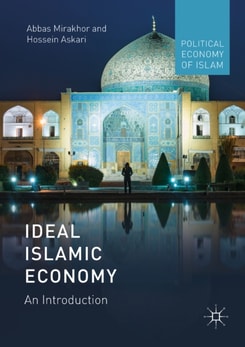
This book provides an introduction to the vision of an economic system based completely on the Holy Qur'an-a system defined as a collection of institutions, representing rules of behavior, prescribed by Allah for humans, and the traditions of the Messenger.
The French philosopher and economist Saint-Simon (1760-1825) propounded a new political, economic and social order in which the quest for economic efficiency and social justice led to putting the workers at the forefront.
City Life from Jakarta to Dakar focuses on the politics incumbent to this process - an "e;anticipatory politics"e; - that encompasses a wide range of practices, calculations and economies.
This thematically structured text offers an ideal introduction to the positive and negative effects of globalization on human welfare in industrial and developing societies.
The story of GDP and why we need a better measurement of growthIn one lifetime, GDP, or Gross Domestic Product, has ballooned from a narrow economic tool into a global article of faith.
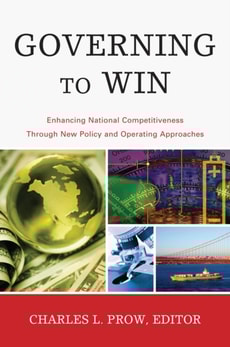
Charles Prow has brought together an impressive lineup of businessmen and women, reporters, and experts to show how the United States can be more competitive in the global economy.
This is a 17,300 word essay describing significant events leading toward a decline of Americas social and economic viability and some thoughts related to a reformation of basic institutions and ethics.
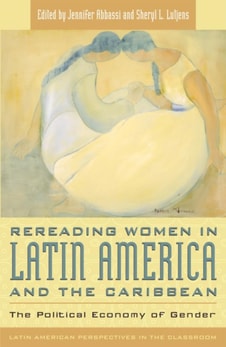
This indispensable text reader provides a broad-ranging and thoughtfully organized feminist introduction to the ongoing controversies of development in Latin America and the Caribbean.
This book is the most comprehensive collection available explaining what the military industrial complex (MIC) is, where it comes from, what damage it does, what further destruction it threatens, and what can be done and is being done to chart a different course.
Increasingly, business leaders are tasked with developing new products, services, and business models that minimize environmental impact while driving economic growth.
A favorite icon for cigarette manufacturers across China since the mid-twentieth century has been the panda, with factories from Shanghai to Sichuan using cuddly cliche to market tobacco products.
Mexico City's public markets were integral to the country's economic development, bolstering the expansion of capitalism from the mid-nineteenth to mid-twentieth centuries.
Japan grew explosively and consistently for more than a century, from the Meiji Restoration until the collapse of the economic bubble in the early 1990s.