Desde algunas corrientes de pensamiento, se considera a la economía como una caja de herramientas a la que acudir para resolver necesidades múltiples contando con recursos escasos.
Since the emergence of climate and global warming onto the international agenda, research in sustainability has been underpinned by the development in energy and environmental science.
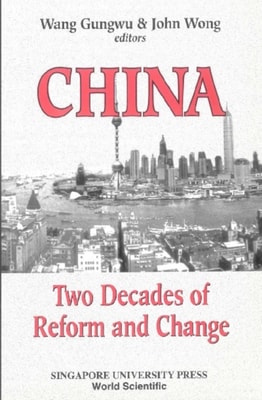
Since the beginning of the 21st century, China's energy diplomacy has been expanding rapidly and the country is searching for energy resources worldwide.
This book by the Asia Competitiveness Institute (ACI) presents the inaugural regional competitiveness analysis for the five regions of India as a basis for the Master Plan on Strategic Regional Economic Development using regional classifications as defined by the Confederation of Indian Industry.
This book is a world-class report by the Asian Competitiveness Institute (ACI), updated annually to analyse Indonesia's competitiveness at both the 33 provincial levels and six regional groupings based on the central government's Master Plan for Acceleration and Expansion of Indonesia's Economic Development (MP3EI).
John Stuart Mill: Political Economist is a revised version of the part of Samuel Hollander's The Economics of John Stuart Mill (1985) treating the theory of economic policy.
The cases of Singapore and Switzerland present a fascinating puzzle: how have two small states achieved similar levels of success through divergent pathways?
Given its geographical proximity to Asia and its close alliance with the West, Australia, amid the rise of Asian economies, needs to re-formulate its policies on trade, investment and security.
Administrative Monopoly in China: Causes, Behaviors, and Termination is a further work of our previous book, China's State-Owned Enterprises: Nature, Performance and Reform.
For the millions of citizens in the Arab World who came together in 2010-2011 to discover their common yearning for dignity and liberty, the real revolutions only began after the wave of protests.
The wave of uprisings that has engulfed the Arab world since 2011 has impacted the Gulf significantly, however much the region appears to have remained unscathed.
The world seems divided to either applaud or fear the rise of China, but this book probes deeper by investigating three aspects of the phenomenon in detail: 1) the institutional dilemmas of the prosperity as it integrates Asian authoritarianism with globalizing capitalism to create economic accomplishments; 2) the political struggles alongside the prosperity as Chinese citizens begin to demand equality, rights, and justice that might be viewed to disturb the continuity of stability and development; and 3) the global implications entailed by the prosperity - not only in power politics, war and peace, or competitions among nations, but especially on global public goods termed "e;human security"e;.
This volume is about the political economy of Deng Xiaoping's Nanxun (tour of South China), which was the most critical phase in China's reform and development since 1978.
This volume represents a first dialogue between European and Asian economists concerning the common outlook of the two continents following the financial crisis which struck Asia in 1997.
This volume is a compilation of important papers relating to the financial, governance and political economy structures of the region, using a variety of methods and topics.
Within thirty years of its humble beginnings, Taiwan was listed by the Organization for Economic Cooperation and Development (OECD) as one of ten newly industrialized countries (NICs).
As the financial crisis swept the Asia-Pacific, China seemed to be the one economy in the region which had been left "e;largely unaffected"e; for various reasons, including its strong economic and financial fundamentals as well as its strong political will to defend the Renminbi, which had so far firmly stood the ground.
With the passing of the old generation of revolutionaries, China's politics is entering a new era that belongs to the Jiang Zemin-centered third generation of leadership.
1997 saw a major reform in China which signaled the move away from its traditional economy, when Jiang Zemin called off the debate on public versus private ownership.
This paper investigates the impact of political interventions made by Beijing and Taipei in recent years on the development of cross-Straits economic relations.
Since the introduction of the Dengist reform in the late 1970s, the state bureaucracy in China has experienced four major restructurings, each of which entailed the redistribution of political power.
The development of market socialism in China has contributed to a remarkable spatial economic transformation in particular areas of the Chinese countryside.
This book presents a unique array of insights into Hong Kong's transition to China since the 1 July 1997 handover, from several perspectives around the region.
Variation in market orientation in individual regions and the weakening of government intervention in regional income redistribution have been mainly responsible for the changes in China's regional economic disparities since 1978.
The Party and state leadership in Beijing was rudely awakened to the fact that the state bureaucracies in charge of public security had no idea of Falun Gong's leadership and its functions on April 25, 1999, when reportedly ten thousand followers in front of Zhongnanhai staged a peaceful and quiet sit-in.
This book has arisen from the belief that cultural understanding can be advanced by contrasting the work of scholars who share academic concerns but work from different cultural vantage-points.