Even if constrained in their international choices, recipient countries of global health programmes hold the capacity to autonomously define and pursue their own strategies, policies, and ultimately attain political goals.
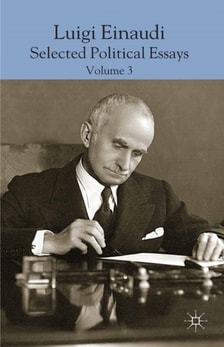
Luigi Einaudi (1874-1961) was a leading liberal Italian economist, economic historian and political figure: Governor of the Bank of Italy, Minister for the Budget and President of the Italian Republic.
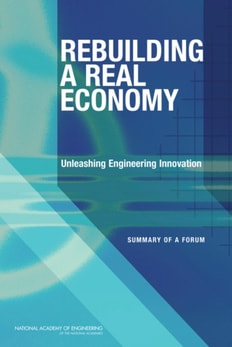
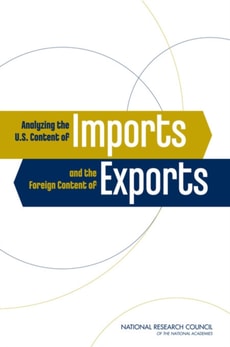
The financial crisis that began in 2008 is a stark demonstration that we as a nation take great risks when we build too much of our economy on a base that does not create real value.
The financial crisis that began in 2008 is a stark demonstration that we as a nation take great risks when we build too much of our economy on a base that does not create real value.
EU Trade Agreements and European Integration studies 50 bilateral trade agreements negotiated by the European Commission from 1970-2008 and how they shaped European integration.
Examining the global significance of the freight container, with particular emphasis on the perspectives of the US and China, Globalization Contained considers the implications of the freight container as an agent of change for the future of the global economy and global security.
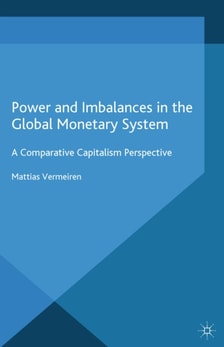
The author examines the indirect macroeconomic roots of the global financial crisis and Eurozone debt crisis: the escalation of global trade imbalances between the US and China and regional trade imbalances in the Eurozone.
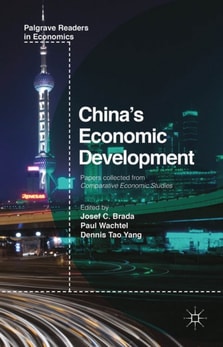
This collection of papers is from Palgrave's journal Comparative Economic Studies, carefully selected by a team of expert editors, this volumes collates the most sophisticated works to provide the readers with an essential guide to the economic development of China.
Duman examines the transition from Keynesianism to monetarism by presenting an analysis of labour market reforms in Greece and Turkey - questioning the role of class struggle on the implementation process.
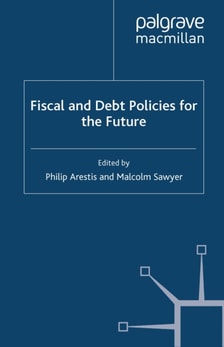
New perspectives and analyses of key European policies through their past successes and failures, present challenges such as the global financial crisis and future developments.
This collection brings together significant new contributions to the Sraffa--based theories of production and distribution, from post-Keynesian arguments concerning monetary and macro economics to the history of thought and methodology.
Independence, Propertylessness, and Basic Income argues that philosophers have focused too much on scalar freedom and proposes a theory of status freedom as effective control self-ownership: the power to have or refuse active cooperation with other willing people, or simply: freedom as the power to say no.
Combining theoretical and empirical insights, this book provides an in-depth analysis of South Asia's transition in the areas of democracy, political economy and security since the end of the Cold War.
Examining essential aspects of American life, John Budd investigates how informational sources (print and broadcast media and other resources) fall short when it comes to informing citizens, failing our democracy and damaging the public good.
The issues discussed in this book are the building blocks needed for an interdisciplinary theoretical framework that will allow for value creation and reporting by the most important assets organizations have, its human capital.
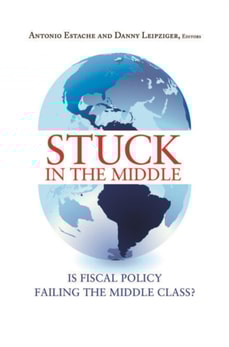
Stuck in the Middle examines both economic and social public policy initiatives in its assertion that enhancing the welfare of people in developed and developing nations requires an explicit focus on the middle class.
Adopting a distinctive structural political economy approach, this book uniquely explains the blind spots of alternative political economy approaches to international aid, and presents an original framework for evaluating likely reformers' strength of commitment and potential alliances with donors.
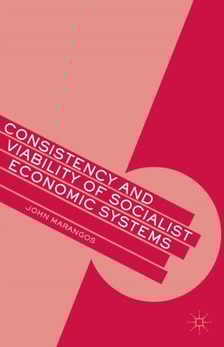
Economic systems and the reforms processes examined in Consistency and Viability of Socialist Economics Systems are the centrally administered socialist economics system of the Soviet Union, the Liberman-Kosygin reforms, the Gorbachev reforms and market socialism of Yugoslavia.
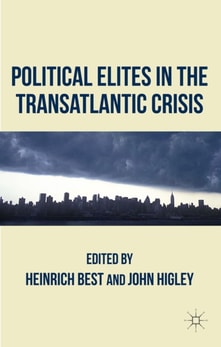
Beliefs held by US and European elites about unregulated markets and a currency union without fiscal union led to a transatlantic crisis unmatched in severity since the Great Depression.
Bartholomew Paudyn investigates how governments across the globe struggle to constitute the authoritative knowledge underpinning the political economy of creditworthiness and what the (neoliberal) 'fiscal normality' means for democratic governance.
Examining the extent to which trade adversely affects domestic workers, Making Sense of Anti-Trade Sentiment documents statistical relationships between exports and imports and domestic employment/wages.
This timely and interdisciplinary volume analyzes the many impacts of and contrasting responses to the Argentine political, economic, and social crises of 2001-02.
Perspectives on Human Capital and Assets goes beyond the current literature by providing a platform for a broad scope of discussion regarding HC&A, and, more importantly, by encouraging a multidisciplinary fusion between diverse disciplines.
Liam Clegg provides an innovative reading of where power lies in the institutions' concessional lending operations, drawing its focus on shareholders and stakeholders from staffs' own understandings of their operational environments.